Just a moment...

Top
Help
×

By creating an account you can:

Logo TaxTMI
>
Call Us / Help / Feedback

Contact Us At :

E-mail: [email protected]

Call / WhatsApp at: +91 99117 96707

For more information, Check Contact Us

FAQs :

To know Frequently Asked Questions, Check FAQs

Most Asked Video Tutorials :

For more tutorials, Check Video Tutorials

Submit Feedback/Suggestion :

Email :
Please provide your email address so we can follow up on your feedback.
Category :
Description :
Min 15 characters0/2000
Add to...
You have not created any category. Kindly create one to bookmark this item!
Create New Category
Hide
Title :
Description :
❮❮ Hide
Default View
Expand ❯❯
Close ✕
🔎 News - Adv. Search
TEXT SEARCH:

Press 'Enter' to add multiple search terms. Rules for Better Search

Search In:
Main Text + AI Text
  • Main Text
  • Main Text + AI Text
  • AI Text
Category: ?
Categorized by AI
---- All Categories ----
  • ---- All Categories ----
  • Income Tax
  • GST
  • Customs, DGFT & SEZ
  • FEMA & RBI
  • Corp. Laws, SEBI & IBC
  • PMLA, Black Money & ED
  • Budget
  • News and Press Release
  • PTI News
Month:
---- All Months ----
  • ---- All Months ----
  • January
  • February
  • March
  • April
  • May
  • June
  • July
  • August
  • September
  • October
  • November
  • December
Year:
---- All Years ----
  • ---- All Years ----
  • 2026
  • 2025
  • 2024
  • 2023
  • 2022
  • 2021
  • 2020
  • 2019
  • 2018
  • 2017
  • 2016
  • 2015
  • 2014
  • 2013
  • 2012
  • 2011
Sort By: ?
In Sort By 'Default', exact matches for text search are shown at the top, followed by the remaining results in their regular order.
RelevanceDefaultDate
    Monetary Policy Statement, 2026-27 Resolution of the Monetary Policy Committee August 3 to 5, 2026
    Stock markets edged higher in early trade amid lower crude oil prices, buying in Reliance Industries
    Monthly review of accounts of Government of India upto June 2026 (FY 2026-27)
    DRI busts illegal drug manufacturing unit in Satara district in Maharashtra; two arrested
    CCI approves proposed combination inter alia involving share acquisition(s) and merger of certain entities e.g. AAPC India, Triguna, Caddie, SMPL, Tec...
    Rupee gains 20 paise to close at 95.08 against US dollar post-RBI policy decision
    TN Budget: Revenue deficit at Rs 55,775 crore, fiscal deficit estimated at Rs 1,21,819 crore
    Tatkare slams ‘gungi gudiya’ jibe against Sunetra; Cong says row being exploited for political gains
    RBI invites public comments on Draft Guidelines for ‘on tap’ Licensing of Urban Co-operative Banks
    Pakistan-origin dry dates, routed through UAE, seized at Kandla port
    RBI keeps rates unchanged, retains neutral stance; outlook uncertain on El Nino, geopolitical risks
    Government Notifies Inventory-based Cross-border E-Commerce Export Framework under Foreign Trade Policy 2023
    Customs official among 5 held for smuggling gold of Rs 1.44 crore at Indore airport
    Lok Sabha passes Bankers' Books Evidence Bill to replace colonial-era law
    Sensex gains 152 pts in volatile session as RBI keeps policy rates unchanged
    DRI seizes 364 metric tonne (MT) banned Pakistan-origin dry dates imports worth Rs. 3 crore
    Rupee gains 13 paise to close at 95.15 against US dollar post-RBI policy decision
    ED raids premises linked to ex-Andhra MLA Malla Vijaya Prasad in chit fund scam
    'Gungi gudiya' remark against Sunetra shows Cong's 'ideological bankruptcy': NCP leader Tatkare
    RBI holds interest rates for fourth straight meeting, awaits clearer inflation outlook
❯❯
MaximizeMaximizeMaximize
0 / 200
Expand Note
Add to Folder

No Folders have been created

    +

    Are you sure you want to delete "My most important" ?

    NOTE:

    News
    Showing Results for :
    Reset Filters
    Results Found:
    Show All SummariesHide All Summaries
    August 6, 2026
    Show AI Summary
    Neutral monetary policy stance continues as resilient growth and food-fuel inflation risks require close macroeconomic monitoring.
    The Monetary Policy Committee retained the policy repo rate and continued the neutral monetary policy stance, citing the need to assess evolving growth-inflation conditions. Domestic activity was assessed as resilient, supported by consumption, investment, credit, manufacturing, services and exports, although global uncertainty, energy prices, supply-chain pressures, geopolitical developments and monsoon conditions remain risks. CPI inflation increased mainly because of food and fuel pressures, while underlying inflation remained moderate. The Committee considered that price pressures were not yet generalised and reaffirmed its commitment to align inflation with the target.
    August 6, 2026
    Show AI Summary
    Closing auction price discovery and a neutral monetary policy stance shaped equity market conditions amid lower crude prices.
    The Closing Auction Session in the equity cash segment introduced an auction-based mechanism for determining closing prices of eligible shares with futures and options contracts, intended to make price discovery more transparent and robust. The Reserve Bank of India retained its neutral stance and left the benchmark policy rate unchanged, pending greater clarity on the inflationary effects of higher energy costs. Future policy decisions were stated to be data dependent.
    August 6, 2026
    Show AI Summary
    Monthly public accounts review records receipts, expenditure, tax devolution, interest payments, subsidies, and capital spending through June.
    Consolidated monthly accounts up to June 2026 report total receipts of Rs.10,49,243 crore, comprising net tax revenue, non-tax revenue and non-debt capital receipts. Tax devolution transfers to State Governments total Rs.2,63,336 crore. Total expenditure is Rs.13,57,076 crore, including revenue expenditure of Rs.10,16,818 crore and capital expenditure of Rs.3,40,258 crore. Revenue expenditure includes interest payments and major subsidies.
    August 6, 2026
    Show AI Summary
    Illicit psychotropic drug manufacture triggered seizure, apprehensions, and investigation into planned trafficking under narcotics control law.
    Illicit manufacture and trafficking of Alprazolam and Diazepam, psychotropic substances regulated under the Narcotic Drugs and Psychotropic Substances Act, 1985, were detected at a clandestine facility. Searches recovered finished and intermediary substances, together with raw materials and reaction mixtures used in manufacture, and the goods were seized under the Act. The manufacturer and an intended buyer were apprehended, with material indicating a proposed transaction for further illicit trafficking. Preliminary investigation indicated prior involvement in illegal drug production and trafficking.
    August 6, 2026
    Show AI Summary
    Competition approval for hotel-sector consolidation covers share acquisitions and merger of Accor-branded hotel entities into InterGlobe Hotels.
    Competition approval was granted for related share acquisitions and the merger of AAPC India, Caddie, Triguna, Srilanand Mansions, Techpark and Accent into InterGlobe Hotels. The combination involves entities jointly controlled by the Bhatia Family Group and the Accor Group, including hotel-owning and developing entities, hotel management and franchising operations, leasing activities, and captive consultancy and support services relating to Accor-branded hotels in India.
    August 5, 2026
    Show AI Summary
    Rupee appreciation followed unchanged monetary policy, lower crude prices, weaker dollar and expectations of orderly exchange-rate management.
    The rupee strengthened after the central bank maintained its policy rate and neutral monetary-policy stance. Lower crude oil prices, a weaker US dollar and declining US Treasury yields supported investor sentiment. Earlier measures to attract capital inflows remained part of the framework supporting the rupee, while the central bank stressed its endeavour to preserve an orderly currency trajectory. Future movement was linked to geopolitical de-escalation, global risk sentiment and US economic data.
    August 5, 2026
    Show AI Summary
    Fiscal consolidation through revenue mobilisation and leakage control aims to reduce deficits while expanding capital expenditure capacity.
    Tamil Nadu's Revised Budget Estimates for 2026-27 project a revenue deficit and fiscal deficit, with outstanding liabilities comprising public debt and public-account liabilities. Revenue mobilisation is proposed through improved tax administration, collection efficiency, closure of leakages, liquor-manufacturer privilege fees, and eligible Union grants. The strategy projects gradual deficit reduction to create room for capital expenditure, supported by expenditure reforms aimed at eliminating leakages, optimising expenditure, and improving service delivery.
    August 5, 2026
    Show AI Summary
    Political criticism of public office-holders raises debate over media accountability, personal remarks, and acceptable public discourse.
    Political criticism followed a social-media post describing Maharashtra Deputy Chief Minister Sunetra Pawar as "gungi gudiya" in connection with a press interaction on law-and-order issues in Beed district. Congress representatives stated that the post was not a personal insult, had been deleted after adverse reactions, and was followed by an expression of regret. NCP representatives termed the expression inappropriate and stressed that the principal dignitary should conduct media interactions. Shiv Sena (UBT) representatives described the phrase as not unparliamentary and linked it to criticism of a guardian minister's public responsibilities.
    August 5, 2026
    Show AI Summary
    On-tap licensing for Urban Co-operative Banks enters public consultation through draft guidelines inviting stakeholder feedback.
    Draft guidelines for 'on tap' licensing of Urban Co-operative Banks have been issued for public and stakeholder consultation. Comments and feedback may be submitted until September 05, 2026, through the designated online consultation facility or by written or email submission to the specified regulatory department.
    August 5, 2026
    Show AI Summary
    Prohibition on indirect Pakistan-origin imports targets alleged origin misdeclaration and UAE routing used to circumvent trade restrictions.
    Import prohibition on goods originating in Pakistan applies to direct and indirect imports under the Foreign Trade Policy, 2023. Pakistan-origin dry dates routed through the UAE were allegedly declared as UAE-origin goods for import, and were intercepted under the Customs Act, 1962. Investigation indicated that the goods were first sent from Pakistan to Dubai, re-containerised, and then exported to India. A separate interception involved Pakistan-origin guggul resin allegedly declared as Somali natural resin and routed through Dubai.
    August 5, 2026
    Show AI Summary
    Neutral monetary policy stance keeps benchmark rates unchanged while inflation risks, liquidity management and consumer-protection reforms remain under review.
    Monetary policy maintains the benchmark policy rate unchanged and retains a neutral stance, with future decisions guided by incoming data. The central bank remains committed to aligning headline inflation with its medium-term target while monitoring food, fuel and other input-cost risks. Surplus liquidity will be managed through two-way operations, and the regulatory framework for interest rates on advances is proposed to be harmonised and standardised across regulated entities to improve transparency and consumer protection.
    August 5, 2026
    Show AI Summary
    Export-only e-commerce inventory framework enables seller exports through registered exporters while requiring traceability, timely payments and domestic-diversion controls.
    The export-only inventory framework permits eligible e-commerce entities to export through a registered Exporter-on-Record, which procures goods from Indian Sellers-on-Record against confirmed overseas orders and assumes export and destination-country compliance responsibilities. Inventory must be segregated, digitally traceable and cannot be diverted to domestic sale. The framework requires timely seller payments, visibility of overseas sales and shipment information, proportional pass-through of export rebates and refunds, annual compliance certification and digital records.
    August 5, 2026
    Show AI Summary
    Gold smuggling enforcement targets concealed foreign-origin gold, airport control evasion, and illicit railway transport under customs law.
    Gold smuggling enforcement operations under the Customs Act, 1962 involved alleged concealment and unlawful movement of foreign-origin gold. At an international airport, an alleged syndicate used an airline employee to transfer gold received from arriving passengers outside Customs and immigration controls, with gold disguised as silver-coloured bracelets. A separate railway operation concerned gold concealed in a specially made cloth waist belt and intended for delivery to a jeweller. The actions addressed concealment, evasion of Customs controls, and illicit transport of foreign-origin gold.
    August 5, 2026
    Show AI Summary
    Digital bank-record evidence gains a technology-neutral framework through expanded admissibility, certified authentication, and regulated production of bankers' books.
    The Bankers' Books Evidence Bill, 2026, modernises the evidentiary treatment of banking records by extending "bankers' books" to physical, electronic, digital, virtual and cloud-based records. It recognises electronic bank records as admissible evidence, allows production in physical or electronic form, and provides for standardised certificates authenticated by manual, digital or electronic signatures. The Bill also defines "special cause" for compelling bank officers to produce records or testify where the bank is not a party, and permits extension to specified financial-sector entities subject to conditions.
    August 5, 2026
    Show AI Summary
    Closing auction price discovery and unchanged policy rates shaped volatile equity trading amid inflation and geopolitical uncertainty.
    The Monetary Policy Committee retained the policy repo rate and neutral policy stance while seeking greater clarity on inflation risks from higher energy costs. Stock exchanges introduced the Closing Auction Session for eligible futures and options shares in the equity cash segment to determine closing prices through a more transparent and robust auction-based price-discovery mechanism. Equity markets showed volatile, limited gains amid geopolitical uncertainty, energy-price concerns, profit booking and the new mechanism's introduction.
    August 5, 2026
    Show AI Summary
    Pakistan-origin import prohibition covers third-country routing, false origin declarations, forged documents, and trans-shipment arrangements used to evade restrictions.
    The prohibition on direct or indirect import or transit of goods originating in or exported from Pakistan extends to goods routed through third countries and falsely declared as having another origin. Misdeclaration of country of origin, false descriptions, forged documentation, and trans-shipment arrangements may contravene that prohibition and invite action under the Customs Act, 1962. Dry dates declared as UAE-origin and Guggul resin declared as Somalia-origin were investigated as goods of Pakistan origin routed through Dubai.
    August 5, 2026
    Show AI Summary
    Foreign exchange stability measures support the rupee as policy continuity, capital inflows and global risk sentiment shape currency expectations.
    Foreign exchange market movement reflected a rupee appreciation against the US dollar following the monetary policy decision to retain the repo rate and neutral stance. Market sentiment was supported by softer crude oil prices, weakness in the US dollar, lower US Treasury yields and foreign equity inflows. The monetary policy framework sought to support capital inflows and maintain an orderly rupee trajectory, with geopolitical developments and US economic data remaining relevant to near-term exchange-rate expectations.
    August 5, 2026
    Show AI Summary
    Money-laundering investigation examines alleged proceeds from chit fund operations following searches linked to a former company managing director.
    A money-laundering investigation concerns alleged proceeds of crime arising from a multi-state chit fund operation associated with Welfare Building and Estates Pvt Ltd. The company is alleged to have collected investor deposits through investment schemes promising high returns before defaulting. Searches at premises linked to its former managing director form part of the inquiry into alleged laundering. The underlying alleged fraud had previously resulted in a CBI case and multiple police FIRs.
    August 5, 2026
    Show AI Summary
    Political restraint in public communications was urged, alongside adherence to principal-speaker protocol during press conferences and media interactions.
    Political restraint in public communications was urged after a social-media remark directed at Sunetra Pawar was criticised as ideologically irresponsible. It was stated that regret alone was insufficient and that leaders should exercise care in public comments. Press-conference protocol was also emphasised: the principal dignitary should respond to media questions, and those seated alongside should not participate in the interaction. Party colleagues were expected to act more responsibly in future media engagements.
    August 5, 2026
    Show AI Summary
    Neutral monetary policy stance continues as inflation clarity is awaited, alongside cooperative banking and lending-rate transparency measures.
    Monetary policy maintained the benchmark policy repo rate and a neutral stance pending clearer evidence that energy-cost pressures will generate broad-based inflation. Inflation is expected to rise temporarily due principally to food and fuel prices before moderating, while core inflation remains benign. The approach remains data-dependent, supported by two-way liquidity operations. Proposed measures include resuming urban cooperative bank licensing, revising rural cooperative bank credit-monitoring directions, and harmonising interest-rate regulation on advances across regulated entities to improve transparency and consumer protection.

    News

    Back

    All News

    Showing Results for :
    Reset Filters
      No Records Found

      News

      Back

      All News

      whatsappJoin Channel
      Showing Results for : Reset Filters
      News and Press Release

      Revolutionizing Digital Commerce: The ONDC Initiative

      January 6, 2025

      Contents
      Summary
      Note

      Note

      -

      Bookmark

      Print

      Print

      Digital commerce reimagined for inclusivity and innovation

      “ONDC has contributed to empowering small businesses and revolutionising e-commerce, thus playing a vital role in furthering growth and prosperity.”

      - Prime Minister Narendra Modi

      Introduction

      The Open Network for Digital Commerce (ONDC) is a transformative initiative by the Department for Promotion of Industry and Internal Trade (DPIIT), Ministry of Commerce, Government of India aimed at democratizing digital commerce. Launched in April 2022, ONDC is an initiative aiming at promoting open networks for all aspects of exchange of goods and services over digital or electronic networks. ONDC is based on open-sourced methodology, using open specifications and open network protocols independent of any specific platform. It envisions creating a level playing field for sellers, buyers, and service providers across India, particularly small and medium enterprises (MSMEs). It serves as a unified platform where stakeholders can interact freely without the constraints of exclusive ecosystems. By fostering open protocols and reducing dependency on monopolistic platforms, ONDC aims to catalyze innovation and inclusivity in the digital commerce landscape.
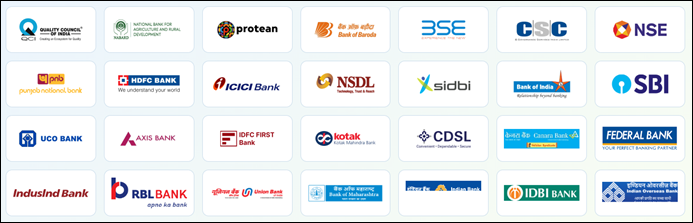
      With the vision to create an organization with a startup mindset supported by government, ONDC was incorporated as a non-profit, Section-8 company and incubated at the Quality Council of India. QCI was joined by Protean as the co-founder for incorporation of ONDC. With an authorized capital of Rs500 crore, any public and private banks and financial institutions have contributed equity to ONDC till now.

      Investors of ONDC
      Objectives of ONDC Initiative
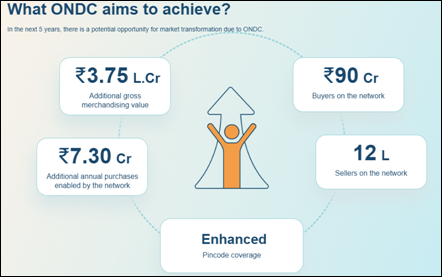
      The ONDC initiative has several key objectives:

      1. Democratization of Commerce: Break the dominance of large e-commerce platforms by enabling interoperability across networks.
      2. Inclusivity: Empower small businesses, retailers, and local artisans to access the digital marketplace.
      3. Cost Efficiency: Lower the cost of customer acquisition and transaction processing for sellers.
      4. Market Expansion: Bridge regional and linguistic gaps, bringing untapped markets into the fold of digital commerce.
      5. Customer Empowerment: Increase options for buyers by providing access to a broader array of sellers.

      How Does It Work?

      ONDC employs open network protocols to facilitate seamless interaction between participants. The network enables buyers and sellers from different platforms to transact with each other using standardized APIs. The key components include:

      1. Decentralized Architecture: Unlike traditional platforms, ONDC does not own or operate e-commerce services. It acts as an enabler for interconnectivity.
      2. Open Protocols: Based on open standards, ONDC ensures that any seller or buyer platform adhering to these protocols can participate.
      3. Role Segregation: Participants are classified into roles such as Buyer Applications, Seller Applications, and Logistics Providers, ensuring clear delineation of responsibilities.

      Domains on the ONDC Network

      S. No.

      Domain Name

      Service Name

      1

      Food & Beverage

      Continental, Middle Eastern, North Indian, Regional Indian, South Indian, Pan-Asian, Tex-Mexican, Healthy Food, World Cuisines, Desserts, Beverages, Fast Food

      2

      Grocery

      Baby Care, Bakery, Cakes & Dairy, Beauty & Hygiene, Beverages, Cleaning & Household, Eggs, Meat & Fish, Foodgrains, Fruits & Vegetables, Snacks & Branded Foods

      3

      Fashion & Footwear

      Men's Accessories, Men's Apparel, Women's Apparel, Women's Footwear, Kid's Apparel

      4

      Home & Kitchen

      Home Decor, Furniture, Cookware and Dining

      5

      Electronics

      Audio, Cameras, Laptops, Mobile Phones, Televisions

      6

      Beauty & Personal Care

      Health, Kitchen Appliances, Lighting

      7

      Health & Wellness

      Pain Relief, Nutrition and Fitness Supplements, Covid Essentials, Diabetes Control, Healthcare & Fitness Devices, Ayurvedic, Homeopathy, Unani and Siddha, Elder Care, Baby Care, Orthopedic Care, Mobility Aids, Medicated Hair Care, Medicated Skin Care, Face Cleansers, Gastric Care, ENT Care, Eye Care, Cold and Cough, Sexual Wellness, Feminine Care, Maternity Care, etc.

      8

      Gift Cards

      Retail and Enterprise Gift Cards

      9

      Mobility

      Auto, Cabs, Flights, Metro Rail, Charter

      10

      Financial Services

      Credit, Insurance and Investments

      11

      Services

      Skilled and Subscription Based

      12

      Agriculture

      Agricultural Input, Output and Services

      13

      ONEST

      Education and Training

      Roles on the ONDC Network

      Participants play various roles to ensure efficient functioning:

      1. Buyer Applications: Platforms enabling customers to access sellers on the ONDC network.
      2. Seller Applications: Interfaces for businesses to list and manage their offerings.
      3. Logistics Providers: Facilitators for the movement of goods across regions.
      4. Technology Enablers: Providers of IT infrastructure and tools.

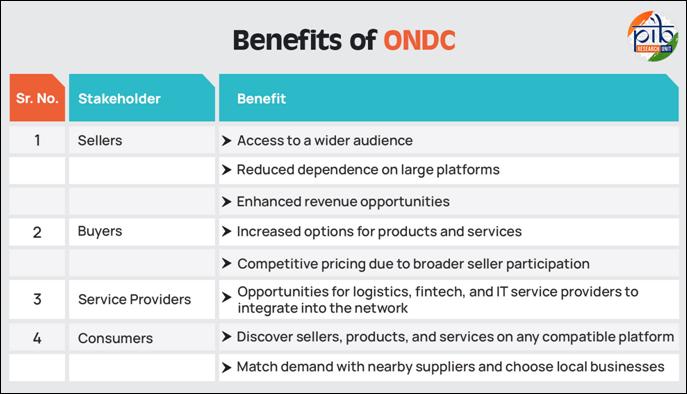
      Benefits of ONDC

      Impact of ONDC

      The implementation of ONDC is having a profound impact on India’s economy:

      1. Market Democratization: Ensuring that businesses of all sizes can thrive.
      2. Economic Growth: Increased digital commerce activity contributing to GDP.
      3. Job Creation: Expanding opportunities in technology, logistics, and ancillary services.
      4. Consumer Empowerment: Offering diverse options and competitive pricing.

      Collaborations with Government Departments/Ministries

      ONDC actively collaborates with multiple government bodies to expand its reach and effectiveness:

      1. Ministry of MSME: To onboard small businesses and local artisans, enhancing their digital presence, for example, the MSME-TEAM Initiative.
      2. Ministry of Commerce and Industry: For policy alignment and fostering international trade through the ONDC network.
      3. Digital India Program: Leveraging digital infrastructure to ensure widespread access.
      4. Startup India: Promoting entrepreneurship and innovation by integrating startups into the ONDC ecosystem.
      5. Quality Council of IndiaDigiReady Certification (DRC) portal, launched in February 2024, aim to assess and certify digital readiness of MSME entities.
      6. Department of Fisheries: To provide a digital platform and empower all stakeholders including traditional fishermen, fish farmers producer organization, entrepreneurs from fisheries sector to buy and sell their products through e-market place, i.e., ONDC.
      7. Ministry of Agriculture & Farmers Welfare and NABARD: Onboarding Farmer Producer Organizations (FPOs) and farmers to the network.

      ONDC for MSMEs

      Micro, Small, and Medium Enterprises (MSMEs) form the backbone of India’s economy. ONDC provides them with a unique opportunity to overcome challenges such as limited digital reach and high platform costs. Key benefits include:

      1. Increased Visibility: MSMEs gain access to a nationwide customer base.
      2. Reduced Costs: Interoperable protocols eliminate dependency on expensive platform services.
      3. Skill Development: Training programs to familiarize MSMEs with digital tools.
      4. Fair Competition: Equal opportunities to compete with larger players.

      ONDC protocols would standardize operations like cataloguing, inventory management, order management and order fulfilment. Thus, small businesses would be able to use any ONDC compatible applications instead of being governed by specific platform centric policies. This will provide multiple options to small businesses to be discoverable over network and conduct business. It would also encourage easy adoption of digital means by those currently not on digital commerce networks.

      The Ministry of MSME launched a sub-scheme “MSME Trade Enablement and Marketing Initiative” (MSME-TEAM Initiative), which aims at assisting five lakh MSMEs to onboard the ONDC platform, through awareness workshops which will include hand-holding assistance for onboarding onto ONDC. MSME TEAM scheme aims to provide financial assistance to micro and small enterprises (MSEs) through Seller Network Participants, for catalogue preparation, account management, logistics and packaging material & design. Of the total five lakh MSEs to be benefited, two and a half lakh MSEs would be women owned MSEs. The scheme is valid from 2024 to 2027. However, awareness workshops will be conducted preferably in Tier 2 and Tier 3 cities and MSME Clusters for greater outreach, especially among women and SC/ ST owned MSMEs.

      ONDC Startup Mahotsav
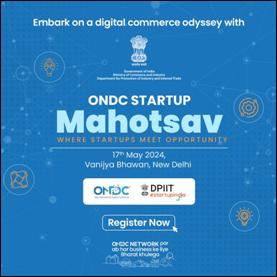
      Department for Promotion of Industry and Internal Trade (DPIIT) organised the ‘ONDC Startup Mahotsav’, a first of its kind event, on 17th May 2024 in New Delhi. The event symbolized the celebration and collaboration of two of DPIIT’s flagship initiatives – the Startup India initiative and ONDC. The event witnessed participation of around 5,000 startups in hybrid mode. Over 125 ecosystem stakeholders including startups, unicorns and high growth businesses such as EaseMyTrip, Livspace, Pristyn Care, Cars24, and Zerodha, signed Letter of Intent (LoI) during the event. These LoIs signify the potential of ONDC and the eagerness of leading startups of the country to collaborate with the platform. Insightful panel discussions on subjects as ‘Building a collaborative future of Indian E-Commerce’, ‘ONDC - Startup Success Story’ and ‘Driving Startup Growth through ONDC’ dwelled on the areas of mutual collaboration and the immense potential for startups and emerging businesses to expand and scale-up harnessing the network of ONDC.

      Government Initiatives to Increase Awareness, Adaptation and Training among Small Businesses

      ONDC has taken various initiatives to increase awareness, adaptation and training among small businesses for fully leveraging the benefits of ONDC and become ONDC compliant. These include:

      • ONDC has been conducting awareness workshops in collaboration with various industry associations across the country to educate the small sellers and businesses about ONDC and its benefits. Multiple joint workshops are being organised in collaboration with RAI, PHDCCI, FICCI, NASSCOM and FHRAI.
      • ONDC has delivered virtual training & technical training through open digital sessions, which was attended by large number of startups, students, business leaders, bureaucrats etc.
      • ONDC has developed a Handbook to help sellers (especially first-time sellers) succeed in digital commerce in 14 languages and are being distributed widely.
      • ONDC is in collaboration with Bhashini to improve app development and e-commerce in Indic languages.
      • ONDC has launched a Feet on Street program to support the Network Participants (NPs) in identifying and educating sellers about the benefits of ONDC and how to join through Seller Applications, hand-holding support to sellers to onboard on Seller Applications and creating a first-level basic catalogue.
      • To connect every village in India to the national digital market, CSC-Common Services Centers have gone live on ONDC.
      • WhatsApp Bot “ONDC Sahayak” launched in 5 languages, to help sellers and buyers get information about ONDC.
      • ONDC has launched an Academy, which is a repository of educational and informative textual and video content. ONDC Academy is providing a curated learning experience providing guidance and best practices for a successful e-commerce journey for each and every participant of the ONDC network.

      Key Achievements of ONDC

      Since its inception, ONDC has recorded notable milestones:
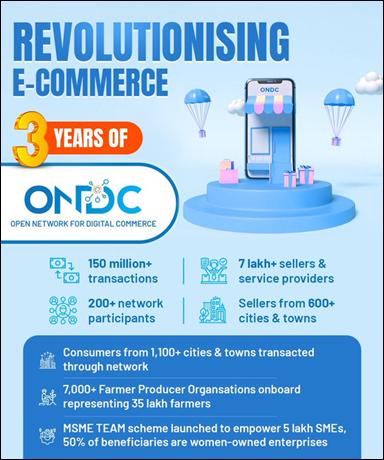
      1. Pilot Programs: Successful implementation in select cities like Bengaluru and Delhi.
      2. First ONDC Fair Price Shop: As a step towards Digital India, the Department of Food and Public Distribution, Government of India launched a pilot to on-board the Fair Price Shops (FPSs) in Una and Hamirpur districts of Himachal Pradesh on the Open Network Digital Commerce (ONDC).
      3. Expansion of Services and Products available on ONDC platforms: The ONDC Network started with two categories (F&B and Grocery) and have expanded to numerous other categories such as Mobility, Fashion, Beauty and Personal Care, Home & Kitchen, Electronics and Appliances, Health & Wellness and B2B.
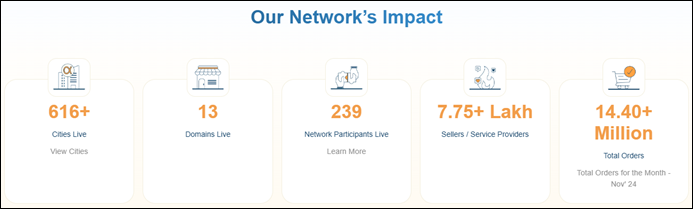
      4. Wide Geographical Coverage: As on January 2, 2024, the sellers and service providers are spread across 616+ cities expanding the geographical coverage of the ONDC network.

      Awards and Recognition

      Year

      Award

      Awarding Organisation

      2024

      Application of Emerging Technologies for providing Citizen Centric Services

      National Awards for e-Governance

      2024

      Challenger (Brand)

      e4m Pitch Top 50 Brands

      2024

      Tech Disrupter

      Republic Business Emerging Technology Awards

      2024

      Start-up of the Year

      14th India Digital Awards (IDA)

      2023

      FinTech Company of the Year

      Global Fintech Awards

      2023

      The Disrupters

      Indian Business Leader Awards (IBLA)

      2023

      The Disruptive Technology Award

      Global IP Convention (GIPC)

      Conclusion

      ONDC represents a bold step towards creating a fair, open, and inclusive digital commerce ecosystem in India. By addressing the challenges of monopolistic practices and empowering smaller players, it has the potential to transform the e-commerce landscape. The initiative is not just a technological framework but a vision for a more equitable digital future.

      References:-

      https://ondc.org/

      https://x.com/narendramodi/status/1874668637891781118

      https://pib.gov.in/Pressreleaseshare.aspx?PRID=1814143

      https://pib.gov.in/PressReleasePage.aspx?PRID=1884249

      https://pib.gov.in/PressReleasePage.aspx?PRID=2020896

      https://pib.gov.in/PressReleasePage.aspx?PRID=2035082

      https://pib.gov.in/PressReleasePage.aspx?PRID=2051330

      https://pib.gov.in/PressReleseDetailm.aspx?PRID=1984081

      https://pib.gov.in/PressReleasePage.aspx?PRID=2003348

      https://pib.gov.in/PressReleasePage.aspx?PRID=2003914

      https://pib.gov.in/PressReleasePage.aspx?PRID=2007083

      https://sansad.in/getFile/loksabhaquestions/annex/1715/AU816.pdf?source=pqals

      https://sansad.in/getFile/annex/265/AU531_uRPdIv.pdf?source=pqars

      Topics

      ActsIncome Tax