
Just a moment...

Top
Help
×

By creating an account you can:

Logo TaxTMI
Call Us / Help / Feedback

Contact Us At :

E-mail: [email protected]

Call / WhatsApp at: +91 99117 96707

For more information, Check Contact Us

FAQs :

To know Frequently Asked Questions, Check FAQs

Most Asked Video Tutorials :

For more tutorials, Check Video Tutorials

Submit Feedback/Suggestion :

Email :
Please provide your email address so we can follow up on your feedback.
Category :
Description :
Min 15 characters0/2000
Make Most of Text Search
  1. Checkout this video tutorial: How to search effectively on TaxTMI.
  2. Put words in double quotes for exact word search, eg: "income tax"
  3. Avoid noise words such as : 'and, of, the, a'
  4. Sort by Relevance to get the most relevant document.
  5. Press Enter to add multiple terms/multiple phrases, and then click on Search to Search.
  6. Text Search
  7. The system will try to fetch results that contains ALL your words.
  8. Once you add keywords, you'll see a new 'Search In' filter that makes your results even more precise.
  9. Text Search
Add to...
You have not created any category. Kindly create one to bookmark this item!
Create New Category
Hide
Title :
Description :
❮❮ Hide
Default View
Expand ❯❯
Close ✕
🔎 News - Adv. Search
TEXT SEARCH:

Press 'Enter' to add multiple search terms. Rules for Better Search

Search In:
Main Text + AI Text
  • Main Text
  • Main Text + AI Text
  • AI Text
Category: ?
Categorized by AI
---- All Categories ----
  • ---- All Categories ----
  • Income Tax
  • GST
  • Customs, DGFT & SEZ
  • FEMA & RBI
  • Corp. Laws, SEBI & IBC
  • PMLA, Black Money & ED
  • Budget
  • News and Press Release
  • PTI News
Month:
---- All Months ----
  • ---- All Months ----
  • January
  • February
  • March
  • April
  • May
  • June
  • July
  • August
  • September
  • October
  • November
  • December
Year:
---- All Years ----
  • ---- All Years ----
  • 2026
  • 2025
  • 2024
  • 2023
  • 2022
  • 2021
  • 2020
  • 2019
  • 2018
  • 2017
  • 2016
  • 2015
  • 2014
  • 2013
  • 2012
  • 2011
Sort By: ?
In Sort By 'Default', exact matches for text search are shown at the top, followed by the remaining results in their regular order.
RelevanceDefaultDate
    SC upholds NCLAT order setting aside CCI's Rs 301.6-cr penalty on Grasim Industries
    China's factory activity unexpectedly slips into contraction in July
    PM Modi to inaugurate Bhogapuram Airport on Aug 1 in Andhra Pradesh
    Rupee rises 20 paise to 95.30 against US dollar in early trade
    APEDA Facilitates First-Ever Sea Shipment of Value-Added Flavoured Makhana from Bihar to Canada
    Indian envoy meets Chinese commerce ministry official; Calls for enhanced market access
    ED attaches Rs 94 crore in foreign bank account in fraud case against Delhi-based rice firm
    Ensure uniform deposit rates across all branches: RBI tells banks
    PM takes stock of geo-political situation, safety of seafarers, supply chain constraints
    Delhi govt to provide property Aadhaar cards; bring Land Records Bill: CM Rekha Gupta
    CCS discusses global security situation, supply chain constraints
    US economy grows a sluggish 1.5% second-quarter with inflation remaining stubbornly high
    Gold rises Rs 1,000 to Rs 1.48 lakh/10g on fresh retail buying
    DFS Launches Protection & Indemnity Insurance Product under Bharat Maritime Insurance Pool (BMIP)
    Investec Selects Infosys Finacle SaaS Platform on Microsoft Azure for Digital Banking Transformation
    Kotak Securities Earns Great Place to Work® Certification and Recognition Among India's Best Workplaces™ in Investments 2026
    India rises from 82nd to 57th in global rankings, in structural and pro-competitive reforms: Report by Competere Foundation
    Aadhaar enrolment in Manipur has reached 87-88 pc: Officials
    IndoStar Capital Finance Limited Q1FY27 Disbursements ₹ 1,235 crore up 44% vis-à-vis Q1FY26
    Global gold demand flat at 1,269 tonnes in June quarter, says WGC
❯❯
MaximizeMaximizeMaximize
0 / 200
Expand Note
Add to Folder

No Folders have been created

    +

    Are you sure you want to delete "My most important" ?

    NOTE:

    News
    Showing Results for :
    Reset Filters
    Results Found:
    Show All SummariesHide All Summaries
    July 31, 2026
    Show AI Summary
    Procedural Fair Hearing in competition inquiries requires notice when the Commission departs from investigative findings before imposing action.
    Competition law procedure requires the Competition Commission to notify and hear an opposite party when departing from the Director General's findings. The penalty order concerning alleged abuse of dominance in viscose staple fibre supply was set aside because Grasim Industries was not given an opportunity to respond to the Commission's disagreement with the investigative findings. The matter was remanded for fresh, time-bound consideration without a finding on the merits.
    July 31, 2026
    Show AI Summary
    Manufacturing contraction highlights weak domestic demand, property-sector pressure and continued reliance on technology-related exports for economic growth.
    Manufacturing activity in China contracted in July, as the official purchasing managers' index fell below the expansion threshold and new orders and production declined. Weak domestic demand, lower building activity and possible typhoon-related disruptions contributed to the slowdown. Consumer spending, investment and property-sector weakness continue to affect confidence, while technology-related exports support growth. Policy commitments include strengthening domestic consumption amid continued reliance on exports.
    July 31, 2026
    Show AI Summary
    Public-private partnership airport development strengthens aviation, cargo logistics, export infrastructure and sustainable connectivity through an integrated international airport project.
    The Bhogapuram airport project is being implemented under a Public-Private Partnership through the Design, Build, Finance, Operate and Transfer framework. It has obtained required aerodrome, safety, fire and environmental clearances and includes infrastructure for domestic and international aviation, passenger processing and airport security. Cargo and cold-chain facilities are intended to support exports and logistics integration, while recycled-water use and LEED Platinum standards form part of the project's sustainability features.
    July 31, 2026
    Show AI Summary
    Rupee appreciation against the US dollar continued as foreign inflows and lower crude prices supported domestic currency markets.
    Rupee appreciation against the US dollar continued in early trading, supported by foreign capital inflows and lower global crude oil prices. A stronger US dollar constrained further appreciation, while expectations of continued Reserve Bank of India intervention were cited as supporting the rupee. Declining Brent crude prices, gains in domestic equity indices and net foreign institutional investment in equities were also identified as relevant market factors.
    July 31, 2026
    Show AI Summary
    Value-added Makhana exports expand international market access, support quality compliance, and improve farmer returns through processing and branding.
    Agricultural export facilitation supported the first sea shipment of value-added flavoured Makhana from Bihar to Canada. Processed and packaged to international quality and food-safety standards, the export demonstrates the role of processing, value addition and export-oriented manufacturing in expanding overseas market access. The initiative is stated to improve farmer returns through value addition, while capacity building, export infrastructure, quality compliance, market linkages and stakeholder collaboration support the agri-export ecosystem.
    July 30, 2026
    Show AI Summary
    Market access for Indian pharmaceuticals remains central to bilateral efforts to promote sustainable trade and economic cooperation.
    Enhanced market access for Indian products, particularly pharmaceuticals, was raised in discussions aimed at strengthening bilateral trade and economic ties. The discussions addressed sustainable trade, and the sides agreed to increase mutual cooperation and communication. India continues to seek greater access to China's information technology, pharmaceutical and agricultural sectors, while pursuing increased pharmaceutical exports and Chinese investment. Bilateral trade increased, but India's trade deficit widened, reflecting an ongoing imbalance in trade flows.
    July 30, 2026
    Show AI Summary
    Money laundering asset attachment targets overseas bank deposits linked to alleged loan fraud and fugitive economic offenders.
    Provisional attachment under the Prevention of Money Laundering Act was reported against Singapore bank deposits held by a company promoter and associated entities in an alleged loan-fraud and money-laundering investigation. The underlying case arises from allegations of fraud, criminal misappropriation, criminal breach of trust and cheating affecting a consortium of lending banks. Service of the attachment order was reported through mutual legal-assistance arrangements, and the promoters had reportedly been declared fugitive economic offenders.
    July 30, 2026
    Show AI Summary
    Deposit interest rate uniformity requires equal rates for similar deposits, while allowing risk-based differentiation for bulk deposits.
    Banks must apply uniform deposit interest rates across branches and customers for similar deposit amounts accepted on the same date, without discrimination. Rates payable, including for bulk deposits, must strictly follow schedules disclosed in advance on bank websites. Bulk deposit rates must be published each business day at 10:00 am, subject to a short permitted delay. Differentiated bulk-deposit rates may be offered based on applicable differential run-off rates under the Liquidity Coverage Ratio framework.
    July 30, 2026
    Show AI Summary
    Supply-chain continuity measures prioritise energy, fertiliser and seafarer protection amid conflict-driven disruptions across critical maritime transit routes.
    Supply-chain continuity and energy security measures were reviewed in response to geopolitical conflicts disrupting maritime transit routes and imports. Measures included diversification of LPG procurement, maintenance of petroleum stocks, expansion of PNG, gas-grid, LNG and city-gas infrastructure, and pipeline connectivity approvals. Fertiliser requirements and alternative procurement sources were considered to ensure uninterrupted supply. A unified monitoring mechanism and support arrangements for seafarers, including timely information, emergency assistance and counselling, were directed to protect citizens, economic interests and the Indian diaspora.
    July 30, 2026
    Show AI Summary
    Property digital identity framework proposed through comprehensive surveys, floor-level records, and unique cards to improve ownership verification.
    The proposed Delhi Land Records Bill, 2026 contemplates a digital land-records framework requiring scientific surveys of every property, comprehensive authenticated digital records and a unique Property Aadhaar Card. The proposed system would cover rural and urban residential, commercial and other properties, including floor-level records for buildings. It is intended to improve ownership verification, property transactions, inheritance, loan access, building-plan approvals and transparency in land records.
    July 30, 2026
    Show AI Summary
    Supply-chain resilience amid maritime conflict drives measures to protect energy imports, fertiliser supplies, seafarers and overseas citizens.
    Supply-chain continuity was reviewed in response to conflicts affecting maritime routes through the Strait of Hormuz, the Black Sea, the Red Sea and the Gulf of Aden. The concerns included disruptions to imports of petroleum, natural gas, fertilisers and other essential goods, risks to ships and seafarers, and the safety of Indian citizens in conflict areas. Measures were considered to maintain uninterrupted imports, protect economic interests and address constraints affecting critical energy and trade corridors.
    July 30, 2026
    Show AI Summary
    Economic growth and persistent inflation shaped slower output, import pressures, and continued interest-rate restraint despite resilient consumer spending.
    United States economic growth slowed in the second quarter as increased imports reduced gross domestic product growth, despite stronger consumer spending and business investment linked to artificial intelligence. The preferred inflation measure moderated but remained above the central bank's target, with core consumer prices showing limited change. The benchmark interest rate was retained for a fifth consecutive meeting, though some regional presidents supported an increase to address elevated inflation. Employment growth and consumer spending continued to support economic resilience amid high living costs and energy-price pressures.
    July 30, 2026
    Show AI Summary
    Gold market volatility reflects retail buying, global price trends, currency movements, and weaker domestic demand linked to higher customs duty.
    Gold prices rose on fresh buying by jewellers and retailers amid firm international trends, while silver prices declined. Improved domestic demand and a pullback in the US dollar supported gold, though a stronger rupee limited further gains. India's gold demand declined year-on-year during April-June, attributed to seasonally subdued sales, higher customs duty and an appeal to reduce purchases. Global gold demand remained broadly unchanged, while precious metals were expected to remain volatile and range-bound.
    July 30, 2026
    Show AI Summary
    Protection and indemnity insurance expands domestic maritime risk coverage for third-party liabilities and strengthens self-reliant insurance capacity.
    Bharat Maritime Insurance Pool has introduced a sovereign-backed Protection & Indemnity insurance product to cover third-party maritime liabilities, including crew and cargo claims, pollution liability and wreck removal. The product expands the pool beyond cargo and hull war-risk coverage and is supported by combined indemnity capacity and a port-correspondent network. The pool is intended to maintain uninterrupted maritime war-risk insurance, build domestic underwriting capacity, strengthen maritime risk management, reduce foreign-market dependence and promote self-reliance in specialised insurance solutions.
    July 30, 2026
    Show AI Summary
    Cloud-native digital banking transformation integrates lending, cash management and liquidity tools while supporting scalable, resilient and compliant operations.
    Digital banking transformation through a cloud-native software-as-a-service platform entails migration from legacy systems to integrated deposits, lending, virtual account management and liquidity-management capabilities. Real-time data, artificial intelligence foundations, open APIs and event-driven architecture are intended to support digital banking products, corporate cash management and operational agility. Liquidity tools are designed to provide visibility and control over cash positions and working capital. The implementation is intended to deliver scalability, resilience, security and high availability while assisting regulatory compliance; projected benefits remain subject to risks and uncertainties.
    July 30, 2026
    Show AI Summary
    Workplace culture recognition highlights continued investment in employee wellbeing, inclusion, learning, collaboration and growth at a stockbroking firm.
    Workplace culture recognition was awarded to Kotak Securities through Great Place to Work Certification for a second consecutive year and inclusion among India's Best Workplaces in Investments 2026. The recognition followed assessment of employee feedback, workplace practices and organisational culture, reflecting employee trust, engagement and belonging. The company states that it will continue initiatives supporting employee wellbeing, learning and development, inclusion, collaboration and growth.
    July 30, 2026
    Show AI Summary
    Pro-competitive reforms strengthen market conditions through competition policy, investment review, trade facilitation, and reduced international regulatory barriers.
    Structural and pro-competitive reforms between 2010 and 2023 are assessed as reducing market distortions and strengthening competitiveness. The assessment covers property-rights protection, domestic competition and international competition, including the Goods and Services Tax, Insolvency and Bankruptcy Code, regulatory improvements and trade-facilitation modernisation. Further priorities include evidence-based competition policy, consumer-welfare review of sector-specific investment restrictions, and cooperation to address international regulatory barriers.
    July 30, 2026
    Show AI Summary
    Aadhaar enrolment access expands through a new service centre, with coordinated efforts focused on improving young children's coverage.
    Aadhaar enrolment in Manipur has reached approximately 87-88 per cent, with comparatively lower coverage among children aged 0-5 years. The first Aadhaar Seva Kendra in Imphal has been inaugurated to expand access to enrolment and Aadhaar-related services. The State Government is coordinating with welfare and health departments, hospitals and UIDAI to improve young children's enrolment, alongside services available through Deputy Commissioners' offices and authorised enrolment centres.
    July 30, 2026
    Show AI Summary
    Secured retail lending growth accompanied enhanced credit controls, digital lending processes, and branch expansion by a middle-layer non-banking finance company.
    IndoStar Capital Finance Limited, a middle-layer non-banking finance company registered with the Reserve Bank of India, reported growth in secured used-vehicle finance and micro loans against property for the quarter ended June 30, 2026. It reported higher disbursements, assets under management and net interest income, alongside a lower weighted average cost of funds. The company also stated that it strengthened underwriting, customer-selection filters, scorecards and early-warning systems, while advancing electronic lending processes and expanding its branch and micro-loans-against-property network.
    July 30, 2026
    Show AI Summary
    Gold demand trends show central bank buying and OTC investment offsetting weaker ETF and jewellery demand.
    Global gold demand remained broadly unchanged during the April-June quarter, with reduced gold exchange-traded fund, bar and coin investment offset in part by over-the-counter investment supported by Asian investors. Central banks and official institutions increased net additions to gold reserves, while high prices reduced jewellery volumes and encouraged demand for lighter products. Total supply was unchanged as increased mine production was offset by lower recycling. Investment is expected to drive future demand, while high prices may continue to constrain jewellery demand and recycling.

    News

    Back

    All News

    Showing Results for :
    Reset Filters
      No Records Found

      News

      Back

      All News

      whatsappJoin Channel
      Showing Results for : Reset Filters

      Union Finance Minister Smt. Nirmala Sitharaman inaugurates first-ever National Conference of Enforcement Chiefs of the State and the Central GST Formations in New Delhi

      March 5, 2024

      Contents
      Summary
      Note

      Note

      -

      Bookmark

      Print

      Print

      FM exhorts GST officials to engage with stakeholders to understand their concerns, enhance compliance, streamline processes, and work collaboratively towards making the tax system more transparent and efficient

      GST has simplified indirect taxation and made lives of people easier: MoS Finance

      Revenue Secretary outlines key priorities for an effective and efficient GST enforcement and emphasises the need for feedback to further improve policy and technology interventions

      CBIC Chairman highlights importance of maintaining balance between enforcement and fairness in sync with instructions of CBIC

      The one-day inaugural conference saw in-depth discussions on GST evasion typologies, preferred methods, and prevalent sectors, importance of collaborative efforts, need to utilise technology effectively, and proactively preventing fraudulent behaviour by identifying high-risk taxpayers

      Union Minister for Finance and Corporate Affairs Smt. Nirmala Sitharaman inaugurated the first-ever National Conference of Enforcement Chiefs of the State and the Central GST Formations, in New Delhi, today. The conference provided one more step towards facilitating understanding and streamlining operations of the tax authorities in enforcement actions undertaken by different indirect tax authorities.
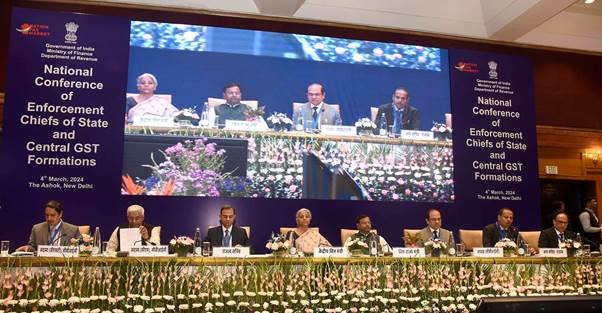
       

      Union Minister of State for Finance Shri Pankaj Chaudhary; Shri Sanjay Malhotra, Secretary, Department of Revenue, Ministry of Finance; Shri Sanjay Kumar Agarwal, Chairman, Central Board of Indirect Taxes and Customs (CBIC); other senior officers of the Department of Revenue, GST Enforcement Chiefs of the States and Central GST authorities, CEO and representative of GSTN, other heads of enforcement like the Chairman Central Board of Direct Taxes (CBDT), Director, Directorate of Enforcement (ED), Director Central Narcotics Bureau (NCB); and DG, Central Economic Intelligence Bureau (CEIB) were also present at the occasion.

      In her address on the occasion, the Union Finance Minister commended the untiring efforts of both the Centre and States GST formations since 2017 in making the GST a reliable, goal-oriented and capable system by leveraging technology.
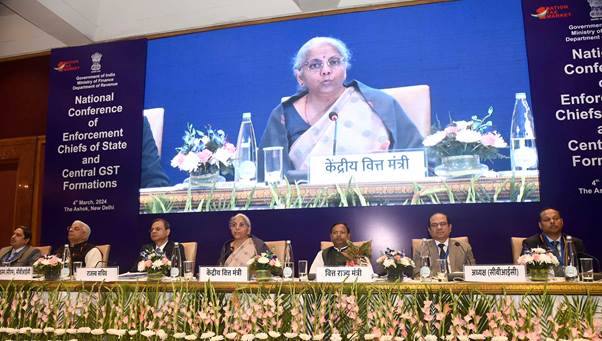
      The Union Finance Minister urged all the GST formations to leverage technology to plug the loopholes as well provide better taxpayer services. Highlighting the importance of innovation, the Union Finance Minister advocated for sharing of emerging best practices, emphasising the need for seamless coordination across States in the larger national interest.

      Further, Smt. Sitharaman stressed on the significance of holding such meetings regularly among enforcement chiefs of Centre and States, and to leverage this platform for discussing obstacles, exchanging successful strategies, and collectively advance towards a more robust and harmonious tax infrastructure.

      The Union Finance Minister also stressed that clarity on classification related issues should be looked into at the earliest through appropriate channels.

      The Union Finance Minister said that the past 10 years under the leadership of Prime Minister Shri Narendra Modi have shown that systems can be cleansed and made more effective through persistent efforts.

      Smt. Sitharaman exhorted the GST officials to engage with stakeholders to understand their concerns, enhance compliance, streamline processes, and work collaboratively towards making the tax system more transparent and efficient.

      Appreciating the initiative of organising this conference, Shri Chaudhary said that it will help to streamline the various issues related to indirect tax enforcement and also help in developing strategies for oncoming challenges through brainstorming during the conference.
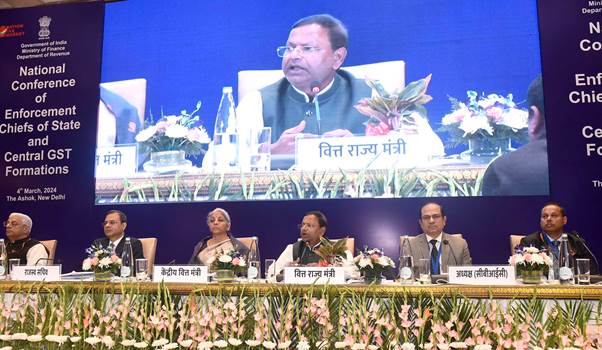
      Hailing GST as a big reform in India, Shri Chaudhary said that GST has simplified indirect taxation and brought down the effective tax rate, thereby made lives of people easier. Shri Chaudhary exhorted the GST formations to work towards facilitating more and more taxpayers.

      Citing the multi-fold increase in GST collections, Shri Chaudhary appreciated the contribution of the GST authorities in achieving the vision of Prime Minister towards achieving ‘Sabka Saath, Sabka Vikas’. He credited the leadership of Prime Minister and Finance Minister in propelling India's economic journey from fragile five in 2014 to top five now. Shri Chaudhary expressed optimism about achieving a monthly target of Rs. 2 lakh crore in GST revenue soon.

      In his address on the occasion, Shri Sanjay Malhotra, Revenue Secretary emphasised the crucial role of enforcement in ensuring the success of the GST system. Shri Malhotra outlined key priorities - targeting high-risk areas, combating tax evaders, balancing enforcement with taxpayer rights, strengthening collaboration between central and state authorities, and gathering feedback for improvement in policy and technological interventions.
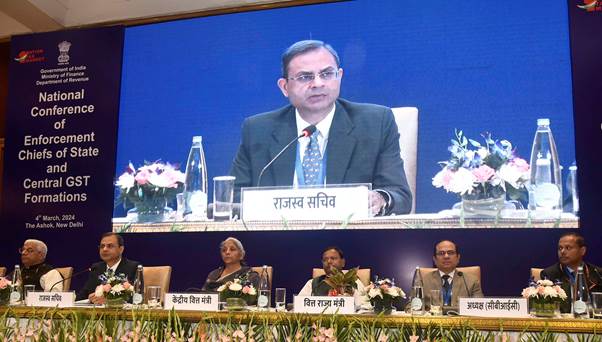
      Setting the context of the one-day conference, Shri Sanjay Kumar Agarwal, CBIC Chairman said that fake entities and GST evasion not only erode our national revenue but also distort fair competition and fuel an underground economy. He highlighted the importance of strong data analytics and use of technology and the need to stay ahead of the perpetrators of GST evasion. He reminded the officers to follow the instructions issued by CBIC in respect of procedure to be followed during enforcement action.
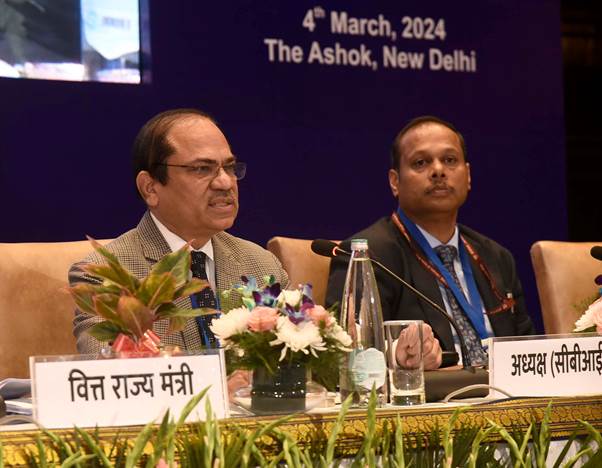
      In his welcome address, Additional Secretary, Revenue, highlighted this platform's unique potential for fostering collaboration and sharing best practices in GST enforcement, bringing together Central and State GST authorities.

      During the one-day conference, various presentations were also made by the GST formations. As per data presented by GST Council Secretariat, the nationwide crackdown on fake registrations and bogus billing from May 2023 alone has resulted in detection of ITC tax evasion of Rs. 49,623 crore involving 31,512 bogus firms. CBIC presented that it has detected fake ITC evasion of Rs.1,14,755 crore from the year 2020 till date.

      Maharashtra State GST showcased the real time monitoring dashboard of suspected non-genuine tax payers (NGTPs). As on 29th February 2024, State has identified 41,601 suspected NGTPs out of which 6,034 NGTPs were detected. It was further highlighted that detection was based on various intelligence gathered during registration, e-way bills and inputs from CBIC/other states and outlined the steps taken to improve detection rate at an early stage.

      During the focussed thematic sessions, the delegates from Central and State GST formations discussed various issues through in-depth discussions such as GST evasion typologies, preferred methods, and prevalent sectors, importance of collaborative efforts, need to utilize technology effectively, not only to detect existing fraudulent behavior but also to proactively prevent it by identifying high-risk taxpayers.

      Participants deliberated on addressing the menace of fake invoicing and its associated issues like money laundering, identity theft, and circular trading. Best practices and deterrent actions implemented by Directorate General of GST Intelligence were also shared.
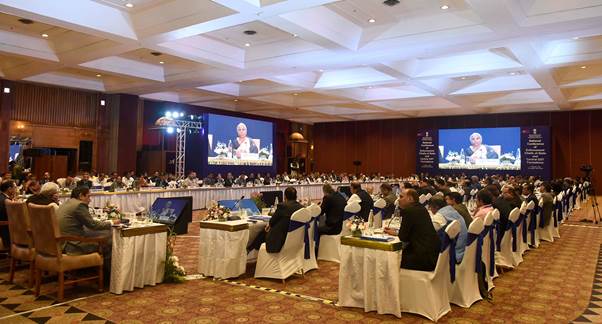
      The conference discussed navigating legal and operational challenges faced by enforcement authorities while ensuring minimal disruption for businesses. It was highlighted that CBIC and DGGI have issued instructions emphasising the need to have more taxpayer-friendly approach to GST enforcement, focusing on avoiding unnecessary audits on issues involving prevalent trade practices and prioritising evidence-based inquiries. It also advocates for considering location convenience and requesting information formally through letters instead of using summons.

      GSTN and DG Systems, CBIC outlined the various analytical tools available to the tax officers to detect risky taxpayers and combat GST evasion. Discussion was also centred around ways of streamlining the tools and to make them available to all GST enforcement formations. DG Analytics and Risk Management showcased risk analytical tool to detect potential GST evaders early in the cycle even before filing of first return.

      Gujarat highlighted the recent success of GST Seva Kendras in reducing the number of fake registrations. The recent case involving fake registration wherein 20 people have been arrested under Gujarat Control of Terrorism and Organised Crime Act, 2015 was also highlighted as a case study of best practice.

      Karnataka highlighted unique case typologies such as bill trading in services sector and mild steel scrap, misclassification etc. West Bengal highlighted the benefits of establishing a cyber forensic lab aiding investigation of GST frauds. Uttarakhand, Sikkim and Andhra Pradesh also presented their best practices in GST enforcement.

      The conference facilitated experience sharing and knowledge transfer between various states and the central government. Participants reviewed past enforcement actions, extracted valuable learnings, and explored future work areas for tax enforcement officers.

      Based on the positive feedback, the conference established the need for regular experience sharing. It was decided to conduct the National Conference of Enforcement Chiefs of State and Central GST Formations bi-annually moving forward.

      Topics

      ActsIncome Tax
