Commercial vehicle depreciation, scientifically determined warranty provisions and exempt-income disallowances were resolved in favour of the taxpayer...
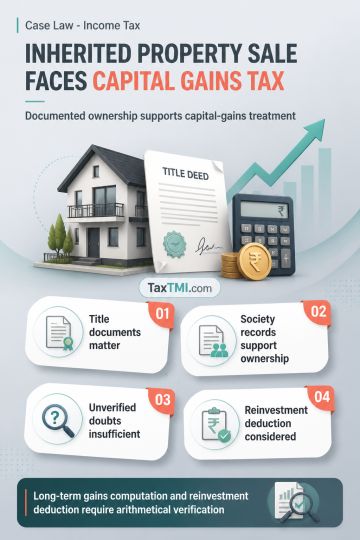
Inherited property sale proceeds require capital-gains treatment where ownership is supported by evidence, not suspicion or unverified signature doubt...
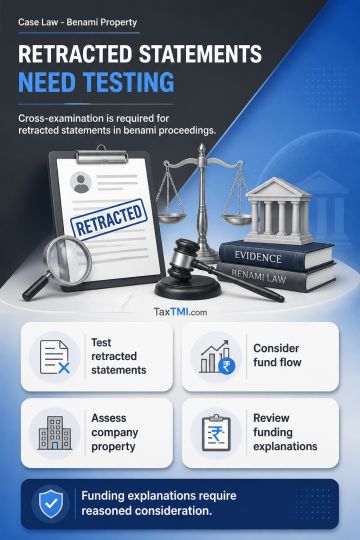
Cross-examination of retracted statements is essential where foundational evidence supports a benami allegation and documented funding explanations re...
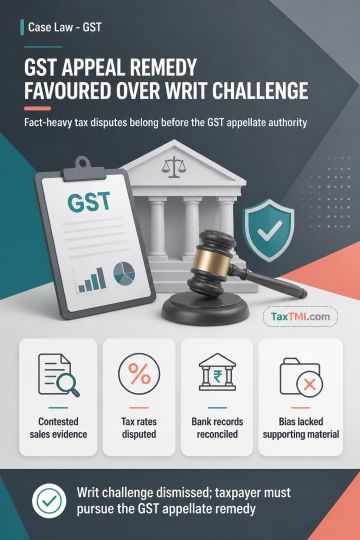
The High Court declined to entertain the writ petition under Article 226 because the challenge to the search authorization, stock discrepancy assessment, and penalty order involved disputed factual matters better examined under the GST statutory framework. Applying the rule that an aggrieved person should ordinarily pursue the remedy created by statute, the Court held that an effective appellate remedy was available and interference in writ jurisdiction was unwarranted. The petitioner was left to file an appeal and was granted liberty to raise all legal and factual grounds, including a request for condonation of delay for the period spent in prosecuting the writ petition.
The High Court declined to entertain the writ petition under Article 226 because the challenge to the search authorization, stock discrepancy assessment, and penalty order involved disputed factual matters better examined under the GST statutory framework. Applying the rule that an aggrieved person should ordinarily pursue the remedy created by statute, the Court held that an effective appellate remedy was available and interference in writ jurisdiction was unwarranted. The petitioner was left to file an appeal and was granted liberty to raise all legal and factual grounds, including a request for condonation of delay for the period spent in prosecuting the writ petition.
Note: It is a system-generated summary and is for quick reference only.
 TaxTMI
  TaxTMI
 of 4811















 Join Channel