Donor-directed corpus contributions retain capital character despite exemption claims under section 10(23C)(vi), preventing their treatment as taxable...
Enhanced tax-audit threshold applies where banking records establish compliant non-cash receipts and payments, eliminating penalty exposure for audit ...
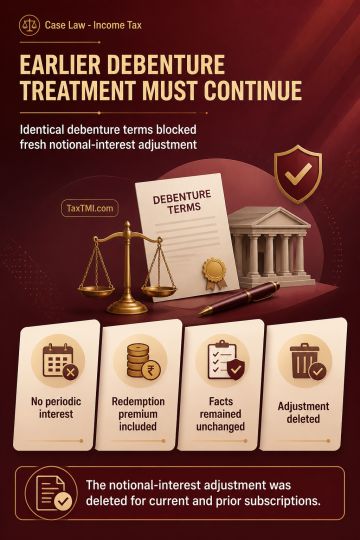
Transfer pricing consistency protects identical non-interest-bearing debenture terms from a later notional-interest adjustment without valid statutory...
Rectification of debatable deduction claims cannot reverse scrutiny-approved co-operative society interest income deductions as apparent record errors...
Cash-method accounting bars presumptive interest taxation, while unsupported securities and share-trading additions require reliable material and veri...
Page of 4814
Press 'Enter' after typing page number.
181 to 200 of 96262 Results
❮
❯
❯❯
0 / 200
Expand Note
Add to Folder
No Folders have been created
+
Are you sure you want to delete "My most important" ?
For proceedings after an assessee's death, the governing expression is legal representative, not legal heir, and it extends beyond succession-law heirs to persons representing or intermeddling with the estate. On that basis, service of notice on the petitioner in his declared representative capacity was valid, and he could not later challenge it merely because he was not a Class I heir. However, where reassessment was initiated by invoking the extended limitation period, sanction had to be obtained from the authority specified under Section 151(ii). Approval granted by the Principal Commissioner instead of the Principal Chief Commissioner did not satisfy the statutory requirement, so the reassessment notice was quashed for want of competent approval.
For proceedings after an assessee's death, the governing expression is legal representative, not legal heir, and it extends beyond succession-law heirs to persons representing or intermeddling with the estate. On that basis, service of notice on the petitioner in his declared representative capacity was valid, and he could not later challenge it merely because he was not a Class I heir. However, where reassessment was initiated by invoking the extended limitation period, sanction had to be obtained from the authority specified under Section 151(ii). Approval granted by the Principal Commissioner instead of the Principal Chief Commissioner did not satisfy the statutory requirement, so the reassessment notice was quashed for want of competent approval.
Note: It is a system-generated summary and is for quick reference only.
 TaxTMI
  TaxTMI
 of 4814


















 Join Channel