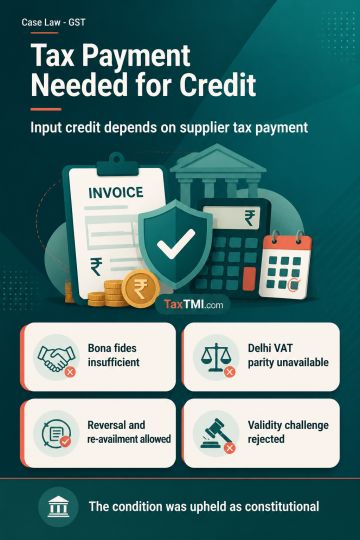
Input tax credit conditions remain constitutionally valid, with eligible recipient claims considered under GST circulars and retrospective filing dead...
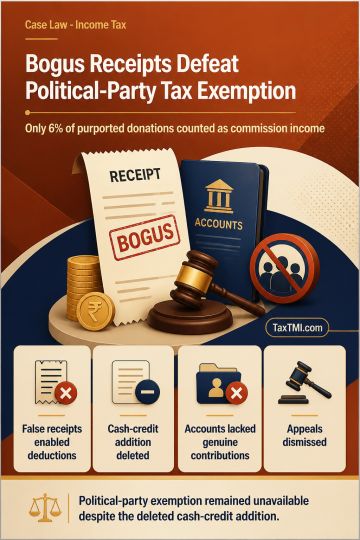
Bogus donation receipts justified commission income assessment and defeated political-party tax exemption for inaccurate accounts and reporting failur...
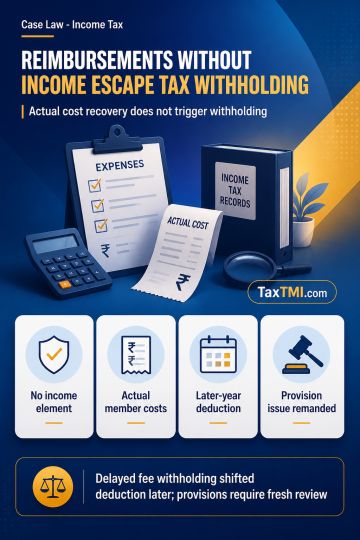
Pure reimbursement without income element escapes tax withholding, while delayed withholding and unsupported provisions face deferred or renewed scrut...
Public benefit requirement defeats charitable registration where residents' association services are reciprocal, member-only facilities governed by mu...
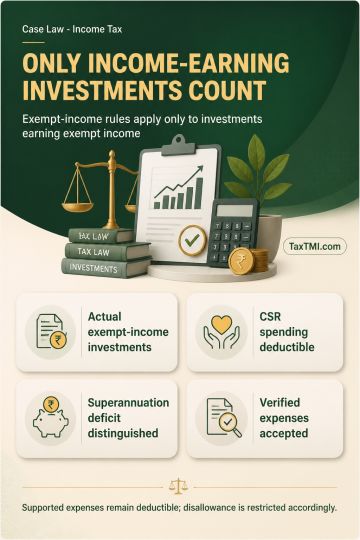
Exempt-income expenditure disallowance is confined to investments that actually generated exempt income, while supported business expenses remain dedu...
The ITAT upheld deletion of transfer pricing adjustments on captive power supplied to eligible manufacturing units for section 80-IA purposes, applying the Supreme Court principle that the relevant market value is the rate charged by the State Electricity Board or distribution company to industrial consumers, not the regulated or contracted surplus-power rate. It accepted the annual landed cost paid by the manufacturing units as the proper benchmark and rejected the Revenue's challenge. The Tribunal also sustained allocation of common head office expenses on the fixed-asset ratio, holding that the Revenue had followed the same method in earlier years and no change in facts or law justified a profitability-based allocation. All four Revenue appeals were dismissed.
The ITAT upheld deletion of transfer pricing adjustments on captive power supplied to eligible manufacturing units for section 80-IA purposes, applying the Supreme Court principle that the relevant market value is the rate charged by the State Electricity Board or distribution company to industrial consumers, not the regulated or contracted surplus-power rate. It accepted the annual landed cost paid by the manufacturing units as the proper benchmark and rejected the Revenue's challenge. The Tribunal also sustained allocation of common head office expenses on the fixed-asset ratio, holding that the Revenue had followed the same method in earlier years and no change in facts or law justified a profitability-based allocation. All four Revenue appeals were dismissed.
Note: It is a system-generated summary and is for quick reference only.
 TaxTMI
 of 4807














 Join Channel


 TaxTMI