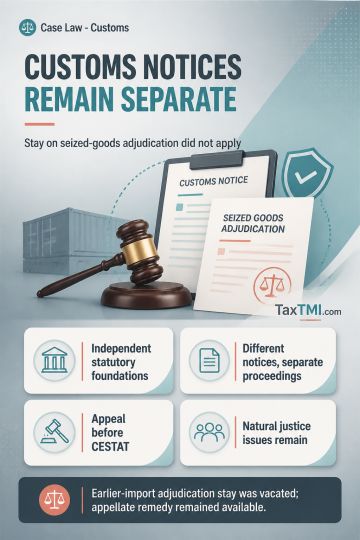
Independent show-cause notices remain separate proceedings, while customs adjudication challenges should ordinarily follow the statutory appellate rem...
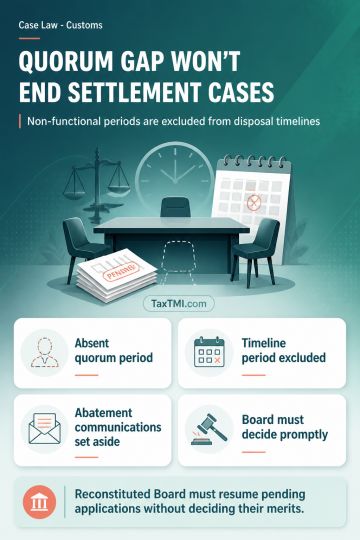
Institutional incapacity in customs settlement proceedings excludes non-functional quorum periods from statutory disposal timelines, preventing automa...
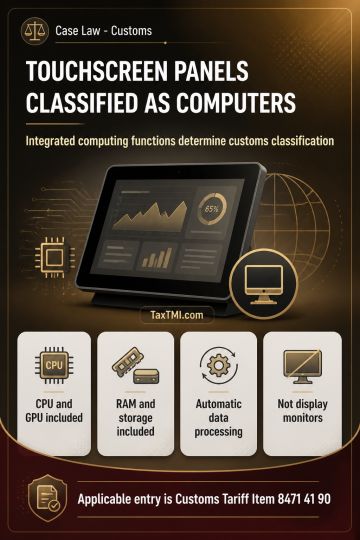
Interactive touchscreen panels with integrated computing functions fall under automatic data-processing machines rather than display monitors for cust...
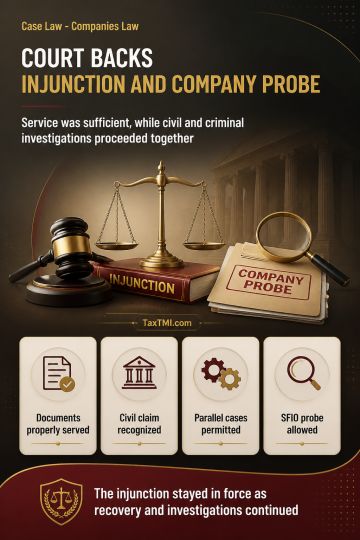
Ex parte injunction service requirements were substantially met, while civil recovery and SFIO investigation into provident fund defalcation continued...
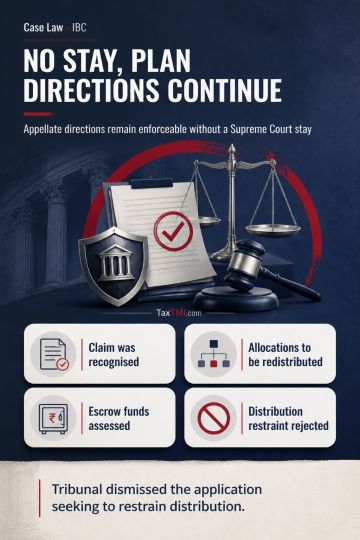
Enforcement of resolution-plan directions continues without a Supreme Court stay, preventing suspension of redistribution and escrowed-fund distributi...
Third-party ownership claims over attached property require Special Court adjudication where purchasers lack registered sale deeds and bona fides rema...
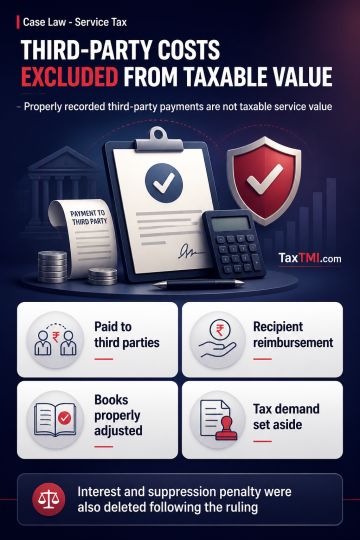
Pure-agent reimbursements in clearing and forwarding services are excluded from taxable value when qualifying third-party payments are properly record...
The ITAT upheld deletion of transfer pricing adjustments on captive power supplied to eligible manufacturing units for section 80-IA purposes, applying the Supreme Court principle that the relevant market value is the rate charged by the State Electricity Board or distribution company to industrial consumers, not the regulated or contracted surplus-power rate. It accepted the annual landed cost paid by the manufacturing units as the proper benchmark and rejected the Revenue's challenge. The Tribunal also sustained allocation of common head office expenses on the fixed-asset ratio, holding that the Revenue had followed the same method in earlier years and no change in facts or law justified a profitability-based allocation. All four Revenue appeals were dismissed.
The ITAT upheld deletion of transfer pricing adjustments on captive power supplied to eligible manufacturing units for section 80-IA purposes, applying the Supreme Court principle that the relevant market value is the rate charged by the State Electricity Board or distribution company to industrial consumers, not the regulated or contracted surplus-power rate. It accepted the annual landed cost paid by the manufacturing units as the proper benchmark and rejected the Revenue's challenge. The Tribunal also sustained allocation of common head office expenses on the fixed-asset ratio, holding that the Revenue had followed the same method in earlier years and no change in facts or law justified a profitability-based allocation. All four Revenue appeals were dismissed.
Note: It is a system-generated summary and is for quick reference only.
 TaxTMI
  TaxTMI
 of 4809










 Join Channel