Food supplement classification requires common parlance and authoritative tests, preventing treatment as proprietary Ayurvedic medicines without suppo...
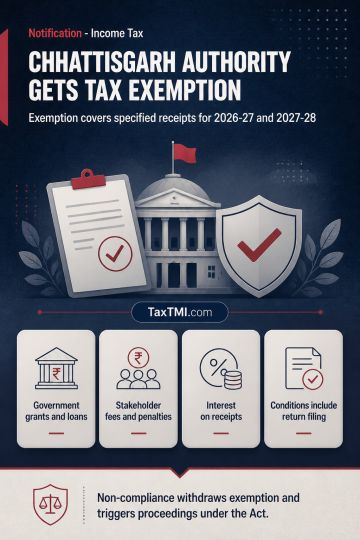
Specified regulatory authority income receives conditional tax exemption, subject to non-commercial activity, unchanged income character, and return f...
Tax exemption for regulatory authority income applies retrospectively, subject to non-commercial activity, unchanged income sources, and return-filing...
Input tax credit conditions remain constitutionally valid, with eligible recipient claims considered under GST circulars and retrospective filing dead...
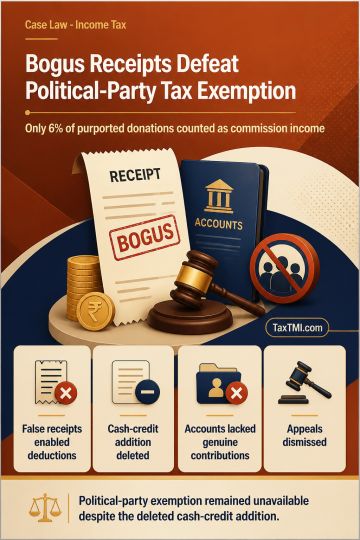
Bogus donation receipts justified commission income assessment and defeated political-party tax exemption for inaccurate accounts and reporting failur...
Page of 4811
Press 'Enter' after typing page number.
901 to 920 of 96208 Results
❮
❯
❯❯
0 / 200
Expand Note
Add to Folder
No Folders have been created
+
Are you sure you want to delete "My most important" ?
The Tribunal addressed double disallowance of a subsidiary investment write-off by noting that the amount had already been added back in the return, so the Assessing Officer had duplicated the disallowance; the duplicate addition was to be deleted and the allowed deduction then given effect. It also accepted that fresh claims may be entertained on appeal and excluded broken period interest on debentures because the income had only accrued notionally and was already absorbed in the later capital gains on sale, avoiding double taxation. A dividend treaty-rate claim for non-resident shareholders was remanded for lack of foundational treaty-eligibility and tax-treatment material, and the challenge to initiation of penalty proceedings was dismissed as premature.
The Tribunal addressed double disallowance of a subsidiary investment write-off by noting that the amount had already been added back in the return, so the Assessing Officer had duplicated the disallowance; the duplicate addition was to be deleted and the allowed deduction then given effect. It also accepted that fresh claims may be entertained on appeal and excluded broken period interest on debentures because the income had only accrued notionally and was already absorbed in the later capital gains on sale, avoiding double taxation. A dividend treaty-rate claim for non-resident shareholders was remanded for lack of foundational treaty-eligibility and tax-treatment material, and the challenge to initiation of penalty proceedings was dismissed as premature.
Note: It is a system-generated summary and is for quick reference only.
 TaxTMI
  TaxTMI
 of 4811





















 Join Channel