Online bond platforms may offer overseas-regulated products and tax-specific bonds subject to disclosures, compliance safeguards and revised complianc...
Corporate guarantee valuation permits actual ascertainable commission while barring retroactive application and extended-period penalties for bona fid...
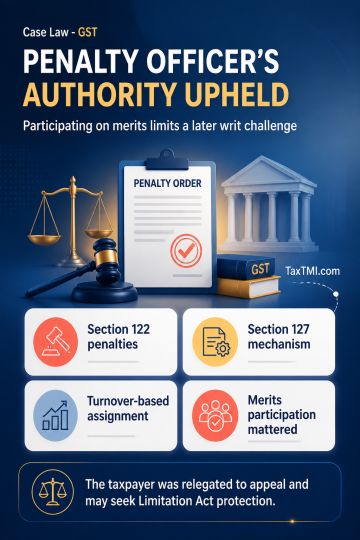
Proper-officer jurisdiction under UPGST penalty provisions upheld; participation on merits prevents bypassing the statutory appellate remedy through w...
Transitioned CENVAT credit may validly satisfy mandatory pre-deposit requirements for legacy service tax appeals through Electronic Credit Ledger debi...
Building-plan sanction charges require statutory authority; unauthorised fees and GST were quashed, while labour cess must follow prescribed collectio...
Pure-agent exclusion fails where hotel booking facilitators receive third-party services themselves, making entire customer consideration taxable as r...
The Tribunal addressed double disallowance of a subsidiary investment write-off by noting that the amount had already been added back in the return, so the Assessing Officer had duplicated the disallowance; the duplicate addition was to be deleted and the allowed deduction then given effect. It also accepted that fresh claims may be entertained on appeal and excluded broken period interest on debentures because the income had only accrued notionally and was already absorbed in the later capital gains on sale, avoiding double taxation. A dividend treaty-rate claim for non-resident shareholders was remanded for lack of foundational treaty-eligibility and tax-treatment material, and the challenge to initiation of penalty proceedings was dismissed as premature.
The Tribunal addressed double disallowance of a subsidiary investment write-off by noting that the amount had already been added back in the return, so the Assessing Officer had duplicated the disallowance; the duplicate addition was to be deleted and the allowed deduction then given effect. It also accepted that fresh claims may be entertained on appeal and excluded broken period interest on debentures because the income had only accrued notionally and was already absorbed in the later capital gains on sale, avoiding double taxation. A dividend treaty-rate claim for non-resident shareholders was remanded for lack of foundational treaty-eligibility and tax-treatment material, and the challenge to initiation of penalty proceedings was dismissed as premature.
Note: It is a system-generated summary and is for quick reference only.
 TaxTMI
  TaxTMI
 of 4816

















 Join Channel


