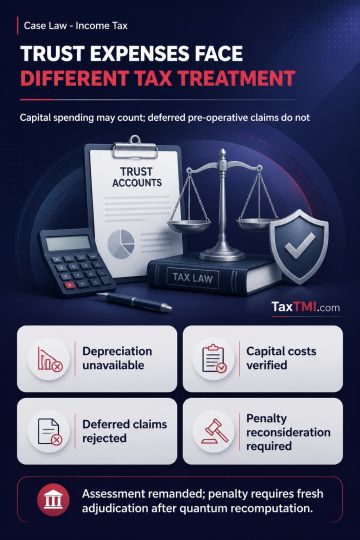
Charitable trust income application permits verified capital expenditure but rejects deferred pre-operative claims and requires reconsideration of con...
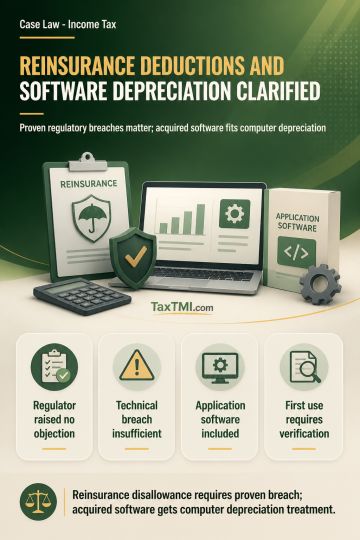
Reinsurance premium deductions require established regulatory breaches, while independently acquired software qualifies within the computer depreciati...
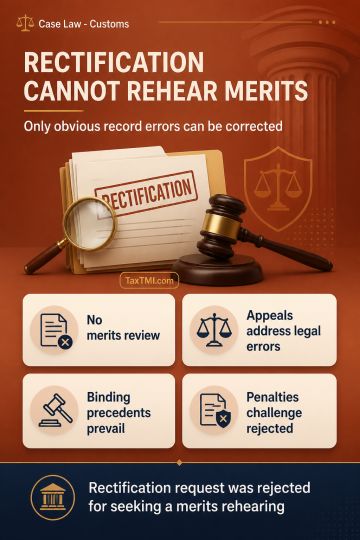
Rectification of mistake remains limited to self-evident record errors, preventing merits review through miscellaneous applications and preserving fin...
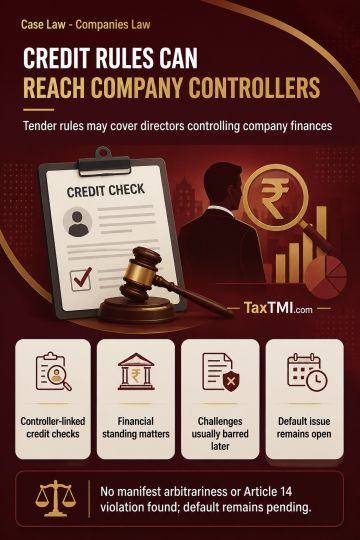
Tender creditworthiness conditions may extend to de facto Promoter Directors, with post-participation challenges generally barred absent arbitrariness...
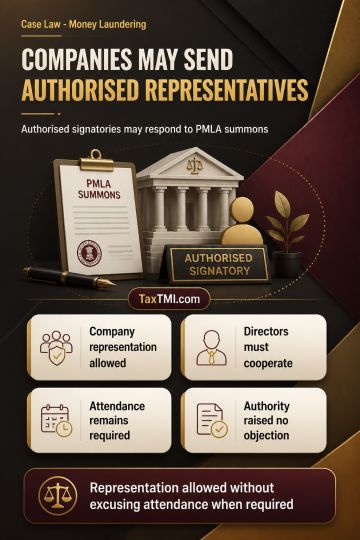
Corporate representation in PMLA summons proceedings permitted through an authorised signatory, subject to directors' continuing cooperation and atten...
Trade receivables under TNMM were treated as integral to the international transactions, so a separate notional interest adjustment was deleted where working capital adjustment had already captured the receivables impact and no distinct financing arrangement was shown. Goodwill arising on amalgamation was accepted as a depreciable acquired intangible, and depreciation was allowed. Product registration and regulatory approval were held to be revenue in nature because they facilitated existing business operations rather than creating a capital asset. For section 80-IC, the Tribunal upheld full deduction on manufacturing profits without hypothetical brand-royalty allocation, included scrap income as derived from manufacturing, and confirmed 100% deduction after substantial expansion in line with Aarham Softronics.
Trade receivables under TNMM were treated as integral to the international transactions, so a separate notional interest adjustment was deleted where working capital adjustment had already captured the receivables impact and no distinct financing arrangement was shown. Goodwill arising on amalgamation was accepted as a depreciable acquired intangible, and depreciation was allowed. Product registration and regulatory approval were held to be revenue in nature because they facilitated existing business operations rather than creating a capital asset. For section 80-IC, the Tribunal upheld full deduction on manufacturing profits without hypothetical brand-royalty allocation, included scrap income as derived from manufacturing, and confirmed 100% deduction after substantial expansion in line with Aarham Softronics.
Note: It is a system-generated summary and is for quick reference only.
 TaxTMI
 of 4805




 Join Channel


 TaxTMI
