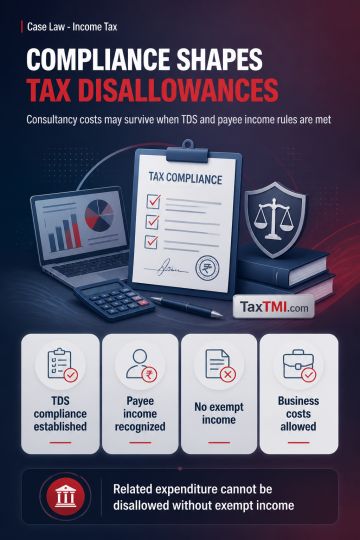
Tax deduction compliance and payee income recognition govern consultancy disallowance, while no exempt income prevents related expenditure disallowanc...
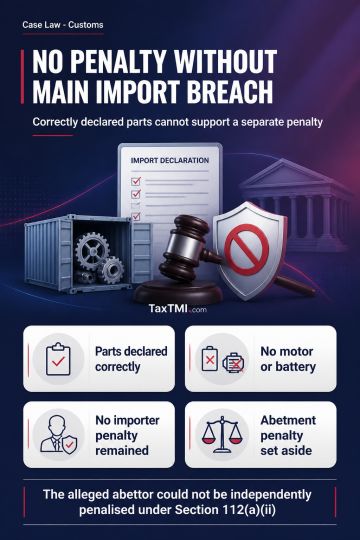
Derivative abetment liability fails when correctly declared imported components establish no underlying improper importation by the principal importer...
Tax exemption for regulatory authority income applies retrospectively, subject to non-commercial activity, unchanged income sources, and return filing...
Penalty under section 112(b) requires proof that a person acquired possession of or dealt with goods liable to confiscation, together with knowledge or belief that the goods were so liable. The Tribunal held that this standard was not met where the appellants consistently maintained they had only supplied fabricated material and scrap to an SEZ unit, had no purchase transactions with it, and were manufacturers rather than traders. It also held that statements recorded under section 108 could not be relied on because the procedure under section 138B had not been followed. The penalties were therefore set aside.
Penalty under section 112(b) requires proof that a person acquired possession of or dealt with goods liable to confiscation, together with knowledge or belief that the goods were so liable. The Tribunal held that this standard was not met where the appellants consistently maintained they had only supplied fabricated material and scrap to an SEZ unit, had no purchase transactions with it, and were manufacturers rather than traders. It also held that statements recorded under section 108 could not be relied on because the procedure under section 138B had not been followed. The penalties were therefore set aside.
Note: It is a system-generated summary and is for quick reference only.
 TaxTMI
  TaxTMI
 of 4811







 Join Channel