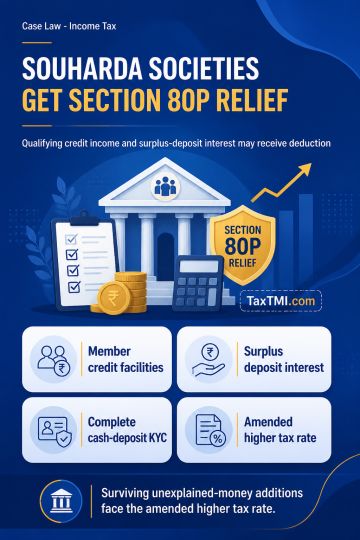
Section 80P deduction covers Souharda credit societies, including qualifying surplus-deposit interest, subject to member KYC verification for cash dep...
Transfer-pricing benchmarking and capital-receipt principles sustained taxpayer relief, while unsupported property-advance write-offs remained disallo...
Pre-existing operational debt disputes require genuine evidence, while undirected running-account payments may be appropriated on a first-in-first-out...
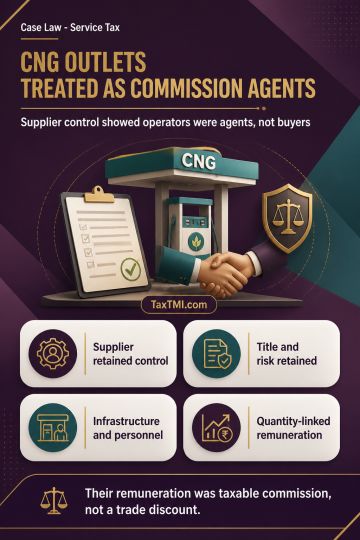
Agency in CNG distribution makes outlet operators commission agents, rendering taxable Business Auxiliary Service rather than purchasing goods for res...
Page of 4809
Press 'Enter' after typing page number.
1121 to 1140 of 96174 Results
❮
❯
❯❯
0 / 200
Expand Note
Add to Folder
No Folders have been created
+
Are you sure you want to delete "My most important" ?
Non-annexure of invoices with a Section 8 demand notice did not invalidate a Section 9 insolvency claim where the operational debt arose from the contract itself and minimum royalty could be computed from the agreement terms. The Tribunal held that Rule 5 permits a demand notice in Form 3 without enclosing an invoice, so rejection of the application on that ground was erroneous. It further found no real pre-existing dispute, as the corporate debtor had acknowledged liability and the correspondence showed only reconciliation and quantification issues. Operational debt and default were therefore established, the appeal was allowed, and the debtor was given time to pay the admitted amount failing which insolvency admission could follow.
Non-annexure of invoices with a Section 8 demand notice did not invalidate a Section 9 insolvency claim where the operational debt arose from the contract itself and minimum royalty could be computed from the agreement terms. The Tribunal held that Rule 5 permits a demand notice in Form 3 without enclosing an invoice, so rejection of the application on that ground was erroneous. It further found no real pre-existing dispute, as the corporate debtor had acknowledged liability and the correspondence showed only reconciliation and quantification issues. Operational debt and default were therefore established, the appeal was allowed, and the debtor was given time to pay the admitted amount failing which insolvency admission could follow.
Note: It is a system-generated summary and is for quick reference only.
 TaxTMI
  TaxTMI
 of 4809













 Join Channel