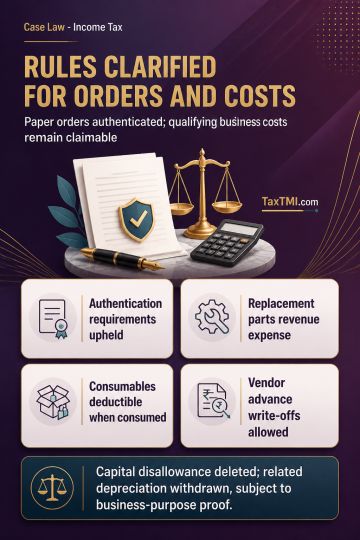
Authentication of paper assessment orders upheld, while qualifying repairs, consumables and vendor advance write-offs remain deductible business claim...
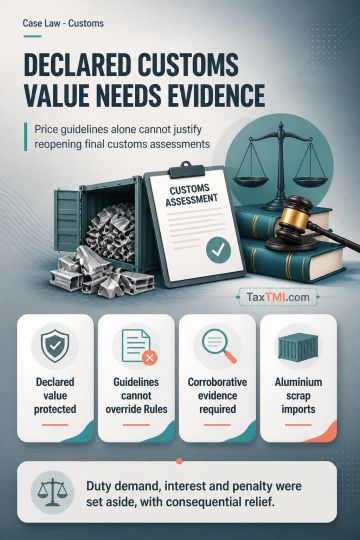
Transaction value cannot be rejected solely on non-statutory valuation guidelines without corroborative evidence supporting reassessment of final cust...
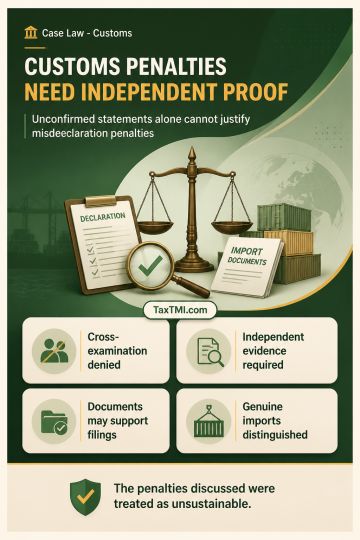
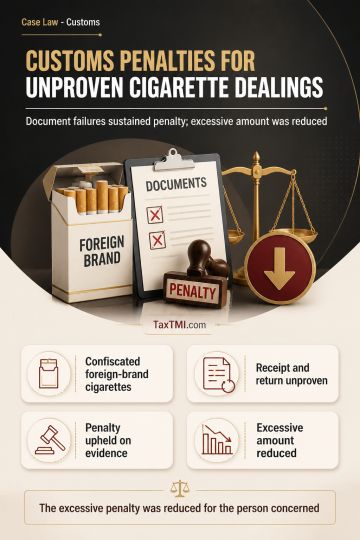
Cross-examination rights and corroborated evidence limit customs penalties for misdeclaration in genuine import transactions involving documented clea...
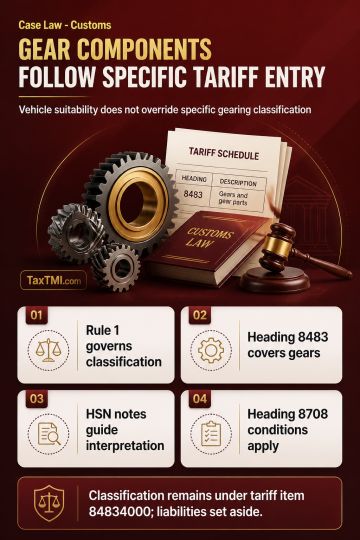
Tariff classification of vehicle gear components follows the specific gearing entry, displacing motor-vehicle parts classification and related liabili...
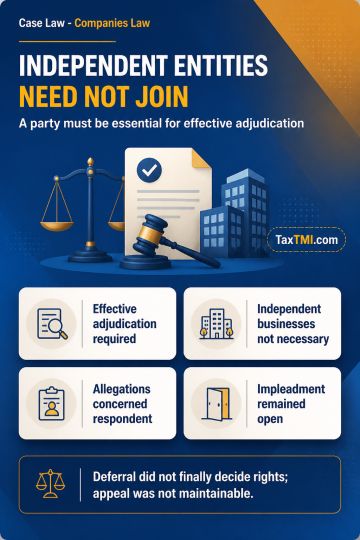
Necessary-party requirements limit impleadment of independent entities, while deferred consideration does not create an appealable adverse determinati...
Non-annexure of invoices with a Section 8 demand notice did not invalidate a Section 9 insolvency claim where the operational debt arose from the contract itself and minimum royalty could be computed from the agreement terms. The Tribunal held that Rule 5 permits a demand notice in Form 3 without enclosing an invoice, so rejection of the application on that ground was erroneous. It further found no real pre-existing dispute, as the corporate debtor had acknowledged liability and the correspondence showed only reconciliation and quantification issues. Operational debt and default were therefore established, the appeal was allowed, and the debtor was given time to pay the admitted amount failing which insolvency admission could follow.
Non-annexure of invoices with a Section 8 demand notice did not invalidate a Section 9 insolvency claim where the operational debt arose from the contract itself and minimum royalty could be computed from the agreement terms. The Tribunal held that Rule 5 permits a demand notice in Form 3 without enclosing an invoice, so rejection of the application on that ground was erroneous. It further found no real pre-existing dispute, as the corporate debtor had acknowledged liability and the correspondence showed only reconciliation and quantification issues. Operational debt and default were therefore established, the appeal was allowed, and the debtor was given time to pay the admitted amount failing which insolvency admission could follow.
Note: It is a system-generated summary and is for quick reference only.
 TaxTMI
  TaxTMI
 of 4811








 Join Channel


