Specified regulatory authority income receives conditional tax exemption, subject to non-commercial activity, unchanged income character, and return f...
Tax exemption for regulatory authority income applies retrospectively, subject to non-commercial activity, unchanged income sources, and return-filing...
Input tax credit conditions remain constitutionally valid, with eligible recipient claims considered under GST circulars and retrospective filing dead...
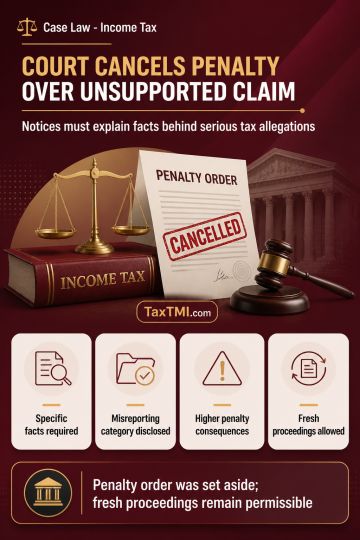
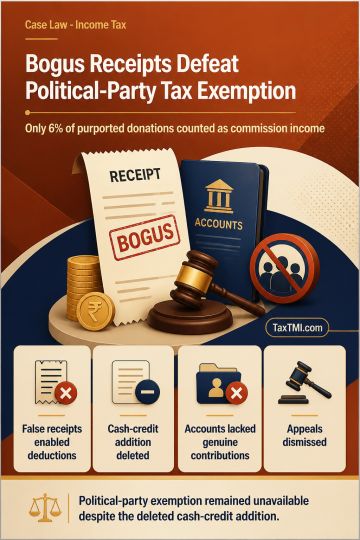
Bogus donation receipts justified commission income assessment and defeated political-party tax exemption for inaccurate accounts and reporting failur...
Pure reimbursement without income element escapes tax withholding, while delayed withholding and unsupported provisions face deferred or renewed scrut...
Public benefit requirement defeats charitable registration where residents' association services are reciprocal, member-only facilities governed by mu...
Prima facie material in the FIR and case diary showed involvement in offences under the Prevention of Corruption Act, and the Court held that custodial interrogation was necessary to confront the applicant with incriminating evidence. The allegations were treated as part of a serious economic offence involving a deep-rooted conspiracy and public funds, which weighed against discretionary anticipatory bail. The plea of parity failed because the earlier coordinate Bench order arose in a different factual setting, and parity with co-accused who had obtained regular bail after substantial custody was not comparable to an anticipatory bail claim. Anticipatory bail was therefore rejected.
Prima facie material in the FIR and case diary showed involvement in offences under the Prevention of Corruption Act, and the Court held that custodial interrogation was necessary to confront the applicant with incriminating evidence. The allegations were treated as part of a serious economic offence involving a deep-rooted conspiracy and public funds, which weighed against discretionary anticipatory bail. The plea of parity failed because the earlier coordinate Bench order arose in a different factual setting, and parity with co-accused who had obtained regular bail after substantial custody was not comparable to an anticipatory bail claim. Anticipatory bail was therefore rejected.
Note: It is a system-generated summary and is for quick reference only.
 TaxTMI
  TaxTMI
 of 4807

















 Join Channel