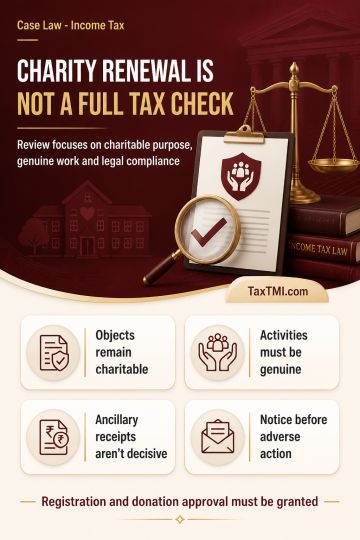
Charitable registration renewal cannot become an assessment of receipts, profitability or annual exemption compliance, requiring renewal and donation ...
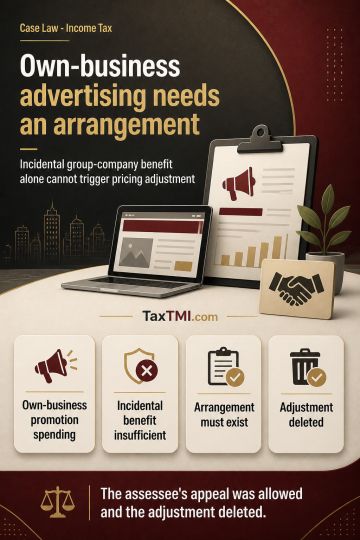
AMP expenditure for own business is not an international transaction without an associated-enterprise arrangement, eliminating transfer pricing adjust...
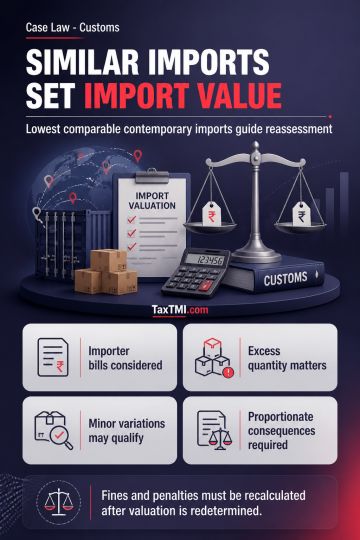
Customs valuation must use comparable contemporary imports, while confiscation fines and penalties require proportionate recalculation on reassessed v...
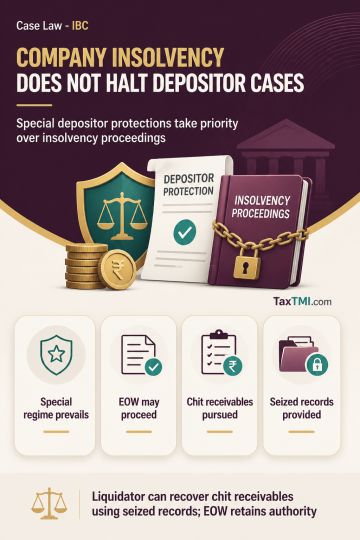
Depositor-protection proceedings prevail over corporate insolvency, while liquidators may recover chit receivables using copies of seized company reco...
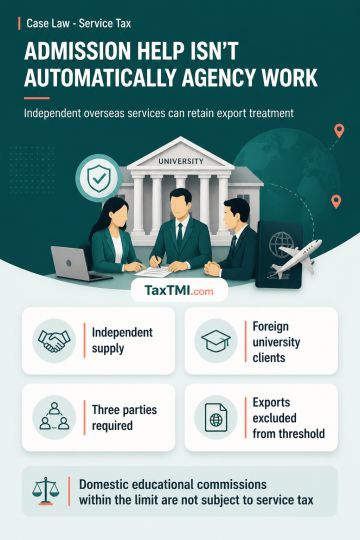
Intermediary service classification fails where overseas admission facilitation is supplied independently, preserving export treatment and small-provi...
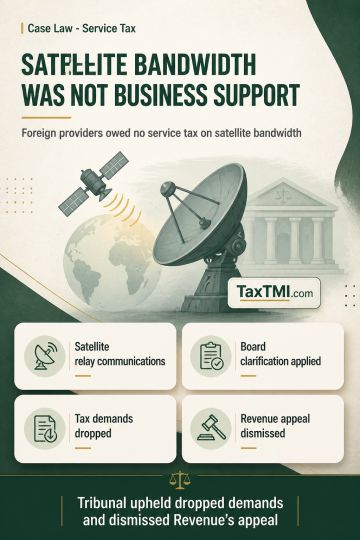
Satellite transponder bandwidth is telecommunication, not Business Support Service; foreign non-telegraph providers triggered no service tax liability...
A statutory maritime board was held to fall within charitable purpose as an institution advancing general public utility, because its port dues, vessel-related charges, cargo and land charges, and other user fees arose from statutory port development, regulation and allied functions under governmental control. Surplus, reserves, or private participation through concessions did not by themselves establish commercial activity, so exemption under sections 11 and 12 remained available. An impermissible investment under section 11(5) read with section 13(1)(d) was held to affect only the income relatable to the offending investment, not the entire exemption. Addition of tax deducted at source as separate income was deleted. Depreciation under section 11(6) required asset-wise factual verification where double deduction was not shown.
A statutory maritime board was held to fall within charitable purpose as an institution advancing general public utility, because its port dues, vessel-related charges, cargo and land charges, and other user fees arose from statutory port development, regulation and allied functions under governmental control. Surplus, reserves, or private participation through concessions did not by themselves establish commercial activity, so exemption under sections 11 and 12 remained available. An impermissible investment under section 11(5) read with section 13(1)(d) was held to affect only the income relatable to the offending investment, not the entire exemption. Addition of tax deducted at source as separate income was deleted. Depreciation under section 11(6) required asset-wise factual verification where double deduction was not shown.
Note: It is a system-generated summary and is for quick reference only.
 TaxTMI
  TaxTMI
 of 4814





 Join Channel


