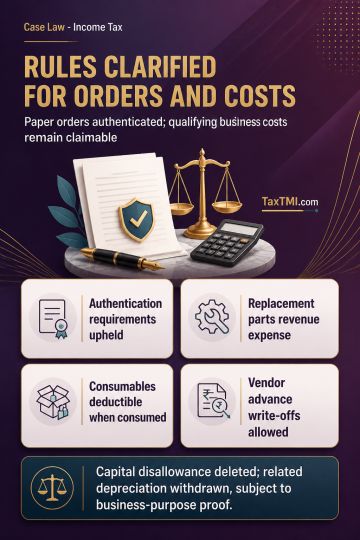
Authentication of paper assessment orders upheld, while qualifying repairs, consumables and vendor advance write-offs remain deductible business claim...
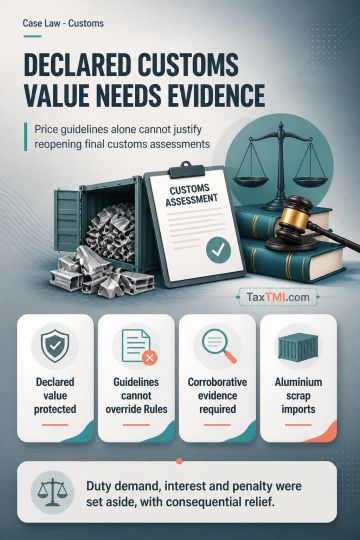
Transaction value cannot be rejected solely on non-statutory valuation guidelines without corroborative evidence supporting reassessment of final cust...
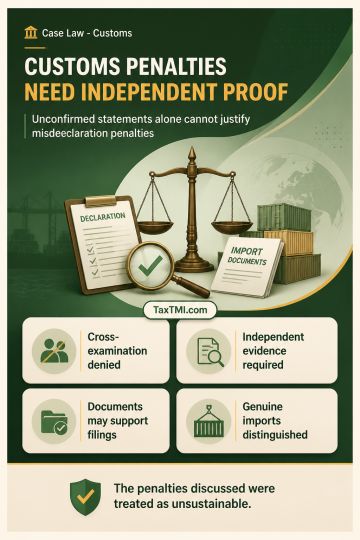
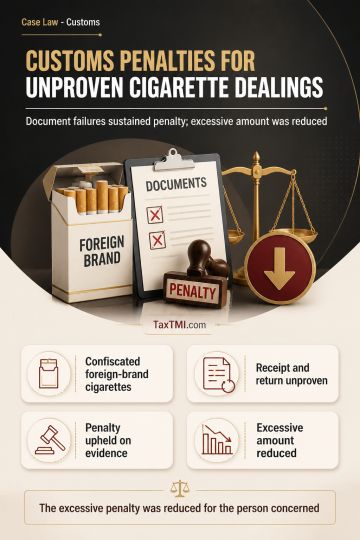
Cross-examination rights and corroborated evidence limit customs penalties for misdeclaration in genuine import transactions involving documented clea...
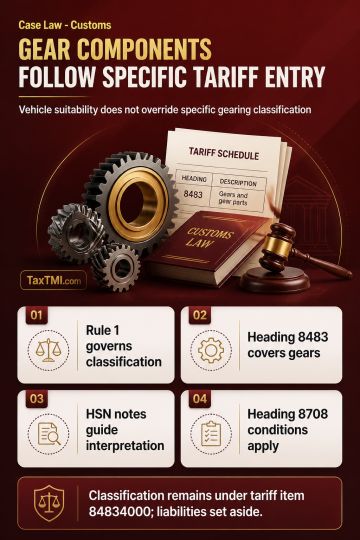
Tariff classification of vehicle gear components follows the specific gearing entry, displacing motor-vehicle parts classification and related liabili...
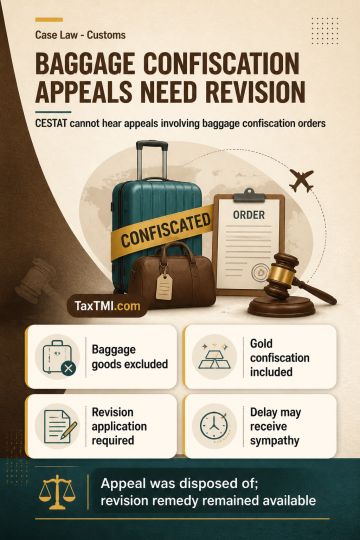
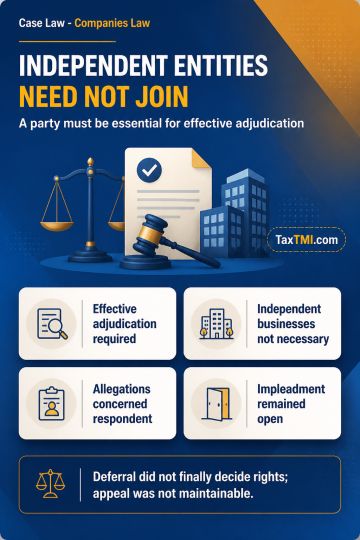
Necessary-party requirements limit impleadment of independent entities, while deferred consideration does not create an appealable adverse determinati...
ITAT held that disallowance of depreciation on a disclosed block...
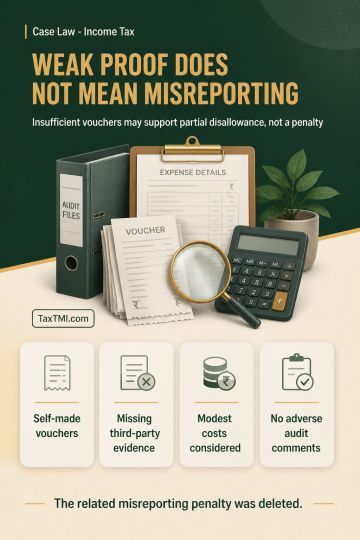
Depreciation and routine compliance expenses disallowance did not prove inaccurate particulars or misreporting; penalty sustained only on foreign travel.
Contents
Summary
Note
Bookmark
Share
✓ Copied successfully !
Print
Print Options
For full text, please login
Login to TaxTMI
Verification Pending
The Email Id has not been verified. Click on the link we have sent on
ITAT held that disallowance of depreciation on a disclosed block of assets did not, by itself, establish furnishing of inaccurate particulars or misreporting, because the claim was grounded in the books and the issue was one of allowability. Penalty was therefore deleted on depreciation, but sustained for foreign travelling expenses in A.Y. 2015-16 because no business activity or nexus was shown. For A.Ys. 2016-17, 2017-18 and 2018-19, penalties under section 271(1)(c) and section 270A were deleted, as routine compliance and administrative expenses, and a write-off, were not shown to be fictitious, bogus or based on suppressed facts; ad hoc or inadequate substantiation disallowed in quantum was insufficient to prove concealment.
ITAT held that disallowance of depreciation on a disclosed block of assets did not, by itself, establish furnishing of inaccurate particulars or misreporting, because the claim was grounded in the books and the issue was one of allowability. Penalty was therefore deleted on depreciation, but sustained for foreign travelling expenses in A.Y. 2015-16 because no business activity or nexus was shown. For A.Ys. 2016-17, 2017-18 and 2018-19, penalties under section 271(1)(c) and section 270A were deleted, as routine compliance and administrative expenses, and a write-off, were not shown to be fictitious, bogus or based on suppressed facts; ad hoc or inadequate substantiation disallowed in quantum was insufficient to prove concealment.
Note: It is a system-generated summary and is for quick reference only.
 TaxTMI
  TaxTMI
 of 4811










 Join Channel


