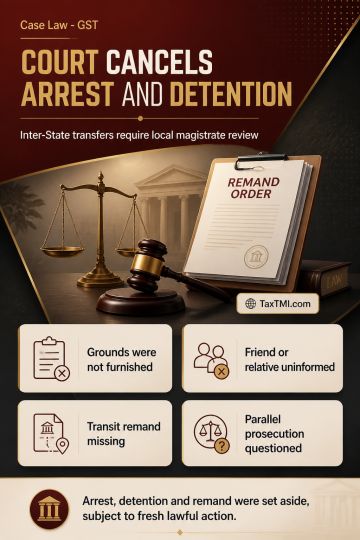
Arrest safeguards and transit remand requirements invalidated detention following inter-State transfer without communicated grounds or magistrate auth...
Arrest safeguards require disclosed grounds, relative intimation and transit remand, while duplicate prosecution under the CGST framework is unsustain...
Document Identification Number defects can invalidate GST assessments, with delayed challenges entertained conditionally where patent irregularities e...
Windmill commissioning evidence supported higher depreciation where grid connection and electricity generation proved operational use before the relev...
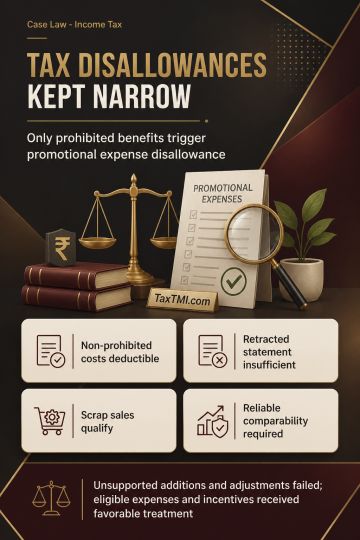
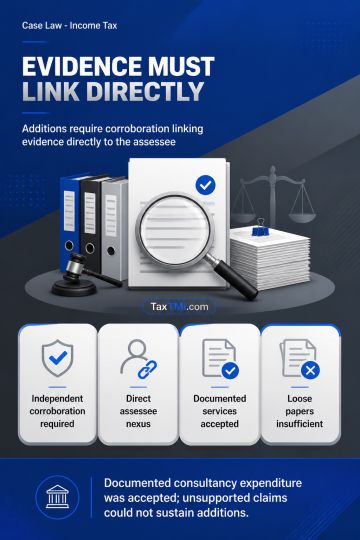
Pharmaceutical promotion and transfer-pricing comparability principles limited disallowances, while uncorroborated search allegations and unsupported ...
Business expenditure substantiation supports scrap credits, statutory payments and expense claims, while depreciation requires proof of actual busines...
A statutory religious body was treated as a body corporate engaged in business for GST purposes, and auctioning or tendering exclusive rights was characterised as a licensing arrangement and therefore a supply of services. GST was held payable on rights to collect offering-remnants and abandoned clothes, to perform rituals, and to operate toilets and washrooms, because the applicant was not itself supplying those services but granting commercial rights for consideration. Exemption was recognised for rights to harvest coconuts from temple lands as a service linked to agricultural operations, and for pooja item stalls as renting of precincts of a religious place, subject to notification conditions. Reverse charge did not apply to honorarium or sitting fees paid to the President and Members, but applied to legal services from advocates.
A statutory religious body was treated as a body corporate engaged in business for GST purposes, and auctioning or tendering exclusive rights was characterised as a licensing arrangement and therefore a supply of services. GST was held payable on rights to collect offering-remnants and abandoned clothes, to perform rituals, and to operate toilets and washrooms, because the applicant was not itself supplying those services but granting commercial rights for consideration. Exemption was recognised for rights to harvest coconuts from temple lands as a service linked to agricultural operations, and for pooja item stalls as renting of precincts of a religious place, subject to notification conditions. Reverse charge did not apply to honorarium or sitting fees paid to the President and Members, but applied to legal services from advocates.
Note: It is a system-generated summary and is for quick reference only.
 TaxTMI
  TaxTMI
 of 4809











 Join Channel


