Development agreements require legal possession or effective enjoyment for capital gains transfer; permissive possession and deferred consideration de...
Prolonged sterilisation of development rights supports capital-gains treatment, while business-income disallowances cannot govern capital-gains comput...
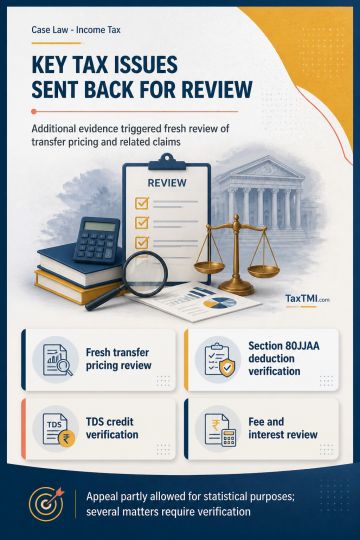
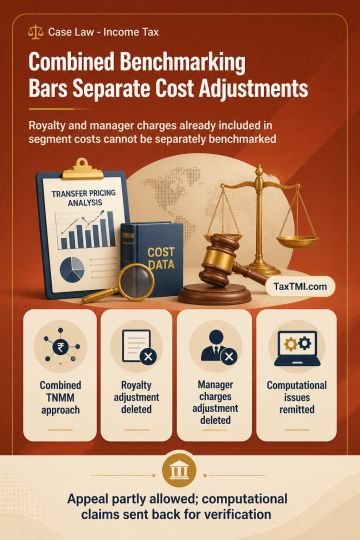
Additional evidence in transfer pricing dispute leads to fresh examination, while tax deductions, TDS credit, fee and refund interest require verifica...
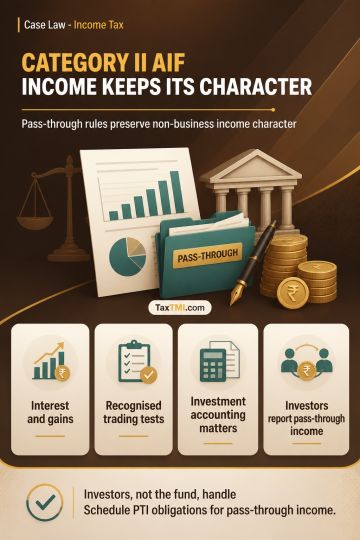
Category II AIF pass-through taxation preserves non-business income character; investment receipts cannot be reclassified without applying recognised ...
Under section 56(2)(viib), once an assessee adopts the prescribed DCF method under Rule 11UA for valuing unquoted equity shares, the Assessing Officer cannot discard that valuation merely because subsequent actual results differ from the original projections. The Tribunal noted that DCF valuation is inherently projection-based and cannot be reworked by substituting later actual figures, nor can the Officer switch to NAV valuation when that method was not chosen by the assessee. As the assessee relied on a qualified valuation report and the Revenue showed no cogent material of perversity, the share premium addition was deleted and the appeal was allowed.
Under section 56(2)(viib), once an assessee adopts the prescribed DCF method under Rule 11UA for valuing unquoted equity shares, the Assessing Officer cannot discard that valuation merely because subsequent actual results differ from the original projections. The Tribunal noted that DCF valuation is inherently projection-based and cannot be reworked by substituting later actual figures, nor can the Officer switch to NAV valuation when that method was not chosen by the assessee. As the assessee relied on a qualified valuation report and the Revenue showed no cogent material of perversity, the share premium addition was deleted and the appeal was allowed.
Note: It is a system-generated summary and is for quick reference only.
 TaxTMI
 of 4805









 Join Channel


 TaxTMI
