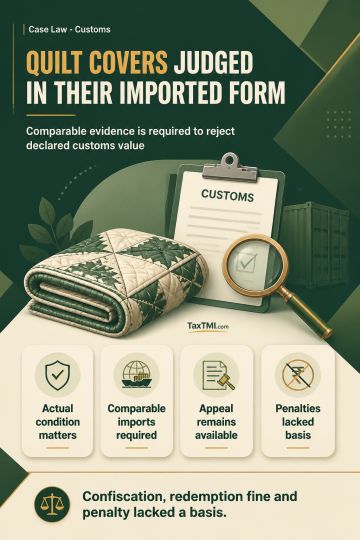
Customs valuation and classification require comparable evidence and assessment of imported goods in their actual condition, invalidating related pena...
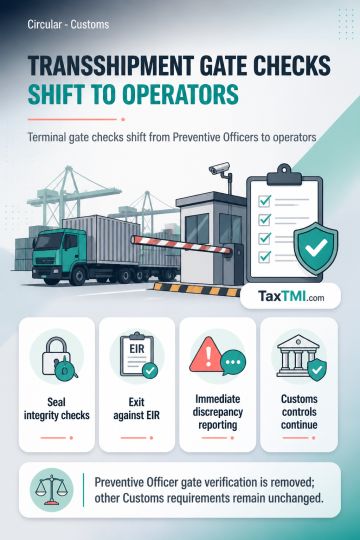
Terminal gate verification for transshipment containers shifts to operators, while Customs controls and discrepancy reporting requirements remain mand...
Rule 7B, not the general composite-income rule, governs income from coffee grown and processed by the seller; for self-grown coffee, 40% is taxable as business income and 60% retains agricultural character. The ITAT accepted that the assessee also purchased coffee from other planters and processed and sold it, but Rule 7B did not extend to that purchased coffee in the same manner. The matter was therefore remanded to the Assessing Officer for fresh computation after segregating income from the assessee's own coffee estate from income arising on purchased coffee, with agricultural exemption available only to the self-grown produce.
Rule 7B, not the general composite-income rule, governs income from coffee grown and processed by the seller; for self-grown coffee, 40% is taxable as business income and 60% retains agricultural character. The ITAT accepted that the assessee also purchased coffee from other planters and processed and sold it, but Rule 7B did not extend to that purchased coffee in the same manner. The matter was therefore remanded to the Assessing Officer for fresh computation after segregating income from the assessee's own coffee estate from income arising on purchased coffee, with agricultural exemption available only to the self-grown produce.
Note: It is a system-generated summary and is for quick reference only.
 TaxTMI
  TaxTMI
 of 4814






 Join Channel


