Cross-examination rights and corroborated evidence limit customs penalties for misdeclaration in genuine import transactions involving documented clea...
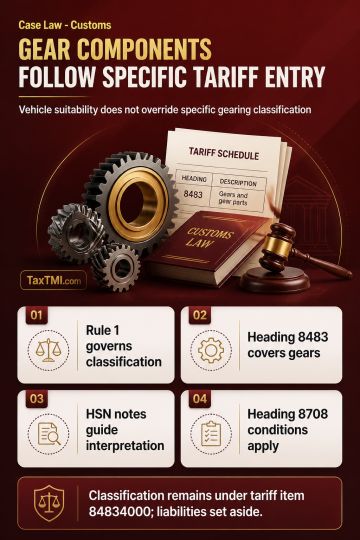
Tariff classification of vehicle gear components follows the specific gearing entry, displacing motor-vehicle parts classification and related liabili...
Necessary-party requirements limit impleadment of independent entities, while deferred consideration does not create an appealable adverse determinati...
Food supplement classification requires common parlance and authoritative tests, preventing treatment as proprietary Ayurvedic medicines without suppo...
Specified regulatory authority income receives conditional tax exemption, subject to non-commercial activity, unchanged income character, and return f...
Tax exemption for regulatory authority income applies retrospectively, subject to non-commercial activity, unchanged income sources, and return-filing...
A habeas corpus petition challenging arrest and detention...
Habeas corpus challenge to arrest safeguards remains maintainable, but substantial compliance with reasons-to-believe requirement defeats the petition.
Contents
Summary
Note
Bookmark
Share
✓ Copied successfully !
Print
Print Options
For full text, please login
Login to TaxTMI
Verification Pending
The Email Id has not been verified. Click on the link we have sent on
A habeas corpus petition challenging arrest and detention remained maintainable despite a judicial remand order where the grievance was breach of a mandatory statutory arrest safeguard affecting personal liberty. The Court held that while a remand order is not ordinarily assailable on merits by habeas corpus, the writ can be invoked to test whether arrest complied with the statutory precondition of recording reasons to believe. On the merits, the Court found that the competent authority had recorded the reasons, authorised arrest, and supplied them in substance to the arrestee; no rule required a verbatim signed copy. The challenge to arrest and custody was therefore rejected.
A habeas corpus petition challenging arrest and detention remained maintainable despite a judicial remand order where the grievance was breach of a mandatory statutory arrest safeguard affecting personal liberty. The Court held that while a remand order is not ordinarily assailable on merits by habeas corpus, the writ can be invoked to test whether arrest complied with the statutory precondition of recording reasons to believe. On the merits, the Court found that the competent authority had recorded the reasons, authorised arrest, and supplied them in substance to the arrestee; no rule required a verbatim signed copy. The challenge to arrest and custody was therefore rejected.
Note: It is a system-generated summary and is for quick reference only.
 TaxTMI
  TaxTMI
 of 4809





















 Join Channel