Business expenditure deduction requires proof of genuine commission payments and commercial allowability; turnover growth alone cannot validate the cl...
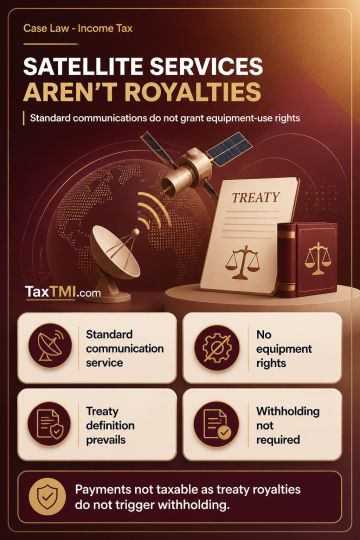
Article 8 treaty coverage excluded third-party airline support services, while documented demonetisation cash receipts remained accepted business inco...
Functional comparability under TNMM requires highway contract benchmarks to reflect operation, maintenance and transfer activities, requiring fresh be...
The Supreme Court held that amounts repayable after a specified period, with promised quarterly interest, fell within the wide definition of "deposit" under Section 2(c) of the MPID Act. It further held that Section 2(d) uses expansive language and includes private persons receiving such deposits, so respondent Nos. 2 to 6 were financial establishments for MPID Act purposes. Prior failure of IPC-based proceedings and the civil character of the transaction did not bar recourse under Section 3, because the MPID Act provides an independent statutory remedy operating in a distinct field. The High Court's contrary view was set aside.
The Supreme Court held that amounts repayable after a specified period, with promised quarterly interest, fell within the wide definition of "deposit" under Section 2(c) of the MPID Act. It further held that Section 2(d) uses expansive language and includes private persons receiving such deposits, so respondent Nos. 2 to 6 were financial establishments for MPID Act purposes. Prior failure of IPC-based proceedings and the civil character of the transaction did not bar recourse under Section 3, because the MPID Act provides an independent statutory remedy operating in a distinct field. The High Court's contrary view was set aside.
Note: It is a system-generated summary and is for quick reference only.
 TaxTMI
  TaxTMI
 of 4811














 Join Channel


