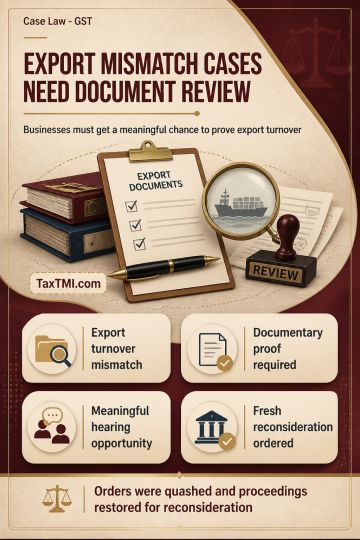
Extended limitation fails without specific suppression allegations, while overseas employee secondment remains taxable as manpower supply within norma...
Time-share accommodation classification excludes Club or Association Service where purchasers receive contractual occupancy rights without genuine mem...
CENVAT credit for trading requires reversal, while taxable-service rental credit remains proportionately available and limitation issues await resolut...
Vicarious liability for dishonoured company cheques may extend to non-signatory directors where complaints contain foundational responsibility avermen...
The Supreme Court held that amounts repayable after a specified period, with promised quarterly interest, fell within the wide definition of "deposit" under Section 2(c) of the MPID Act. It further held that Section 2(d) uses expansive language and includes private persons receiving such deposits, so respondent Nos. 2 to 6 were financial establishments for MPID Act purposes. Prior failure of IPC-based proceedings and the civil character of the transaction did not bar recourse under Section 3, because the MPID Act provides an independent statutory remedy operating in a distinct field. The High Court's contrary view was set aside.
The Supreme Court held that amounts repayable after a specified period, with promised quarterly interest, fell within the wide definition of "deposit" under Section 2(c) of the MPID Act. It further held that Section 2(d) uses expansive language and includes private persons receiving such deposits, so respondent Nos. 2 to 6 were financial establishments for MPID Act purposes. Prior failure of IPC-based proceedings and the civil character of the transaction did not bar recourse under Section 3, because the MPID Act provides an independent statutory remedy operating in a distinct field. The High Court's contrary view was set aside.
Note: It is a system-generated summary and is for quick reference only.
 TaxTMI
  TaxTMI
 of 4814










 Join Channel