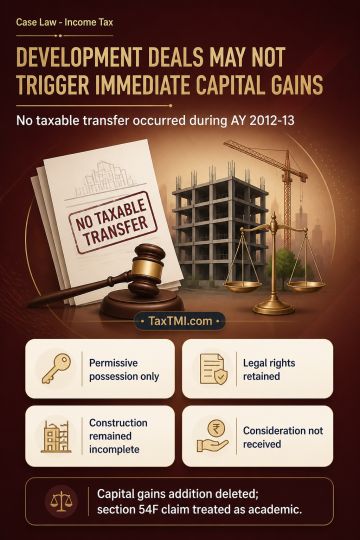
Development agreements require legal possession or effective enjoyment for capital gains transfer; permissive possession and deferred consideration de...
Prolonged sterilisation of development rights supports capital-gains treatment, while business-income disallowances cannot govern capital-gains comput...
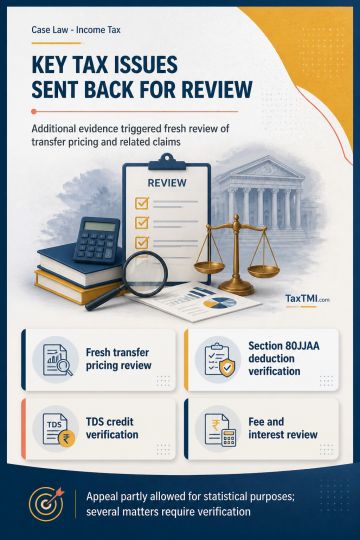
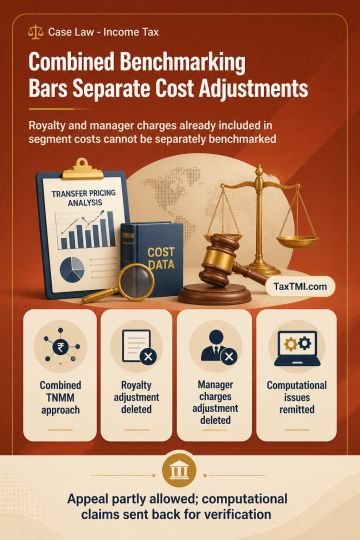
Additional evidence in transfer pricing dispute leads to fresh examination, while tax deductions, TDS credit, fee and refund interest require verifica...
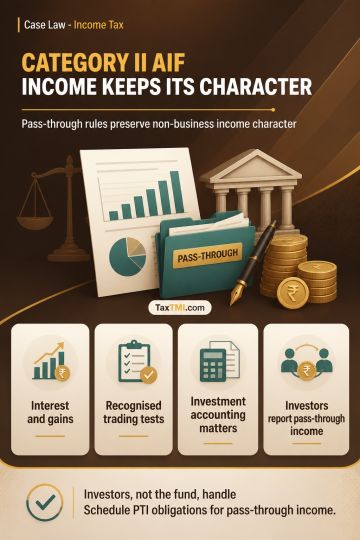
Category II AIF pass-through taxation preserves non-business income character; investment receipts cannot be reclassified without applying recognised ...
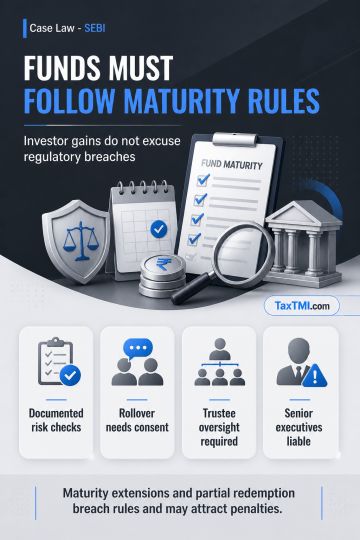
Mutual fund maturity rules require proper rollover, redemption, disclosure, and due diligence; investor gains cannot excuse regulatory breaches or pen...
Advance ruling jurisdiction under section 97 of the CGST Act does not extend to questions seeking guidance on the sufficiency of documentary evidence for proving that supplies to SEZ units or developers are for authorised operations. The applicant asked whether LOA or eligibility certificate evidence was enough for zero-rated treatment, or whether invoice endorsement by the Specified Officer was mandatory, but the Authority held these issues did not fall within any category listed in section 97(2), such as classification, notification applicability, time or value of supply, input tax credit, tax liability, registration, or whether an activity amounts to supply. It therefore declined to answer all three questions and left the merits of zero-rating and endorsement requirements unexamined.
Advance ruling jurisdiction under section 97 of the CGST Act does not extend to questions seeking guidance on the sufficiency of documentary evidence for proving that supplies to SEZ units or developers are for authorised operations. The applicant asked whether LOA or eligibility certificate evidence was enough for zero-rated treatment, or whether invoice endorsement by the Specified Officer was mandatory, but the Authority held these issues did not fall within any category listed in section 97(2), such as classification, notification applicability, time or value of supply, input tax credit, tax liability, registration, or whether an activity amounts to supply. It therefore declined to answer all three questions and left the merits of zero-rating and endorsement requirements unexamined.
Note: It is a system-generated summary and is for quick reference only.
 TaxTMI
 of 4807





 Join Channel


 TaxTMI