Development agreements require legal possession or effective enjoyment for capital gains transfer; permissive possession and deferred consideration de...
Prolonged sterilisation of development rights supports capital-gains treatment, while business-income disallowances cannot govern capital-gains comput...
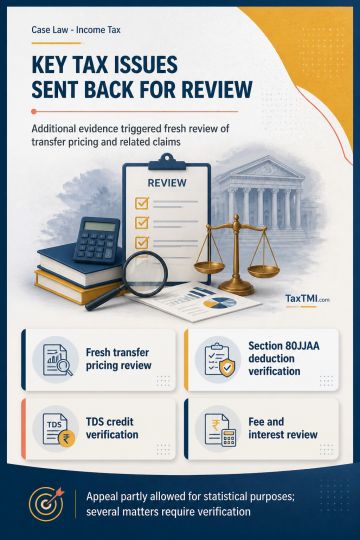
Additional evidence in transfer pricing dispute leads to fresh examination, while tax deductions, TDS credit, fee and refund interest require verifica...
Category II AIF pass-through taxation preserves non-business income character; investment receipts cannot be reclassified without applying recognised ...
Mutual fund maturity rules require proper rollover, redemption, disclosure, and due diligence; investor gains cannot excuse regulatory breaches or pen...
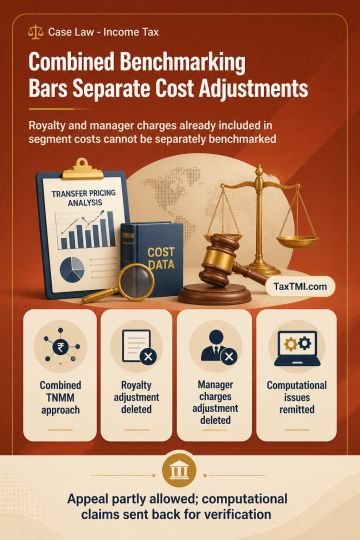
The High Court held that the Bright Line Test could not be adopted for transfer pricing because it is not provided under the Income-tax Act, 1961 or the Rules and is alien to the statutory scheme; the proposed question was rejected. It also declined to entertain the royalty adjustment questions, noting that the need for any transfer pricing adjustment, the computation method, and the arm's length price had already been decided in the assessee's own cases, with no contrary Supreme Court ruling shown. The exclusion of Febulka Advertising Pvt. Ltd. as a comparable was treated as a factual finding based on its different business and incomplete public data, beyond interference under section 260A. The appeal was dismissed.
The High Court held that the Bright Line Test could not be adopted for transfer pricing because it is not provided under the Income-tax Act, 1961 or the Rules and is alien to the statutory scheme; the proposed question was rejected. It also declined to entertain the royalty adjustment questions, noting that the need for any transfer pricing adjustment, the computation method, and the arm's length price had already been decided in the assessee's own cases, with no contrary Supreme Court ruling shown. The exclusion of Febulka Advertising Pvt. Ltd. as a comparable was treated as a factual finding based on its different business and incomplete public data, beyond interference under section 260A. The appeal was dismissed.
Note: It is a system-generated summary and is for quick reference only.
 TaxTMI
 of 4807












 Join Channel


 TaxTMI