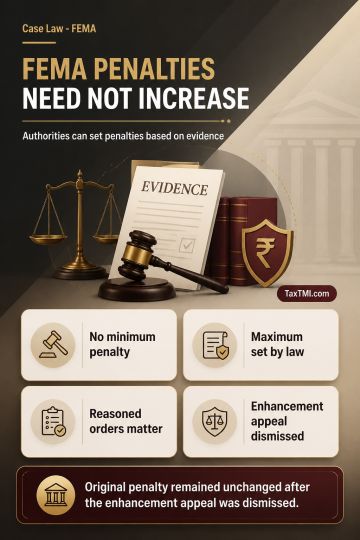
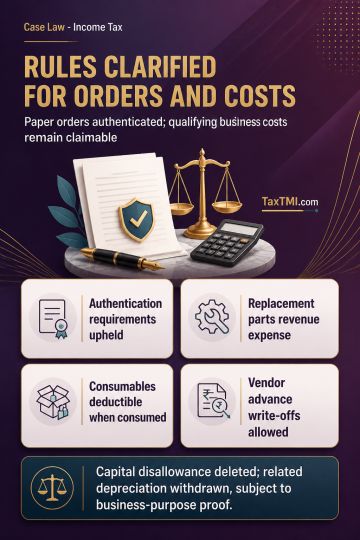
Authentication of paper assessment orders upheld, while qualifying repairs, consumables and vendor advance write-offs remain deductible business claim...
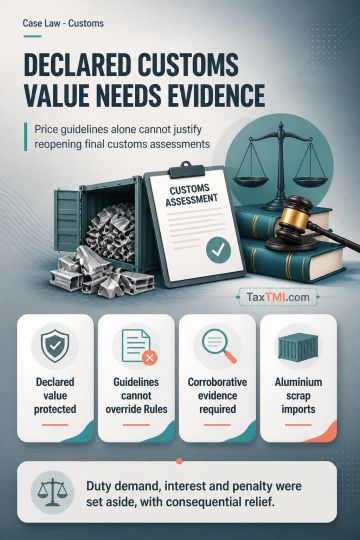
Transaction value cannot be rejected solely on non-statutory valuation guidelines without corroborative evidence supporting reassessment of final cust...
Cross-examination rights and corroborated evidence limit customs penalties for misdeclaration in genuine import transactions involving documented clea...
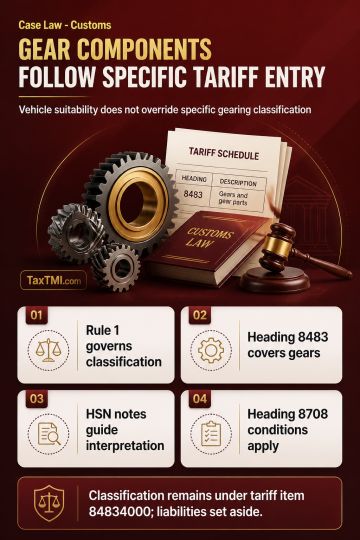
Tariff classification of vehicle gear components follows the specific gearing entry, displacing motor-vehicle parts classification and related liabili...
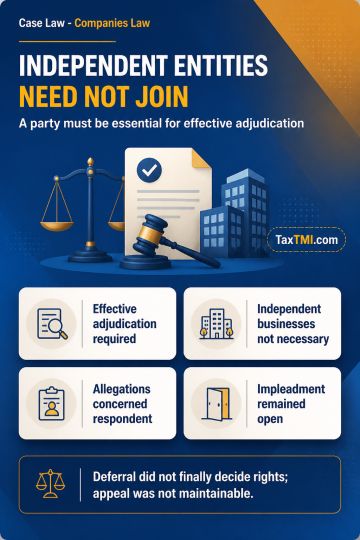
Necessary-party requirements limit impleadment of independent entities, while deferred consideration does not create an appealable adverse determinati...
The High Court held that the Bright Line Test could not be adopted for transfer pricing because it is not provided under the Income-tax Act, 1961 or the Rules and is alien to the statutory scheme; the proposed question was rejected. It also declined to entertain the royalty adjustment questions, noting that the need for any transfer pricing adjustment, the computation method, and the arm's length price had already been decided in the assessee's own cases, with no contrary Supreme Court ruling shown. The exclusion of Febulka Advertising Pvt. Ltd. as a comparable was treated as a factual finding based on its different business and incomplete public data, beyond interference under section 260A. The appeal was dismissed.
The High Court held that the Bright Line Test could not be adopted for transfer pricing because it is not provided under the Income-tax Act, 1961 or the Rules and is alien to the statutory scheme; the proposed question was rejected. It also declined to entertain the royalty adjustment questions, noting that the need for any transfer pricing adjustment, the computation method, and the arm's length price had already been decided in the assessee's own cases, with no contrary Supreme Court ruling shown. The exclusion of Febulka Advertising Pvt. Ltd. as a comparable was treated as a factual finding based on its different business and incomplete public data, beyond interference under section 260A. The appeal was dismissed.
Note: It is a system-generated summary and is for quick reference only.
 TaxTMI
  TaxTMI
 of 4811







 Join Channel