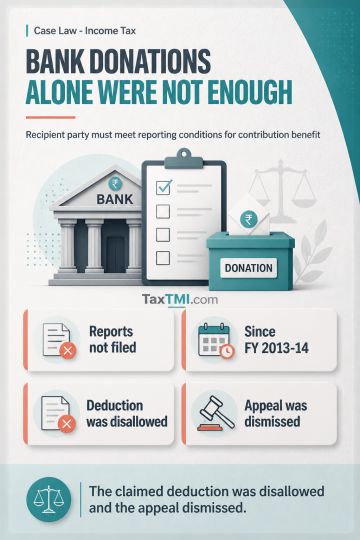
Political contribution deductions require recipient party compliance with contribution-reporting conditions; banking-channel donations alone do not qu...
Aggregation under TNMM prevents selective testing of intra-group services without comparable uncontrolled transactions, while appellate additional cla...
Protective assessment cannot duplicate identical receipts under competing characterisations; remote services did not establish a taxable permanent est...
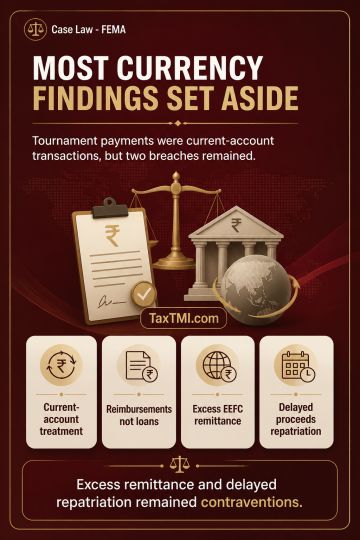
Current account treatment of overseas tournament services removed most FEMA findings, but excess EEFC remittance and delayed repatriation remained bre...
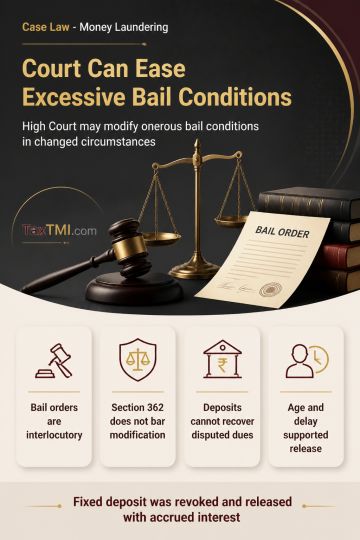
Modification of bail conditions remains available through inherent jurisdiction where onerous deposits undermine justice and cannot recover disputed d...
Merchant banker regulation consolidates registration, governance, capital, reporting, outsourcing and investor-protection requirements under an update...
Page of 4809
Press 'Enter' after typing page number.
821 to 840 of 96177 Results
❮
❯
❯❯
0 / 200
Expand Note
Add to Folder
No Folders have been created
+
Are you sure you want to delete "My most important" ?
Under the amended reassessment regime, the High Court held that capital gains from the property transfer had to be computed with the stamp duty valuation under Sections 148, 149, 50C and 48. Because the petitioner's one-fourth share, valued on that basis, exceeded the statutory threshold of fifty lakh rupees, the extended limitation period applied and the Section 148A(d) order and consequential Section 148 notice were not without jurisdiction. The Court also held that the complaint that the written reply was not considered did not alter the result once limitation was decided against the petitioner. The writ petition was dismissed and assessment was directed to proceed, excluding the period spent before the Court for limitation purposes.
Under the amended reassessment regime, the High Court held that capital gains from the property transfer had to be computed with the stamp duty valuation under Sections 148, 149, 50C and 48. Because the petitioner's one-fourth share, valued on that basis, exceeded the statutory threshold of fifty lakh rupees, the extended limitation period applied and the Section 148A(d) order and consequential Section 148 notice were not without jurisdiction. The Court also held that the complaint that the written reply was not considered did not alter the result once limitation was decided against the petitioner. The writ petition was dismissed and assessment was directed to proceed, excluding the period spent before the Court for limitation purposes.
Note: It is a system-generated summary and is for quick reference only.
 TaxTMI
  TaxTMI
 of 4809















 Join Channel