Charitable registration renewal cannot become an assessment of receipts, profitability or annual exemption compliance, requiring renewal and donation ...
AMP expenditure for own business is not an international transaction without an associated-enterprise arrangement, eliminating transfer pricing adjust...
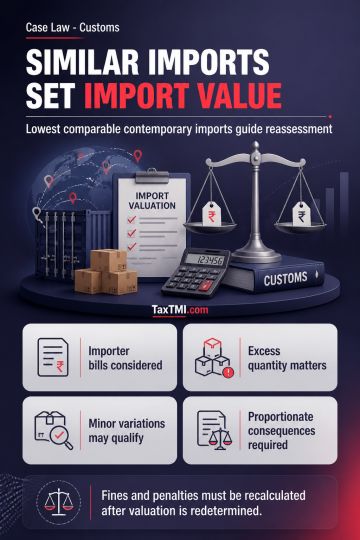
Customs valuation must use comparable contemporary imports, while confiscation fines and penalties require proportionate recalculation on reassessed v...
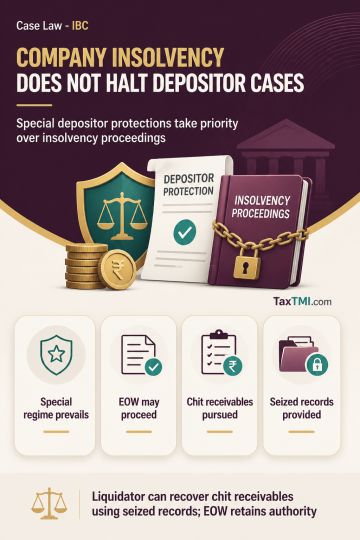
Depositor-protection proceedings prevail over corporate insolvency, while liquidators may recover chit receivables using copies of seized company reco...
Intermediary service classification fails where overseas admission facilitation is supplied independently, preserving export treatment and small-provi...
Satellite transponder bandwidth is telecommunication, not Business Support Service; foreign non-telegraph providers triggered no service tax liability...
Under the amended reassessment regime, the High Court held that capital gains from the property transfer had to be computed with the stamp duty valuation under Sections 148, 149, 50C and 48. Because the petitioner's one-fourth share, valued on that basis, exceeded the statutory threshold of fifty lakh rupees, the extended limitation period applied and the Section 148A(d) order and consequential Section 148 notice were not without jurisdiction. The Court also held that the complaint that the written reply was not considered did not alter the result once limitation was decided against the petitioner. The writ petition was dismissed and assessment was directed to proceed, excluding the period spent before the Court for limitation purposes.
Under the amended reassessment regime, the High Court held that capital gains from the property transfer had to be computed with the stamp duty valuation under Sections 148, 149, 50C and 48. Because the petitioner's one-fourth share, valued on that basis, exceeded the statutory threshold of fifty lakh rupees, the extended limitation period applied and the Section 148A(d) order and consequential Section 148 notice were not without jurisdiction. The Court also held that the complaint that the written reply was not considered did not alter the result once limitation was decided against the petitioner. The writ petition was dismissed and assessment was directed to proceed, excluding the period spent before the Court for limitation purposes.
Note: It is a system-generated summary and is for quick reference only.
 TaxTMI
  TaxTMI
 of 4816




















 Join Channel


