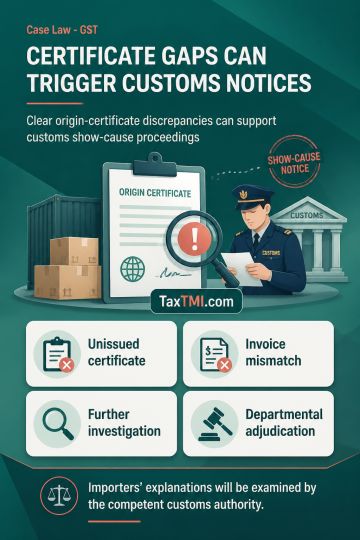
Jurisdictional facts in certificate-of-origin discrepancies can support customs show-cause proceedings, leaving factual explanations for departmental ...
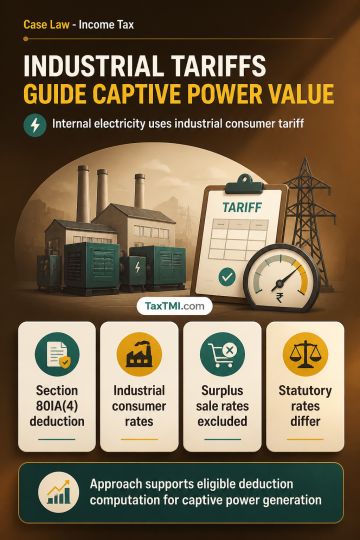
Market value for captive electricity consumption follows industrial consumer tariffs, supporting profit computation for the power generation deduction...
Transfer of shares to a wholly owned subsidiary was a bona fide commercial reorganisation, not a colourable device, because the Revenue showed no sham, lack of commercial substance, or non-genuineness, and tax benefit alone could not invalidate the transaction. The Tribunal also held that the shares were capital assets and that section 47(iv) exemption applied since the assessee and subsidiary satisfied the statutory ownership conditions. The share valuation challenge failed because the Assessing Officer identified no specific defect in the recognised valuation method, assumptions, or projections. The addition was deleted.
Transfer of shares to a wholly owned subsidiary was a bona fide commercial reorganisation, not a colourable device, because the Revenue showed no sham, lack of commercial substance, or non-genuineness, and tax benefit alone could not invalidate the transaction. The Tribunal also held that the shares were capital assets and that section 47(iv) exemption applied since the assessee and subsidiary satisfied the statutory ownership conditions. The share valuation challenge failed because the Assessing Officer identified no specific defect in the recognised valuation method, assumptions, or projections. The addition was deleted.
Note: It is a system-generated summary and is for quick reference only.
 TaxTMI
  TaxTMI
 of 4807







 Join Channel