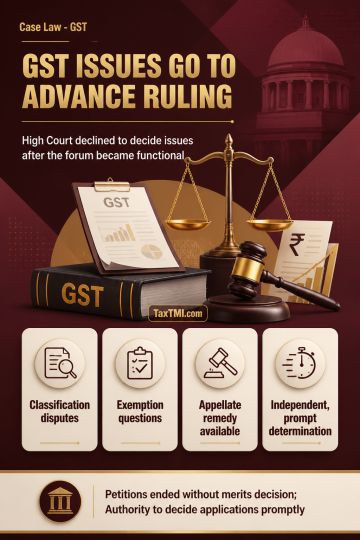
Advance-ruling mechanism governs pending GST classification, exemption and taxability disputes, limiting writ review once the specialised forum functi...
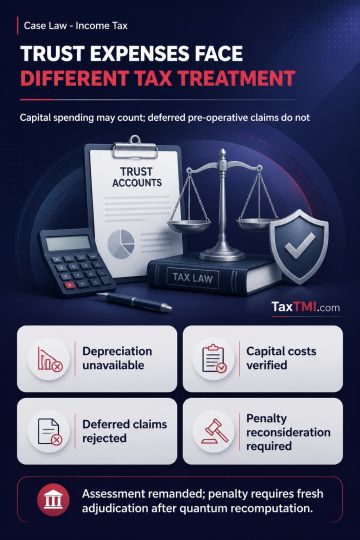
Charitable trust income application permits verified capital expenditure but rejects deferred pre-operative claims and requires reconsideration of con...
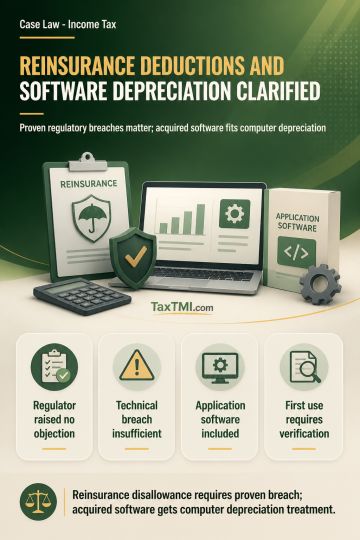
Reinsurance premium deductions require established regulatory breaches, while independently acquired software qualifies within the computer depreciati...
Transfer of shares to a wholly owned subsidiary was a bona fide commercial reorganisation, not a colourable device, because the Revenue showed no sham, lack of commercial substance, or non-genuineness, and tax benefit alone could not invalidate the transaction. The Tribunal also held that the shares were capital assets and that section 47(iv) exemption applied since the assessee and subsidiary satisfied the statutory ownership conditions. The share valuation challenge failed because the Assessing Officer identified no specific defect in the recognised valuation method, assumptions, or projections. The addition was deleted.
Transfer of shares to a wholly owned subsidiary was a bona fide commercial reorganisation, not a colourable device, because the Revenue showed no sham, lack of commercial substance, or non-genuineness, and tax benefit alone could not invalidate the transaction. The Tribunal also held that the shares were capital assets and that section 47(iv) exemption applied since the assessee and subsidiary satisfied the statutory ownership conditions. The share valuation challenge failed because the Assessing Officer identified no specific defect in the recognised valuation method, assumptions, or projections. The addition was deleted.
Note: It is a system-generated summary and is for quick reference only.
 TaxTMI
  TaxTMI
 of 4809




 Join Channel


