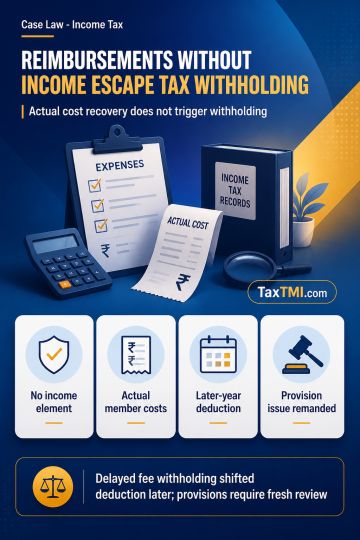
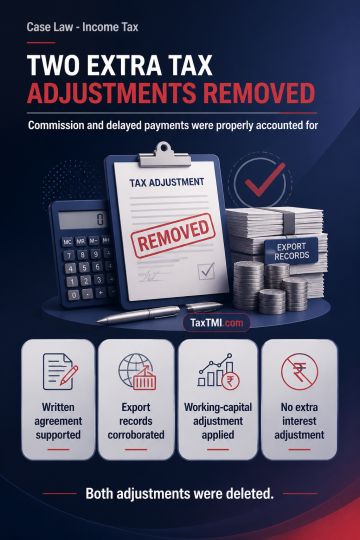
Pure reimbursement without income element escapes tax withholding, while delayed withholding and unsupported provisions face deferred or renewed scrut...
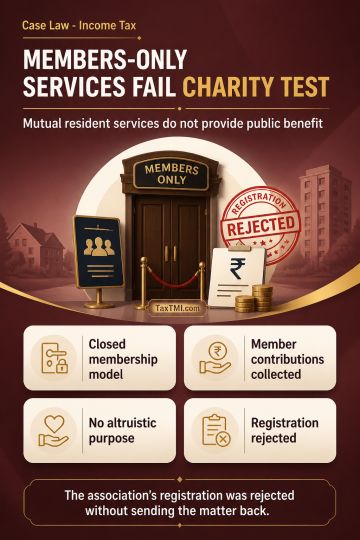
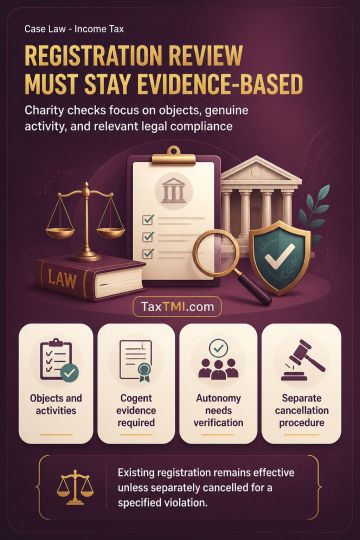
Public benefit requirement defeats charitable registration where residents' association services are reciprocal, member-only facilities governed by mu...
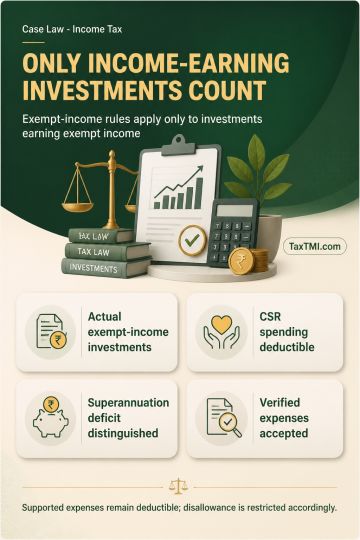
Exempt-income expenditure disallowance is confined to investments that actually generated exempt income, while supported business expenses remain dedu...
Objective characteristics and principal use govern mining-tyre classification, while fresh advance ruling applications may rely on additional technica...
Transfer of shares to a wholly owned subsidiary was a bona fide commercial reorganisation, not a colourable device, because the Revenue showed no sham, lack of commercial substance, or non-genuineness, and tax benefit alone could not invalidate the transaction. The Tribunal also held that the shares were capital assets and that section 47(iv) exemption applied since the assessee and subsidiary satisfied the statutory ownership conditions. The share valuation challenge failed because the Assessing Officer identified no specific defect in the recognised valuation method, assumptions, or projections. The addition was deleted.
Transfer of shares to a wholly owned subsidiary was a bona fide commercial reorganisation, not a colourable device, because the Revenue showed no sham, lack of commercial substance, or non-genuineness, and tax benefit alone could not invalidate the transaction. The Tribunal also held that the shares were capital assets and that section 47(iv) exemption applied since the assessee and subsidiary satisfied the statutory ownership conditions. The share valuation challenge failed because the Assessing Officer identified no specific defect in the recognised valuation method, assumptions, or projections. The addition was deleted.
Note: It is a system-generated summary and is for quick reference only.
 TaxTMI
  TaxTMI
 of 4811





 Join Channel


