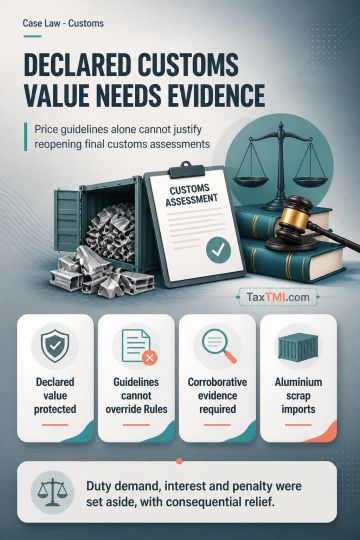
Transaction value cannot be rejected solely on non-statutory valuation guidelines without corroborative evidence supporting reassessment of final cust...
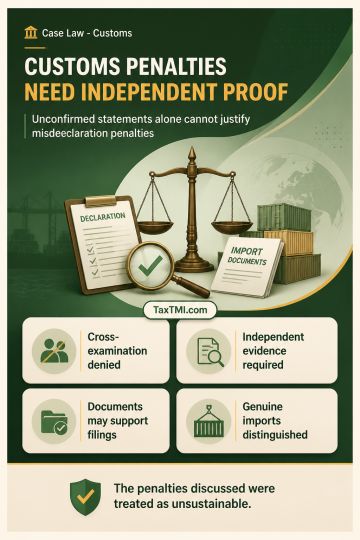
Cross-examination rights and corroborated evidence limit customs penalties for misdeclaration in genuine import transactions involving documented clea...
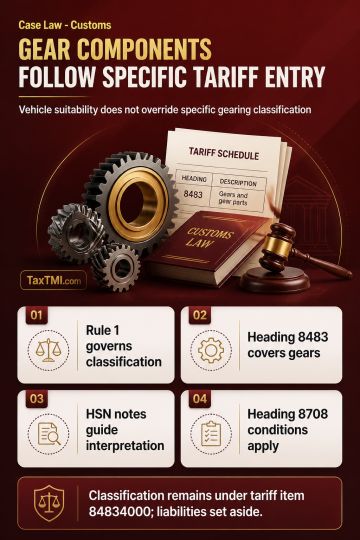
Tariff classification of vehicle gear components follows the specific gearing entry, displacing motor-vehicle parts classification and related liabili...
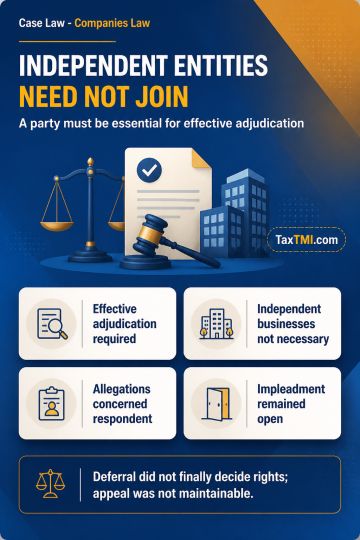
Necessary-party requirements limit impleadment of independent entities, while deferred consideration does not create an appealable adverse determinati...
Food supplement classification requires common parlance and authoritative tests, preventing treatment as proprietary Ayurvedic medicines without suppo...
Extended limitation under section 28(4) of the Customs Act could not be invoked where the bill of entry disclosed the tariff item and described the imported software CD as relatable to the LRSAM system, and the show cause notice relied only on an allegation of misdeclaration. The Tribunal held that invocation of the extended period requires a deliberate misstatement or suppression made with intent to evade duty, and that intent was not established, particularly given the appellant's status as a public sector undertaking engaged in defence supplies. As the demand rested entirely on the extended period, it failed. The consequential penalty under section 114A also failed because its foundation was the same as the extended-period allegation.
Extended limitation under section 28(4) of the Customs Act could not be invoked where the bill of entry disclosed the tariff item and described the imported software CD as relatable to the LRSAM system, and the show cause notice relied only on an allegation of misdeclaration. The Tribunal held that invocation of the extended period requires a deliberate misstatement or suppression made with intent to evade duty, and that intent was not established, particularly given the appellant's status as a public sector undertaking engaged in defence supplies. As the demand rested entirely on the extended period, it failed. The consequential penalty under section 114A also failed because its foundation was the same as the extended-period allegation.
Note: It is a system-generated summary and is for quick reference only.
 TaxTMI
  TaxTMI
 of 4814




 Join Channel