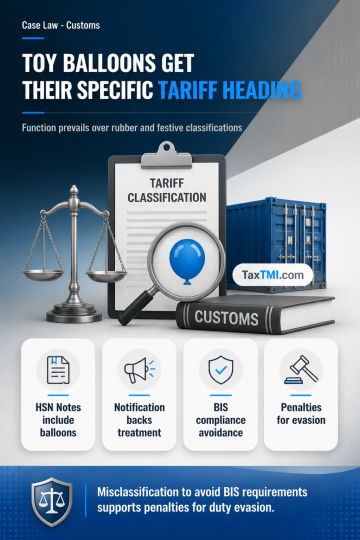
Toy balloon tariff classification: functional heading prevails over residual rubber and festive article headings, supporting penalties for deliberate ...
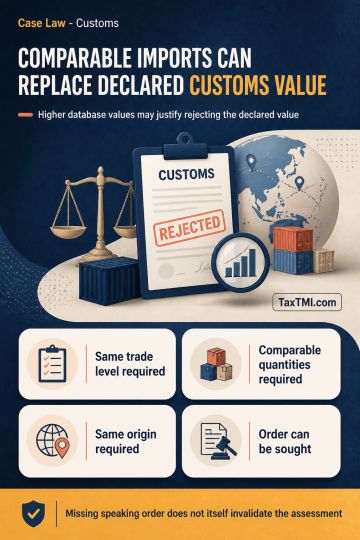
Customs valuation using comparable contemporaneous imports can displace declared value, while missing speaking orders require pursuit before competent...
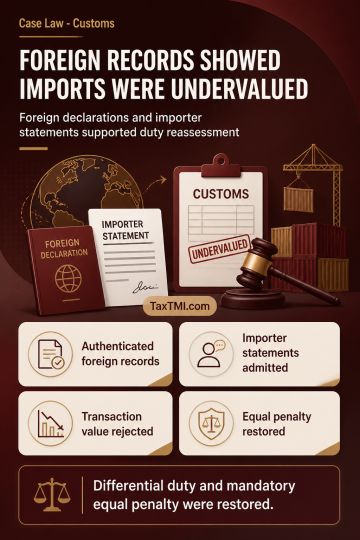
Foreign customs declarations and importer admissions established undervaluation, supporting sequential value redetermination, differential duty, and m...
Customs seizure safeguards prevent detention-based limitation avoidance and invalidate provisional release conditions for imported vehicles under an i...
Rule 26 of the Central Excise Rules, 2002 applies to a body corporate because the term "person" is not confined to natural persons; the Tribunal relied on the General Clauses Act and broader statutory context to reject the argument that a company cannot be penalised. Penalty was also sustainable because the goods were liable to confiscation, and actual confiscation was not required where the appellant knew or had reason to believe that undervaluation and duty short-payment had occurred. On the facts already concluded in the common adjudication order, the Tribunal upheld the penalty and dismissed the appeal.
Rule 26 of the Central Excise Rules, 2002 applies to a body corporate because the term "person" is not confined to natural persons; the Tribunal relied on the General Clauses Act and broader statutory context to reject the argument that a company cannot be penalised. Penalty was also sustainable because the goods were liable to confiscation, and actual confiscation was not required where the appellant knew or had reason to believe that undervaluation and duty short-payment had occurred. On the facts already concluded in the common adjudication order, the Tribunal upheld the penalty and dismissed the appeal.
Note: It is a system-generated summary and is for quick reference only.
 TaxTMI
  TaxTMI
 of 4817












 Join Channel