Fair-rent assessment requires consideration of lease terms, valuation principles and prevailing market rent; the certificate was quashed for fresh rev...
Document Identification Number compliance is satisfied when electronically communicated orders are promptly authenticated through a correctly identifi...
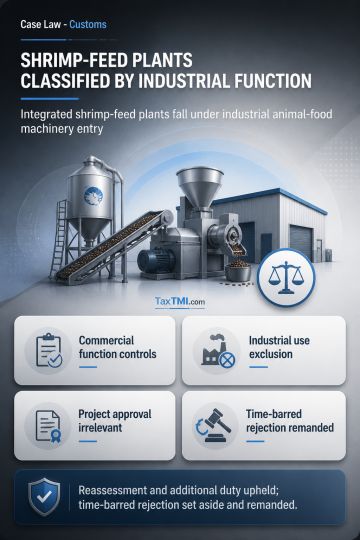
Industrial shrimp-feed machinery classification follows its commercial function, placing integrated production plants under the specific industrial fo...
Rule 26 of the Central Excise Rules, 2002 applies to a body corporate because the term "person" is not confined to natural persons; the Tribunal relied on the General Clauses Act and broader statutory context to reject the argument that a company cannot be penalised. Penalty was also sustainable because the goods were liable to confiscation, and actual confiscation was not required where the appellant knew or had reason to believe that undervaluation and duty short-payment had occurred. On the facts already concluded in the common adjudication order, the Tribunal upheld the penalty and dismissed the appeal.
Rule 26 of the Central Excise Rules, 2002 applies to a body corporate because the term "person" is not confined to natural persons; the Tribunal relied on the General Clauses Act and broader statutory context to reject the argument that a company cannot be penalised. Penalty was also sustainable because the goods were liable to confiscation, and actual confiscation was not required where the appellant knew or had reason to believe that undervaluation and duty short-payment had occurred. On the facts already concluded in the common adjudication order, the Tribunal upheld the penalty and dismissed the appeal.
Note: It is a system-generated summary and is for quick reference only.
 TaxTMI
  TaxTMI
 of 4809











 Join Channel


