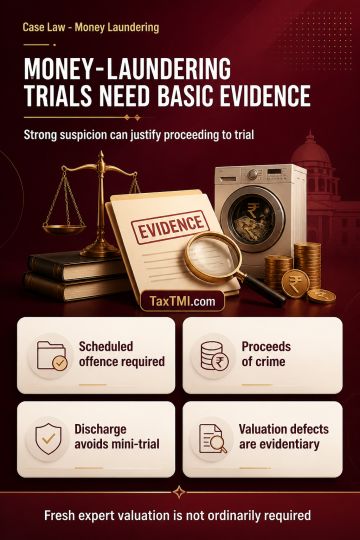
Provisional attachment of laundered funds and equivalent-value property sustained, with statutory protection limited to pension, gratuity and providen...
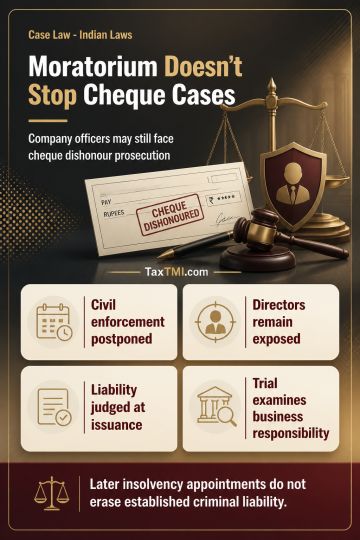
Insolvency moratorium does not shield company officers from cheque dishonour prosecution for liability arising before corporate insolvency proceedings...
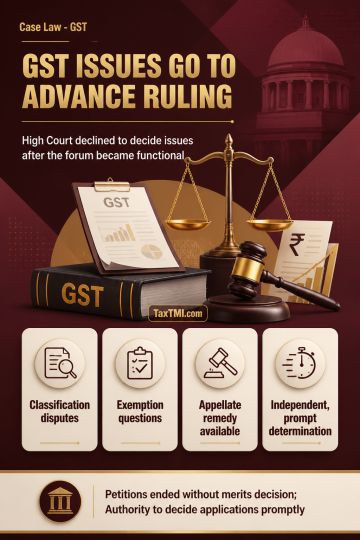
Advance-ruling mechanism governs pending GST classification, exemption and taxability disputes, limiting writ review once the specialised forum functi...
Rule 26 of the Central Excise Rules, 2002 applies to a body corporate because the term "person" is not confined to natural persons; the Tribunal relied on the General Clauses Act and broader statutory context to reject the argument that a company cannot be penalised. Penalty was also sustainable because the goods were liable to confiscation, and actual confiscation was not required where the appellant knew or had reason to believe that undervaluation and duty short-payment had occurred. On the facts already concluded in the common adjudication order, the Tribunal upheld the penalty and dismissed the appeal.
Rule 26 of the Central Excise Rules, 2002 applies to a body corporate because the term "person" is not confined to natural persons; the Tribunal relied on the General Clauses Act and broader statutory context to reject the argument that a company cannot be penalised. Penalty was also sustainable because the goods were liable to confiscation, and actual confiscation was not required where the appellant knew or had reason to believe that undervaluation and duty short-payment had occurred. On the facts already concluded in the common adjudication order, the Tribunal upheld the penalty and dismissed the appeal.
Note: It is a system-generated summary and is for quick reference only.
 TaxTMI
  TaxTMI
 of 4811










 Join Channel


