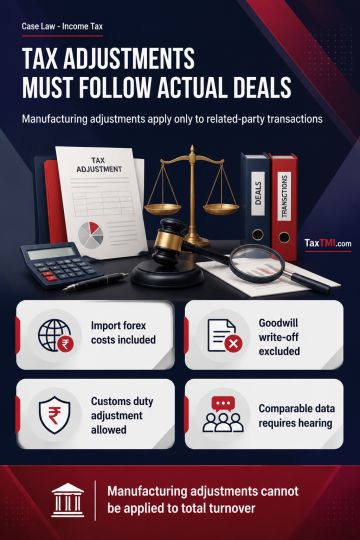
International transaction benchmarking restricts transfer pricing adjustments to associated-enterprise dealings, while functional comparability govern...
Joint development agreements defer taxable transfer where possession lacks part performance, while completed flats determine consideration and exempti...
Passenger baggage re-export requires true declaration and cannot be granted indirectly through discretionary redemption of undeclared prohibited goods...
Rule 26 of the Central Excise Rules, 2002 applies to a body corporate because the term "person" is not confined to natural persons; the Tribunal relied on the General Clauses Act and broader statutory context to reject the argument that a company cannot be penalised. Penalty was also sustainable because the goods were liable to confiscation, and actual confiscation was not required where the appellant knew or had reason to believe that undervaluation and duty short-payment had occurred. On the facts already concluded in the common adjudication order, the Tribunal upheld the penalty and dismissed the appeal.
Rule 26 of the Central Excise Rules, 2002 applies to a body corporate because the term "person" is not confined to natural persons; the Tribunal relied on the General Clauses Act and broader statutory context to reject the argument that a company cannot be penalised. Penalty was also sustainable because the goods were liable to confiscation, and actual confiscation was not required where the appellant knew or had reason to believe that undervaluation and duty short-payment had occurred. On the facts already concluded in the common adjudication order, the Tribunal upheld the penalty and dismissed the appeal.
Note: It is a system-generated summary and is for quick reference only.
 TaxTMI
  TaxTMI
 of 4813

















 Join Channel


