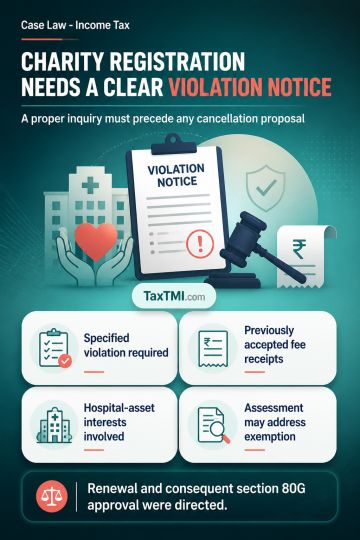
Charitable trust registration requires a specified-violation notice; settled cash deposits and related-party payments did not justify cancellation or ...
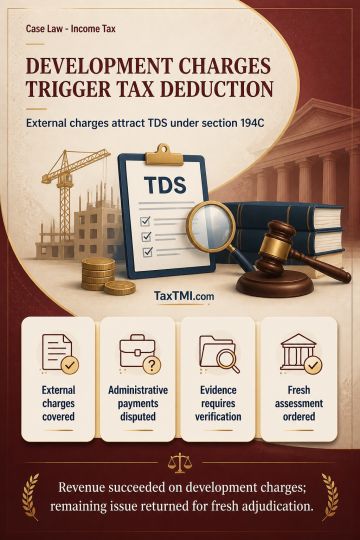
External development charges trigger TDS under section 194C, while disputed administrative payments require factual verification and fresh adjudicatio...
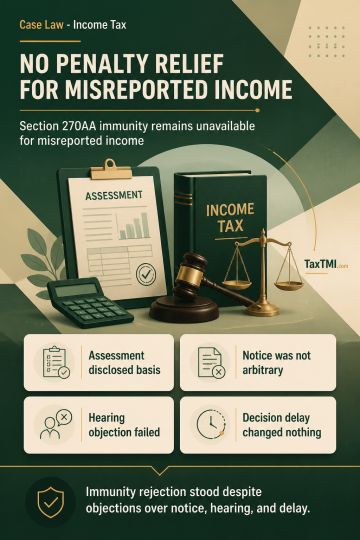
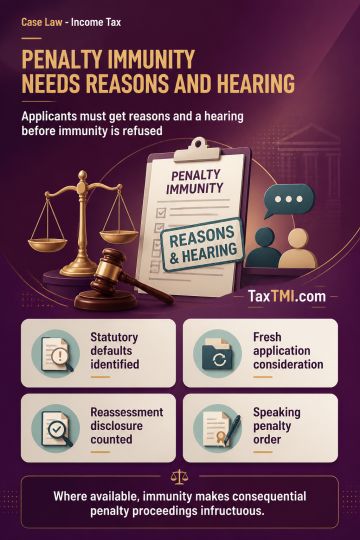
Section 270AA penalty immunity requires identified statutory defaults and a hearing before rejection; reassessment disclosure may constitute under-rep...
An appellate authority must first examine limitation before considering the merits of a statutory appeal, and where delay is noticed the appellant must be given an opportunity to explain it and, where appropriate, seek condonation. Reliance on an electronic portal flag alone is insufficient if the appellant has not been heard on the issue of delay or the limitation computation may be erroneous. Here, the appeal was dismissed as time-barred after merits were heard and without raising a limitation objection earlier, so the petitioner was denied a fair opportunity. The appellate order was set aside and the matter remanded for fresh consideration on limitation and, if maintainable, on merits.
An appellate authority must first examine limitation before considering the merits of a statutory appeal, and where delay is noticed the appellant must be given an opportunity to explain it and, where appropriate, seek condonation. Reliance on an electronic portal flag alone is insufficient if the appellant has not been heard on the issue of delay or the limitation computation may be erroneous. Here, the appeal was dismissed as time-barred after merits were heard and without raising a limitation objection earlier, so the petitioner was denied a fair opportunity. The appellate order was set aside and the matter remanded for fresh consideration on limitation and, if maintainable, on merits.
Note: It is a system-generated summary and is for quick reference only.
 TaxTMI
  TaxTMI
 of 4826














 Join Channel


