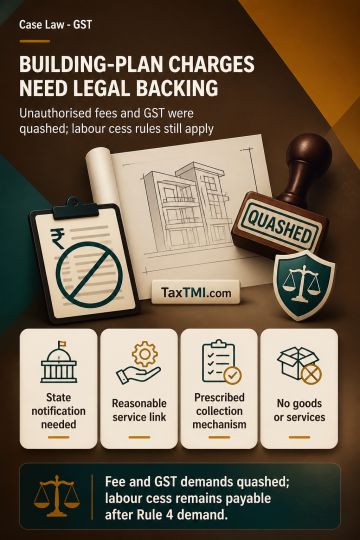
Building-plan sanction charges require statutory authority; unauthorised fees and GST were quashed, while labour cess must follow prescribed collectio...
Pure-agent exclusion fails where hotel booking facilitators receive third-party services themselves, making entire customer consideration taxable as r...
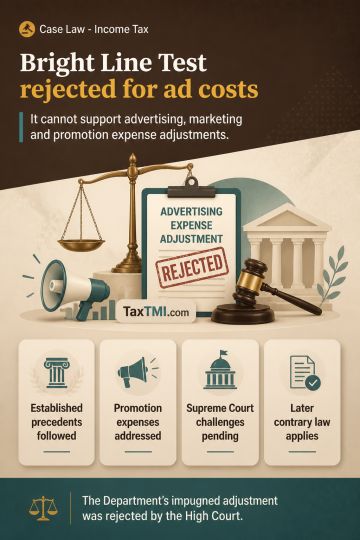
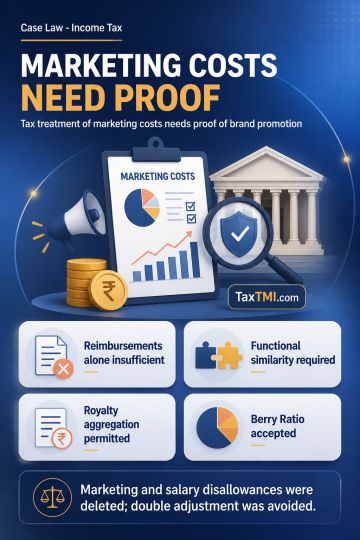
Transfer pricing requires evidence for AMP transactions, functionally reliable comparables, and appropriate aggregation or Berry Ratio benchmarking me...
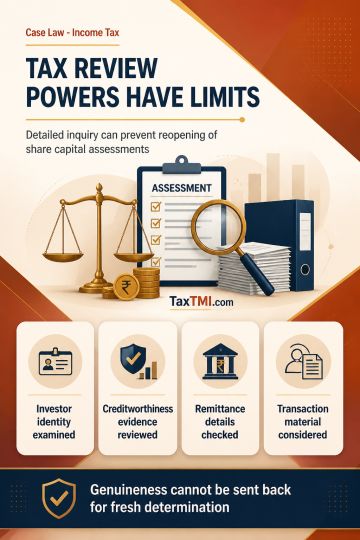
Revisionary jurisdiction cannot reopen share capital assessments where adequate inquiry supports a permissible view and no independent error is establ...
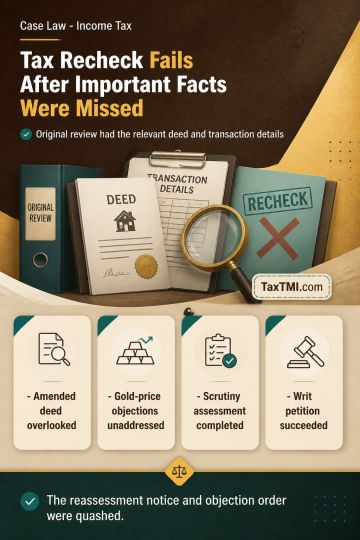
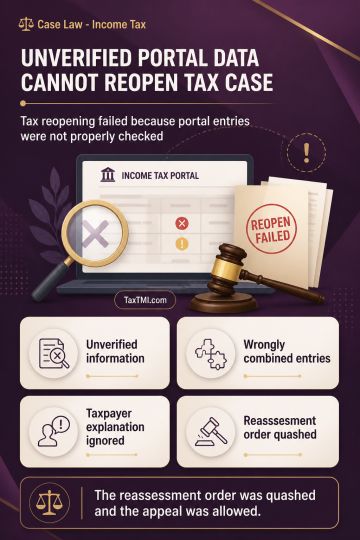
Reassessment jurisdiction fails where unverified portal information is aggregated without examining the taxpayer's explanation or relevance of entries...
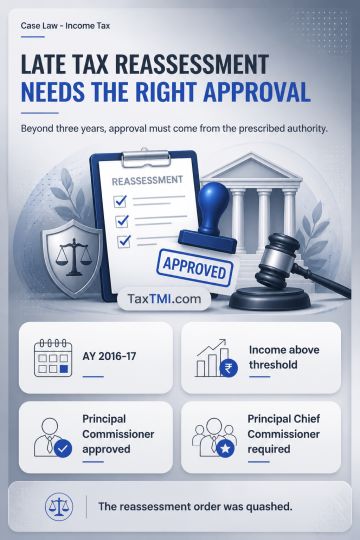
Statutory sanction for delayed reassessment requires approval from the prescribed authority; approval by an inferior authority invalidates jurisdictio...
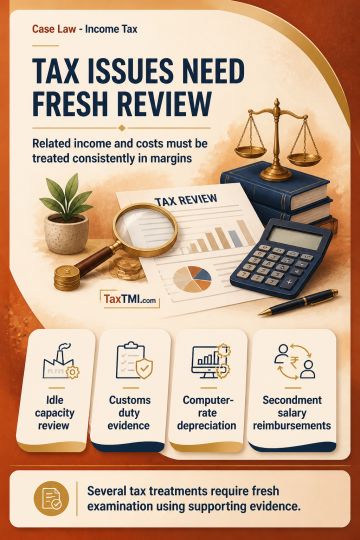
Transfer pricing margin adjustments require matching treatment of non-operating income and related costs, with comparability issues reconsidered on ev...
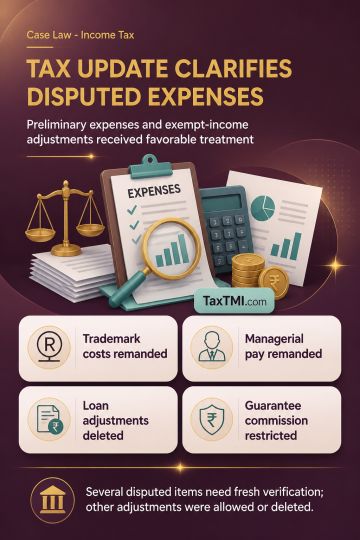
Preliminary-expense amortisation and MAT exempt-income adjustments prevailed, while trademark costs and managerial remuneration require fresh verifica...
Page of 4819
Press 'Enter' after typing page number.
501 to 520 of 96365 Results
❮
❯
❯❯
0 / 200
Expand Note
Add to Folder
No Folders have been created
+
Are you sure you want to delete "My most important" ?
An appellate authority must first examine limitation before considering the merits of a statutory appeal, and where delay is noticed the appellant must be given an opportunity to explain it and, where appropriate, seek condonation. Reliance on an electronic portal flag alone is insufficient if the appellant has not been heard on the issue of delay or the limitation computation may be erroneous. Here, the appeal was dismissed as time-barred after merits were heard and without raising a limitation objection earlier, so the petitioner was denied a fair opportunity. The appellate order was set aside and the matter remanded for fresh consideration on limitation and, if maintainable, on merits.
An appellate authority must first examine limitation before considering the merits of a statutory appeal, and where delay is noticed the appellant must be given an opportunity to explain it and, where appropriate, seek condonation. Reliance on an electronic portal flag alone is insufficient if the appellant has not been heard on the issue of delay or the limitation computation may be erroneous. Here, the appeal was dismissed as time-barred after merits were heard and without raising a limitation objection earlier, so the petitioner was denied a fair opportunity. The appellate order was set aside and the matter remanded for fresh consideration on limitation and, if maintainable, on merits.
Note: It is a system-generated summary and is for quick reference only.
 TaxTMI
  TaxTMI
 of 4819










 Join Channel