Retention of seized property survives where recorded reasons support proceeds of crime, while stayed investigation periods are excluded from limitatio...
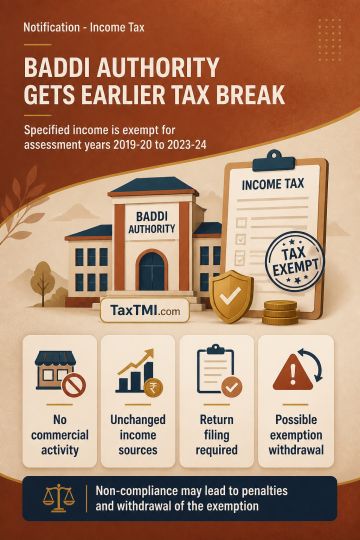
Specified income of Baddi Barotiwala Nalagarh Development Authority receives conditional tax exemption, retrospectively covering its designated assess...
Specified development authority income receives retrospective tax exemption, subject to non-commercial activity, unchanged income sources, and return-...
Unified Brand India framework introduces voluntary Trust Mark certification and funding support for export branding, packaging and global promotional ...
Origin Declaration authentication governs preferential tariff claims under India-UK CETA, requiring a validated reference number before import clearan...
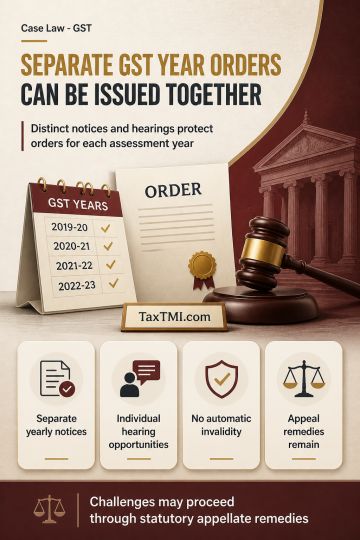
Separate assessment orders for different years remain valid when distinct notices and hearing opportunities prevent prejudice from combined proceeding...
Section 122(1) of the GST enactments was held to prescribe a mandatory penalty once the provision is attracted, because the phrase "whichever is higher" leaves no discretion to impose a lesser amount on proportionality grounds. The High Court rejected reliance on proportionality decisions from labour and excise jurisprudence, and noted that the petitioners were prima facie liable on the material in the assessment orders. It also found no procedural irregularity or lack of reasons in the impugned orders, and held that the statutory appellate remedy must be pursued instead of writ relief. The writ petitions were dismissed, but the petitioners were allowed to file appeals with the 10% pre-deposit requirement dispensed with.
Section 122(1) of the GST enactments was held to prescribe a mandatory penalty once the provision is attracted, because the phrase "whichever is higher" leaves no discretion to impose a lesser amount on proportionality grounds. The High Court rejected reliance on proportionality decisions from labour and excise jurisprudence, and noted that the petitioners were prima facie liable on the material in the assessment orders. It also found no procedural irregularity or lack of reasons in the impugned orders, and held that the statutory appellate remedy must be pursued instead of writ relief. The writ petitions were dismissed, but the petitioners were allowed to file appeals with the 10% pre-deposit requirement dispensed with.
Note: It is a system-generated summary and is for quick reference only.
 TaxTMI
  TaxTMI
 of 4807
















 Join Channel


