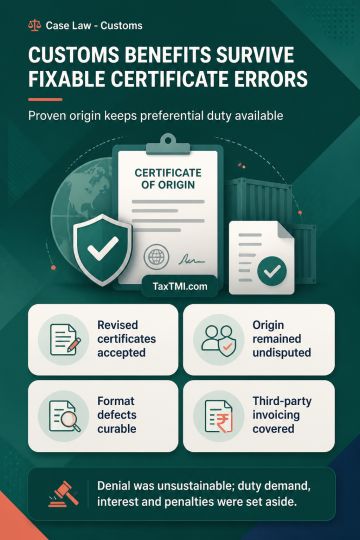
Opportunity to respond to jurisdictional reports is mandatory before customs settlement duty enhancement; connected applications require consistent ad...
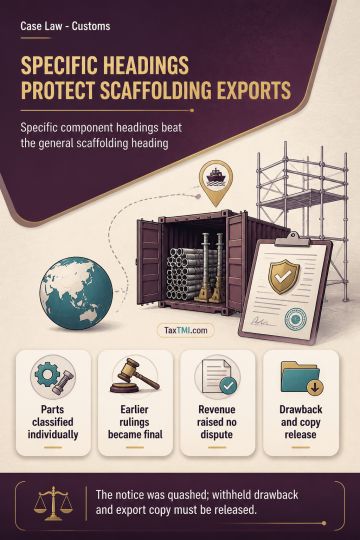
Specific customs headings for scaffolding components prevail over general classification, invalidating misclassification proceedings and enabling with...
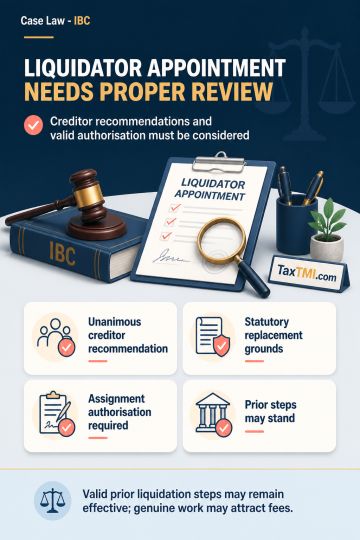
Liquidator appointment under Section 34 requires consideration of creditor recommendations, valid professional authorisation, and preservation of vali...
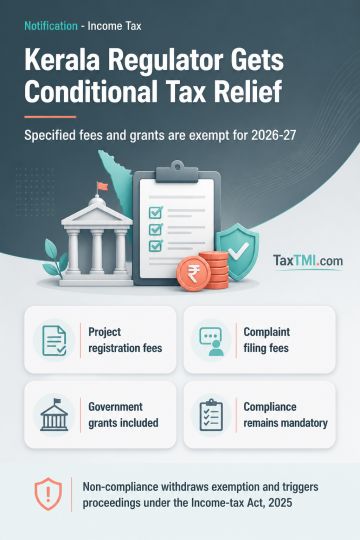
Income-tax exemption for specified regulatory fees and government grants applies subject to non-commercial activity and continuing compliance conditio...
Page of 4811
Press 'Enter' after typing page number.
781 to 800 of 96208 Results
❮
❯
❯❯
0 / 200
Expand Note
Add to Folder
No Folders have been created
+
Are you sure you want to delete "My most important" ?
Section 122(1) of the GST enactments was held to prescribe a mandatory penalty once the provision is attracted, because the phrase "whichever is higher" leaves no discretion to impose a lesser amount on proportionality grounds. The High Court rejected reliance on proportionality decisions from labour and excise jurisprudence, and noted that the petitioners were prima facie liable on the material in the assessment orders. It also found no procedural irregularity or lack of reasons in the impugned orders, and held that the statutory appellate remedy must be pursued instead of writ relief. The writ petitions were dismissed, but the petitioners were allowed to file appeals with the 10% pre-deposit requirement dispensed with.
Section 122(1) of the GST enactments was held to prescribe a mandatory penalty once the provision is attracted, because the phrase "whichever is higher" leaves no discretion to impose a lesser amount on proportionality grounds. The High Court rejected reliance on proportionality decisions from labour and excise jurisprudence, and noted that the petitioners were prima facie liable on the material in the assessment orders. It also found no procedural irregularity or lack of reasons in the impugned orders, and held that the statutory appellate remedy must be pursued instead of writ relief. The writ petitions were dismissed, but the petitioners were allowed to file appeals with the 10% pre-deposit requirement dispensed with.
Note: It is a system-generated summary and is for quick reference only.
 TaxTMI
  TaxTMI
 of 4811











 Join Channel


