Charitable registration renewal cannot become an assessment of receipts, profitability or annual exemption compliance, requiring renewal and donation ...
AMP expenditure for own business is not an international transaction without an associated-enterprise arrangement, eliminating transfer pricing adjust...
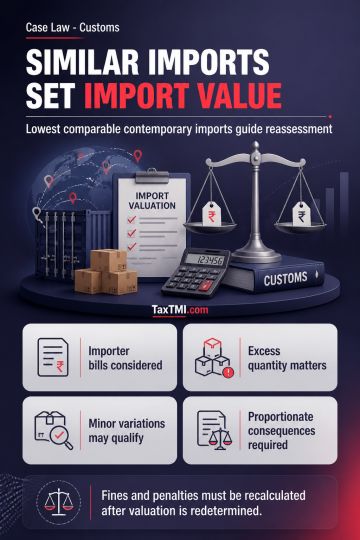
Customs valuation must use comparable contemporary imports, while confiscation fines and penalties require proportionate recalculation on reassessed v...
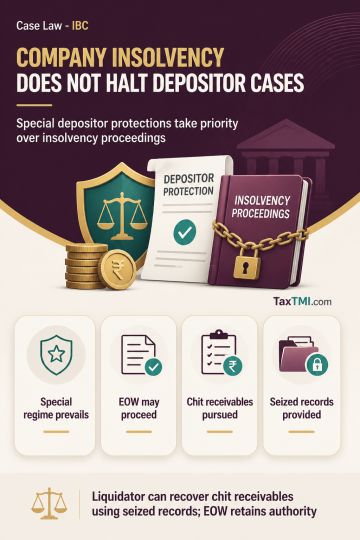
Depositor-protection proceedings prevail over corporate insolvency, while liquidators may recover chit receivables using copies of seized company reco...
Intermediary service classification fails where overseas admission facilitation is supplied independently, preserving export treatment and small-provi...
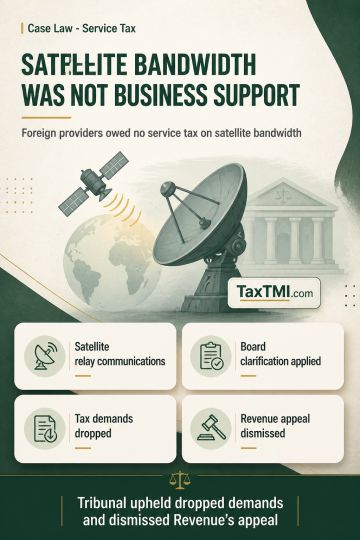
Satellite transponder bandwidth is telecommunication, not Business Support Service; foreign non-telegraph providers triggered no service tax liability...
Section 122(1) of the GST enactments was held to prescribe a mandatory penalty once the provision is attracted, because the phrase "whichever is higher" leaves no discretion to impose a lesser amount on proportionality grounds. The High Court rejected reliance on proportionality decisions from labour and excise jurisprudence, and noted that the petitioners were prima facie liable on the material in the assessment orders. It also found no procedural irregularity or lack of reasons in the impugned orders, and held that the statutory appellate remedy must be pursued instead of writ relief. The writ petitions were dismissed, but the petitioners were allowed to file appeals with the 10% pre-deposit requirement dispensed with.
Section 122(1) of the GST enactments was held to prescribe a mandatory penalty once the provision is attracted, because the phrase "whichever is higher" leaves no discretion to impose a lesser amount on proportionality grounds. The High Court rejected reliance on proportionality decisions from labour and excise jurisprudence, and noted that the petitioners were prima facie liable on the material in the assessment orders. It also found no procedural irregularity or lack of reasons in the impugned orders, and held that the statutory appellate remedy must be pursued instead of writ relief. The writ petitions were dismissed, but the petitioners were allowed to file appeals with the 10% pre-deposit requirement dispensed with.
Note: It is a system-generated summary and is for quick reference only.
 TaxTMI
  TaxTMI
 of 4814











 Join Channel


