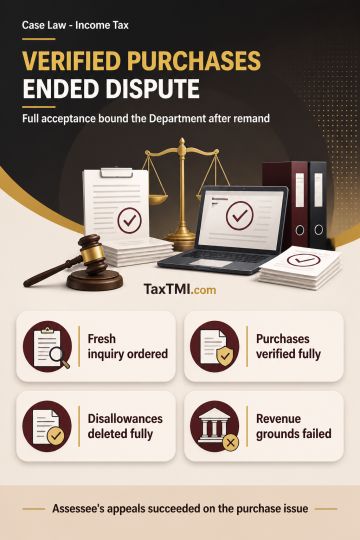
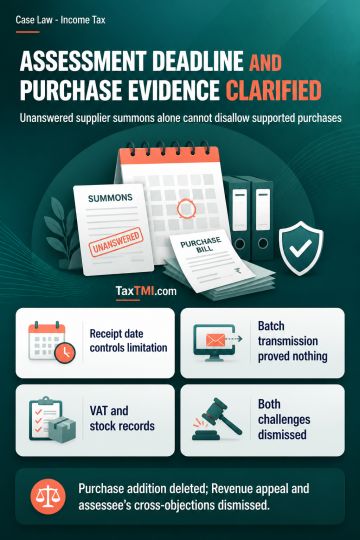
Limitation for consequential assessments runs from prescribed authority receipt, while verified purchases cannot be disallowed merely for unanswered s...
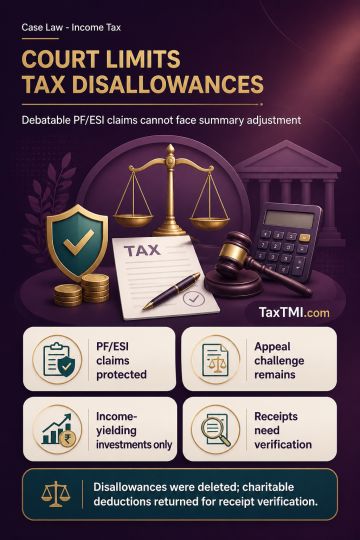
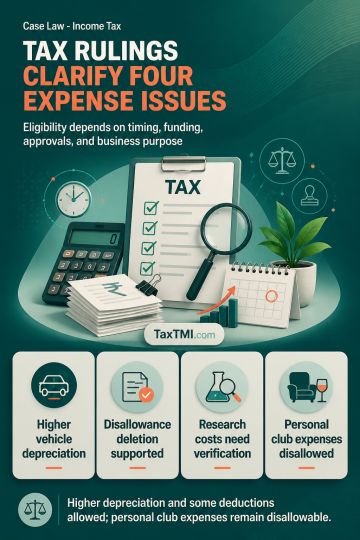
Higher depreciation for qualifying commercial vehicles, exempt-income disallowance, research deduction verification, and club-expense treatment clarif...
Charitable registration renewal cannot become an assessment of receipts, profitability or annual exemption compliance, requiring renewal and donation ...
AMP expenditure for own business is not an international transaction without an associated-enterprise arrangement, eliminating transfer pricing adjust...
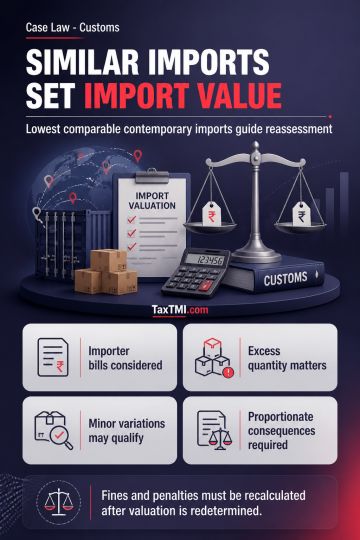
Customs valuation must use comparable contemporary imports, while confiscation fines and penalties require proportionate recalculation on reassessed v...
Page of 4817
Press 'Enter' after typing page number.
301 to 320 of 96332 Results
❮
❯
❯❯
0 / 200
Expand Note
Add to Folder
No Folders have been created
+
Are you sure you want to delete "My most important" ?
Exemption under section 54B requires proof of actual agricultural use of the land during the prescribed period; mere classification in revenue records is insufficient. The Tribunal found that revised 7/12 extracts could only raise a presumption and were not conclusive without corroborative evidence such as produce sale bills, seed or fertiliser purchase records, labour records, or other material showing active cultivation. As no such evidence was produced, the essential statutory condition remained unproved and the denial of exemption was upheld, with the addition sustained. The Tribunal also distinguished the cited contrary precedent on facts and relied on authority holding that revenue entries alone do not establish agricultural use.
Exemption under section 54B requires proof of actual agricultural use of the land during the prescribed period; mere classification in revenue records is insufficient. The Tribunal found that revised 7/12 extracts could only raise a presumption and were not conclusive without corroborative evidence such as produce sale bills, seed or fertiliser purchase records, labour records, or other material showing active cultivation. As no such evidence was produced, the essential statutory condition remained unproved and the denial of exemption was upheld, with the addition sustained. The Tribunal also distinguished the cited contrary precedent on facts and relied on authority holding that revenue entries alone do not establish agricultural use.
Note: It is a system-generated summary and is for quick reference only.
 TaxTMI
  TaxTMI
 of 4817













 Join Channel