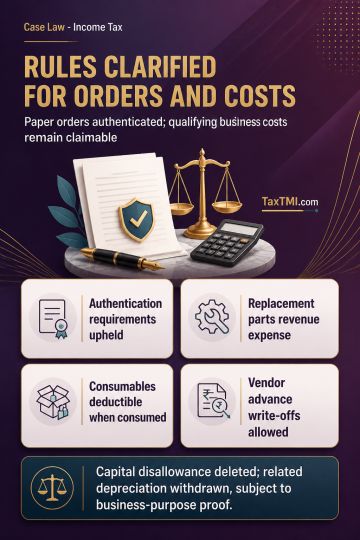
Authentication of paper assessment orders upheld, while qualifying repairs, consumables and vendor advance write-offs remain deductible business claim...
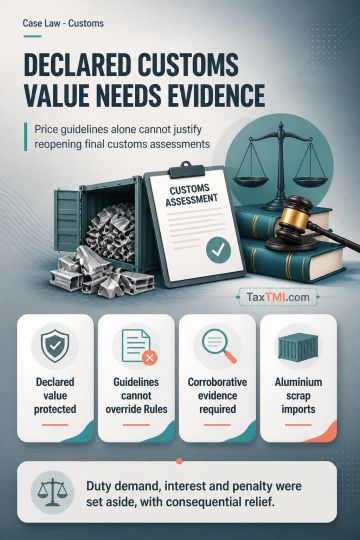
Transaction value cannot be rejected solely on non-statutory valuation guidelines without corroborative evidence supporting reassessment of final cust...
Cross-examination rights and corroborated evidence limit customs penalties for misdeclaration in genuine import transactions involving documented clea...
Tariff classification of vehicle gear components follows the specific gearing entry, displacing motor-vehicle parts classification and related liabili...
Necessary-party requirements limit impleadment of independent entities, while deferred consideration does not create an appealable adverse determinati...
Professional fees paid for services linked to imports from OFAC-restricted Iranian-origin goods were held allowable under section 37(1) because the assessee proved the recipient's identity, genuineness of payment, and banking trail, while the payee confirmed the transactions and disclosed them in its tax records. The Tribunal accepted that the services addressed abnormal remittance delays caused by OFAC-related banking scrutiny, and that comparative material showed improved payment cycles, turnover, and profits after the services were used. Revenue's disallowance failed because it relied on suspicion without independent enquiry or evidence that the services were nonexistent or that payments were returned.
Professional fees paid for services linked to imports from OFAC-restricted Iranian-origin goods were held allowable under section 37(1) because the assessee proved the recipient's identity, genuineness of payment, and banking trail, while the payee confirmed the transactions and disclosed them in its tax records. The Tribunal accepted that the services addressed abnormal remittance delays caused by OFAC-related banking scrutiny, and that comparative material showed improved payment cycles, turnover, and profits after the services were used. Revenue's disallowance failed because it relied on suspicion without independent enquiry or evidence that the services were nonexistent or that payments were returned.
Note: It is a system-generated summary and is for quick reference only.
 TaxTMI
  TaxTMI
 of 4811














 Join Channel




