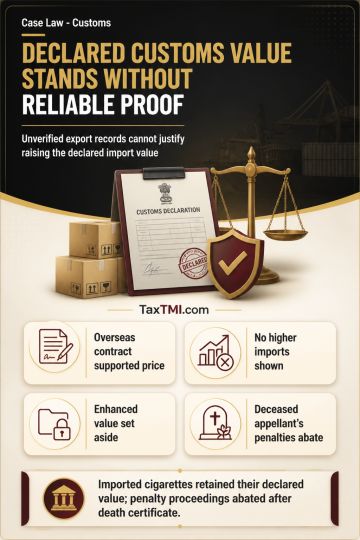
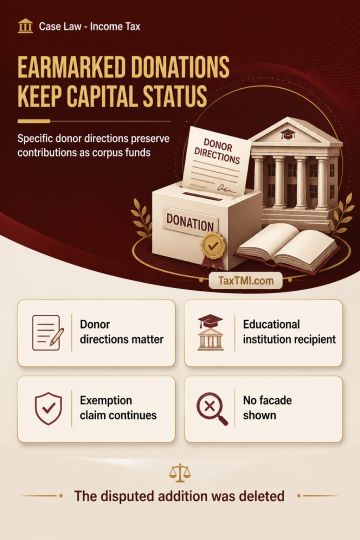
Donor-directed corpus contributions retain capital character despite exemption claims under section 10(23C)(vi), preventing their treatment as taxable...
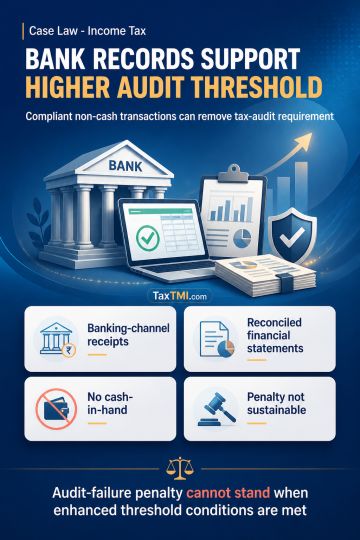
Enhanced tax-audit threshold applies where banking records establish compliant non-cash receipts and payments, eliminating penalty exposure for audit ...
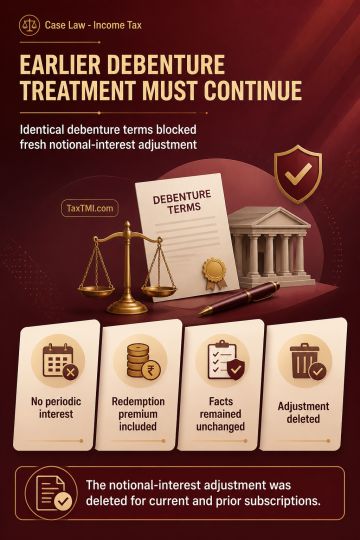
Transfer pricing consistency protects identical non-interest-bearing debenture terms from a later notional-interest adjustment without valid statutory...
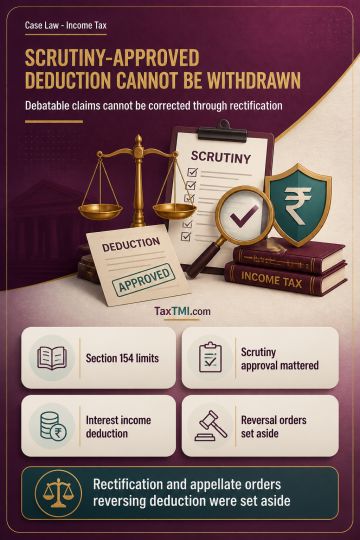
Rectification of debatable deduction claims cannot reverse scrutiny-approved co-operative society interest income deductions as apparent record errors...
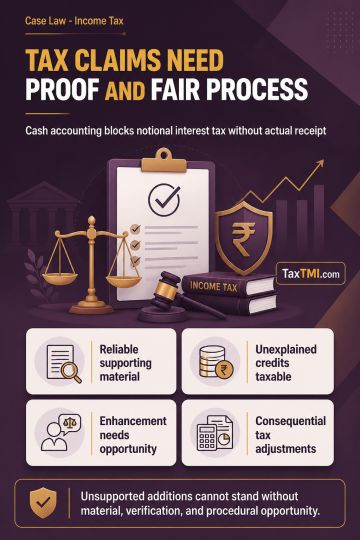
Cash-method accounting bars presumptive interest taxation, while unsupported securities and share-trading additions require reliable material and veri...
Professional fees paid for services linked to imports from OFAC-restricted Iranian-origin goods were held allowable under section 37(1) because the assessee proved the recipient's identity, genuineness of payment, and banking trail, while the payee confirmed the transactions and disclosed them in its tax records. The Tribunal accepted that the services addressed abnormal remittance delays caused by OFAC-related banking scrutiny, and that comparative material showed improved payment cycles, turnover, and profits after the services were used. Revenue's disallowance failed because it relied on suspicion without independent enquiry or evidence that the services were nonexistent or that payments were returned.
Professional fees paid for services linked to imports from OFAC-restricted Iranian-origin goods were held allowable under section 37(1) because the assessee proved the recipient's identity, genuineness of payment, and banking trail, while the payee confirmed the transactions and disclosed them in its tax records. The Tribunal accepted that the services addressed abnormal remittance delays caused by OFAC-related banking scrutiny, and that comparative material showed improved payment cycles, turnover, and profits after the services were used. Revenue's disallowance failed because it relied on suspicion without independent enquiry or evidence that the services were nonexistent or that payments were returned.
Note: It is a system-generated summary and is for quick reference only.
 TaxTMI
  TaxTMI
 of 4817






 Join Channel