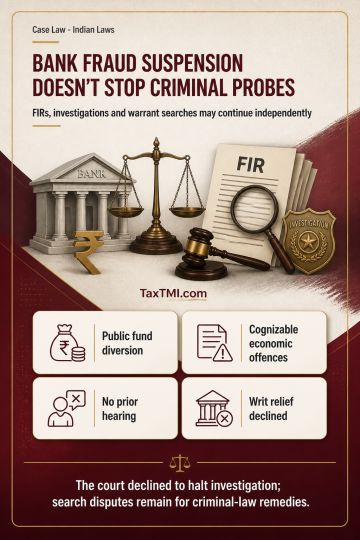
Administrative fraud classification suspension does not halt independent criminal investigation or warrant-based searches into alleged economic offenc...
Arrest safeguards and transit remand requirements invalidated detention following inter-State transfer without communicated grounds or magistrate auth...
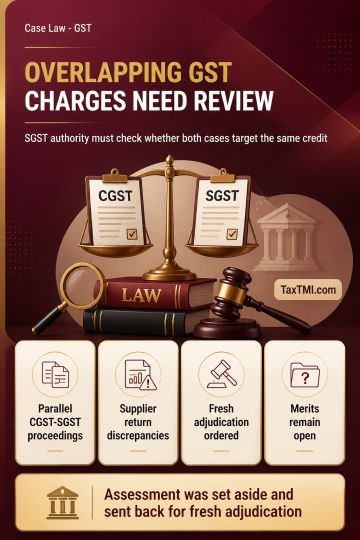
Arrest safeguards require disclosed grounds, relative intimation and transit remand, while duplicate prosecution under the CGST framework is unsustain...
Document Identification Number defects can invalidate GST assessments, with delayed challenges entertained conditionally where patent irregularities e...
Arbitral awards on prolongation costs, GST reimbursement, minimum-wage escalation, Environmental Compensation Charges and taxes were upheld under Section 34 because the tribunal had adopted a plausible view on the contract, delay attribution and quantification of damages. The court treated the prolongation-cost methodology as a permissible estimate based on record and industry practice, and refused re-appreciation of evidence. It also sustained reimbursement for GST introduced during the extended period, held that a minimum-wage escalation bar could not defeat compensation for employer-caused delay, and accepted ECC as an additional charge not clearly barred by the exclusion clause. The majority award was treated as binding, and no patent illegality or perversity was shown.
Arbitral awards on prolongation costs, GST reimbursement, minimum-wage escalation, Environmental Compensation Charges and taxes were upheld under Section 34 because the tribunal had adopted a plausible view on the contract, delay attribution and quantification of damages. The court treated the prolongation-cost methodology as a permissible estimate based on record and industry practice, and refused re-appreciation of evidence. It also sustained reimbursement for GST introduced during the extended period, held that a minimum-wage escalation bar could not defeat compensation for employer-caused delay, and accepted ECC as an additional charge not clearly barred by the exclusion clause. The majority award was treated as binding, and no patent illegality or perversity was shown.
Note: It is a system-generated summary and is for quick reference only.
 TaxTMI
  TaxTMI
 of 4811







 Join Channel




