Windmill commissioning evidence supported higher depreciation where grid connection and electricity generation proved operational use before the relev...
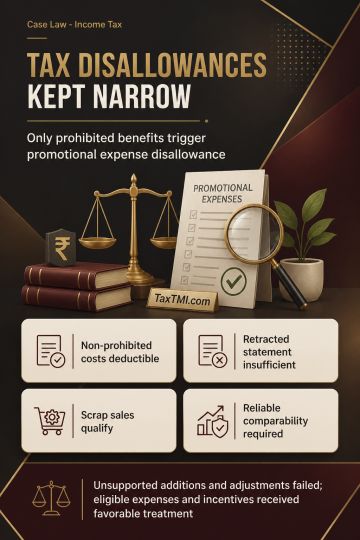
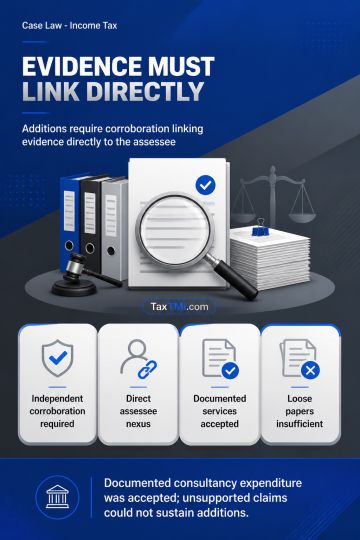
Pharmaceutical promotion and transfer-pricing comparability principles limited disallowances, while uncorroborated search allegations and unsupported ...
Business expenditure substantiation supports scrap credits, statutory payments and expense claims, while depreciation requires proof of actual busines...
Reopening of assessment was upheld where the recorded reasons showed fresh tangible material from impounded documents and a director's statement, and the assessee had not fully disclosed the crucial Clause 7 entitlement to 35% of gross sale receipts; no earlier opinion on the receipt's true character had been formed, so change of opinion did not apply. The Court also held that reopening must stand or fall on the recorded reasons alone. On the merits, the assessee's 35% entitlement under the AOP agreement was not a share of profit, because it arose from gross receipts before project expenses and was diverted by overriding title; it was therefore taxable as business income.
Reopening of assessment was upheld where the recorded reasons showed fresh tangible material from impounded documents and a director's statement, and the assessee had not fully disclosed the crucial Clause 7 entitlement to 35% of gross sale receipts; no earlier opinion on the receipt's true character had been formed, so change of opinion did not apply. The Court also held that reopening must stand or fall on the recorded reasons alone. On the merits, the assessee's 35% entitlement under the AOP agreement was not a share of profit, because it arose from gross receipts before project expenses and was diverted by overriding title; it was therefore taxable as business income.
Note: It is a system-generated summary and is for quick reference only.
 TaxTMI
  TaxTMI
 of 4811


















 Join Channel


