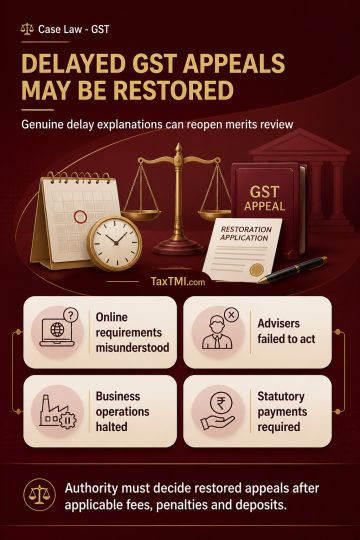
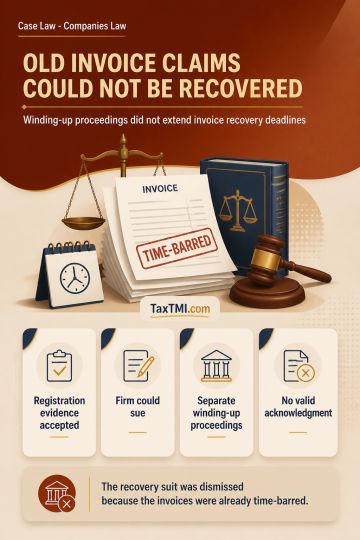
Invoice-based recovery claims remain time-barred despite separate winding-up proceedings, absent valid acknowledgment or part-payment of the disputed ...
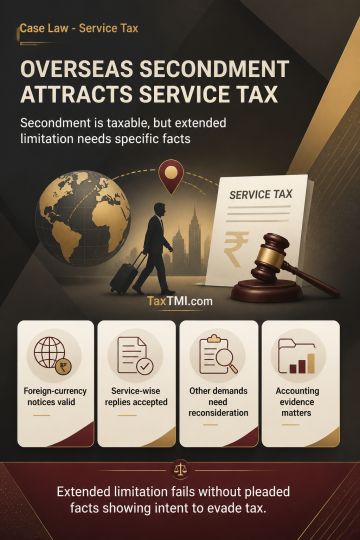
Extended limitation fails without specific suppression allegations, while overseas employee secondment remains taxable as manpower supply within norma...
Time-share accommodation classification excludes Club or Association Service where purchasers receive contractual occupancy rights without genuine mem...
CENVAT credit for trading requires reversal, while taxable-service rental credit remains proportionately available and limitation issues await resolut...
Vicarious liability for dishonoured company cheques may extend to non-signatory directors where complaints contain foundational responsibility avermen...
ITAT upheld the reassessment notice because the record showed prior approval of the Principal Commissioner on the notice under section 148A(b), and both the notice and approval were within the statutory time limit, so the challenge on limitation and lack of approval failed. On disputed bogus purchases, the Tribunal held that invoices, ledgers and banking entries were not enough where Investigation Wing and GST material indicated accommodation entry suppliers and there were deficiencies in transport and purchase-to-sale linkage. It found that the existing factual examination was inadequate to sustain either full disallowance or a restriction to 15%, and restored the matter to the Assessing Officer for fresh verification and enquiries.
ITAT upheld the reassessment notice because the record showed prior approval of the Principal Commissioner on the notice under section 148A(b), and both the notice and approval were within the statutory time limit, so the challenge on limitation and lack of approval failed. On disputed bogus purchases, the Tribunal held that invoices, ledgers and banking entries were not enough where Investigation Wing and GST material indicated accommodation entry suppliers and there were deficiencies in transport and purchase-to-sale linkage. It found that the existing factual examination was inadequate to sustain either full disallowance or a restriction to 15%, and restored the matter to the Assessing Officer for fresh verification and enquiries.
Note: It is a system-generated summary and is for quick reference only.
 TaxTMI
  TaxTMI
 of 4811











 Join Channel