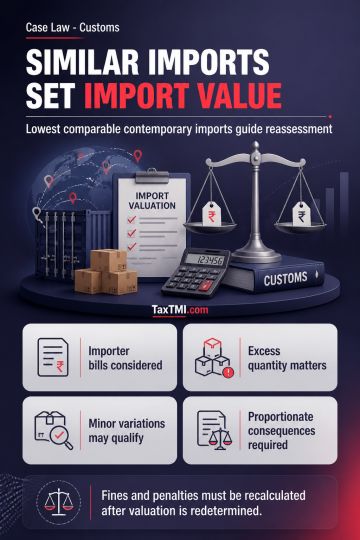
Customs valuation must use comparable contemporary imports, while confiscation fines and penalties require proportionate recalculation on reassessed v...
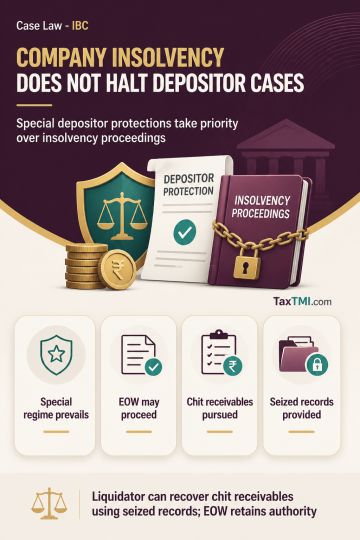
Depositor-protection proceedings prevail over corporate insolvency, while liquidators may recover chit receivables using copies of seized company reco...
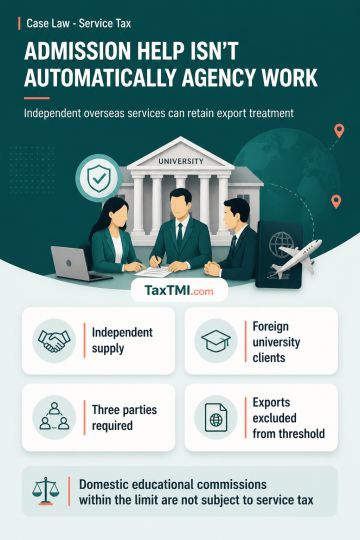
Intermediary service classification fails where overseas admission facilitation is supplied independently, preserving export treatment and small-provi...
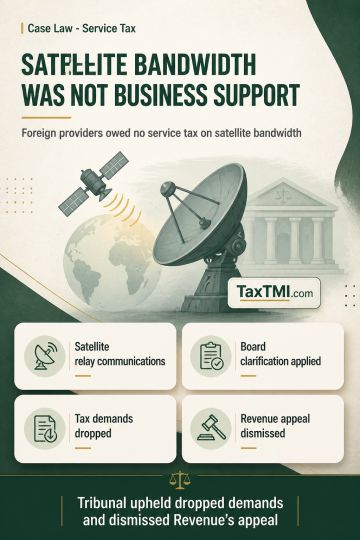
Satellite transponder bandwidth is telecommunication, not Business Support Service; foreign non-telegraph providers triggered no service tax liability...
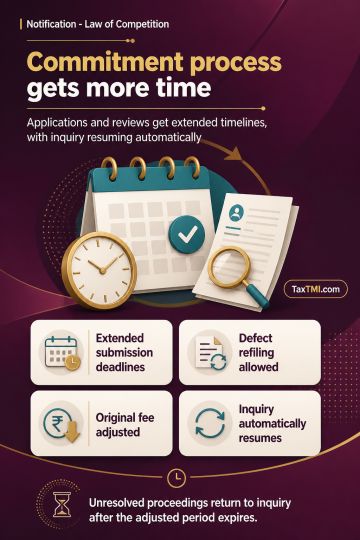
Commitment proceedings gain extended timelines, structured defect refiling, and automatic resumption of inquiry after the adjusted completion period e...
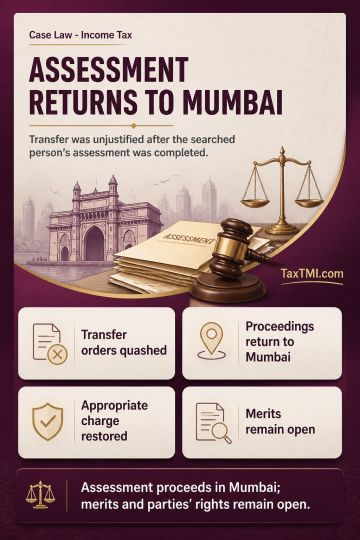
Centralised assessment transfer becomes unwarranted once the searched person's assessment is complete, requiring restoration to the appropriate charge...
Page of 4817
Press 'Enter' after typing page number.
321 to 340 of 96333 Results
❮
❯
❯❯
0 / 200
Expand Note
Add to Folder
No Folders have been created
+
Are you sure you want to delete "My most important" ?
The U.P. GST law did not exclude prosecution under the general penal law for alleged creation of fake firms, fictitious invoices and wrongful input tax credit claims, because its without prejudice clause preserves other penal provisions and does not bar an FIR for offences under general criminal law. The Court rejected the plea that the Bharatiya Nyaya Sanhita was inapplicable merely because GST offences were also alleged. On the facts, prima facie material showed involvement in creating a fictitious firm, generating false e-way bills through another bogus concern, and evading tax without actual movement of goods, so bail was refused.
The U.P. GST law did not exclude prosecution under the general penal law for alleged creation of fake firms, fictitious invoices and wrongful input tax credit claims, because its without prejudice clause preserves other penal provisions and does not bar an FIR for offences under general criminal law. The Court rejected the plea that the Bharatiya Nyaya Sanhita was inapplicable merely because GST offences were also alleged. On the facts, prima facie material showed involvement in creating a fictitious firm, generating false e-way bills through another bogus concern, and evading tax without actual movement of goods, so bail was refused.
Note: It is a system-generated summary and is for quick reference only.
 TaxTMI
  TaxTMI
 of 4817









 Join Channel