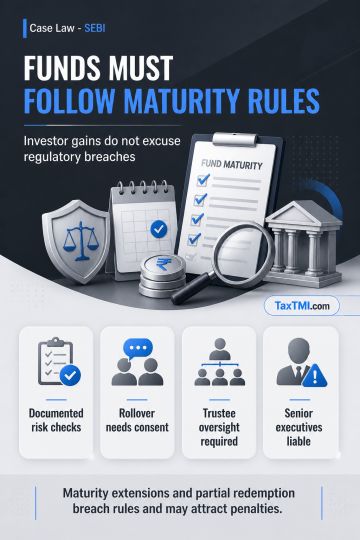
Mutual fund maturity rules require proper rollover, redemption, disclosure, and due diligence; investor gains cannot excuse regulatory breaches or pen...
Threshold exemption excludes exempt services, while stamp-paper purchases avoid reverse charge; consequential service tax penalties were also set asid...
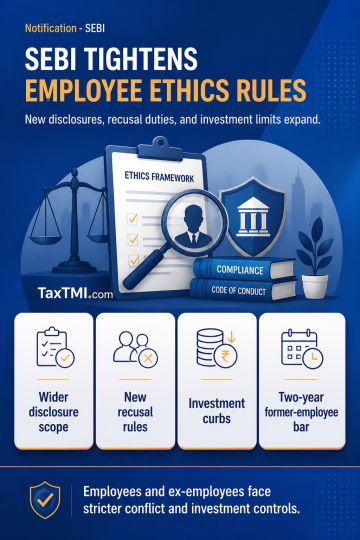
Employee conflict disclosures and investment restrictions expand with new recusal duties, post-employment limits, and compliance reporting requirement...
Simultaneous insolvency proceedings against a principal borrower and its corporate guarantor were held maintainable, so a status quo order in the borrower's case did not bar liquidation of the guarantor. A proposed settlement could not be used to resist liquidation after commencement of liquidation, because withdrawal under Section 12A is unavailable at that stage; any post-liquidation compromise must proceed through a Section 230 scheme. The tribunal also found no error in deciding an interlocutory application on merits despite the applicant's absence, as the rules permit dismissal for default or decision on merits. Liquidation was sustained on the unanimous CoC decision, absence of any resolution plan, and failure of settlement efforts.
Simultaneous insolvency proceedings against a principal borrower and its corporate guarantor were held maintainable, so a status quo order in the borrower's case did not bar liquidation of the guarantor. A proposed settlement could not be used to resist liquidation after commencement of liquidation, because withdrawal under Section 12A is unavailable at that stage; any post-liquidation compromise must proceed through a Section 230 scheme. The tribunal also found no error in deciding an interlocutory application on merits despite the applicant's absence, as the rules permit dismissal for default or decision on merits. Liquidation was sustained on the unanimous CoC decision, absence of any resolution plan, and failure of settlement efforts.
Note: It is a system-generated summary and is for quick reference only.
 TaxTMI
  TaxTMI
 of 4807











 Join Channel