Clean slate principle extinguishes uncrystallised operational claims and bars continuation of pending recovery and arbitral proceedings after plan app...
Works contract classification governs composite layout-development contracts where VAT-paid goods are transferred alongside construction and infrastru...
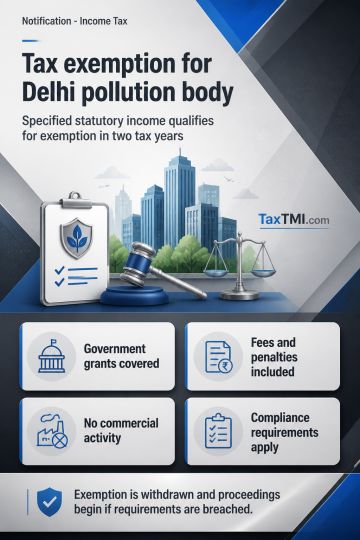
Specified income tax exemption for pollution control body remains conditional on non-commercial activity, unchanged income character, and return filin...
Jurisdictional facts in certificate-of-origin discrepancies can support customs show-cause proceedings, leaving factual explanations for departmental ...
State tax dues in liquidation do not rank as secured debt unless a valid security interest exists under the Insolvency and Bankruptcy Code. Applying the waterfall mechanism in Section 53, the Tribunal held that the Excise and Taxation Department could not be treated at par with secured financial creditors, and that the Haryana Value Added Tax Act could not override the Code by virtue of Section 238. The liquidator's withholding of sale proceeds and insistence on an indemnity for a possible future change in law were held unsustainable. The withheld proceeds were directed to be distributed to the secured financial creditor that had relinquished its security interest.
State tax dues in liquidation do not rank as secured debt unless a valid security interest exists under the Insolvency and Bankruptcy Code. Applying the waterfall mechanism in Section 53, the Tribunal held that the Excise and Taxation Department could not be treated at par with secured financial creditors, and that the Haryana Value Added Tax Act could not override the Code by virtue of Section 238. The liquidator's withholding of sale proceeds and insistence on an indemnity for a possible future change in law were held unsustainable. The withheld proceeds were directed to be distributed to the secured financial creditor that had relinquished its security interest.
Note: It is a system-generated summary and is for quick reference only.
 TaxTMI
  TaxTMI
 of 4809














 Join Channel