Patent-settlement expenditure treated as commercially expedient revenue outlay, with foreign-law restrictions inapplicable before the prospective amen...
International transaction benchmarking restricts transfer pricing adjustments to associated-enterprise dealings, while functional comparability govern...
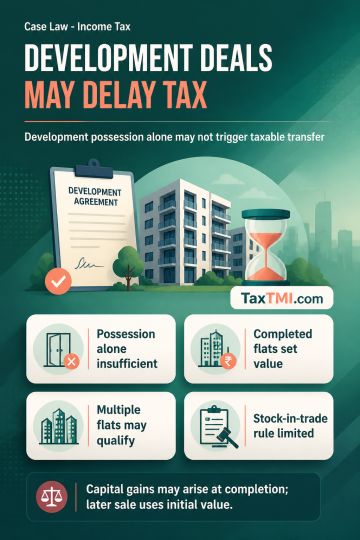
Joint development agreements defer taxable transfer where possession lacks part performance, while completed flats determine consideration and exempti...
Page of 4811
Press 'Enter' after typing page number.
661 to 680 of 96208 Results
❮
❯
❯❯
0 / 200
Expand Note
Add to Folder
No Folders have been created
+
Are you sure you want to delete "My most important" ?
Penalty under section 271D could not be sustained because no satisfaction was recorded in the assessment order initiating penalty proceedings. The Tribunal held that where the returned income was accepted and no quantum addition was made, there was no occasion in the assessment order to record the requisite satisfaction, and the Assessing Officer could not validly proceed by issuing a separate show-cause notice and penalty order. Relying on binding precedent, the Tribunal treated the absence of recorded satisfaction as fatal to jurisdiction and allowed the assessee's appeal without examining the merits.
Penalty under section 271D could not be sustained because no satisfaction was recorded in the assessment order initiating penalty proceedings. The Tribunal held that where the returned income was accepted and no quantum addition was made, there was no occasion in the assessment order to record the requisite satisfaction, and the Assessing Officer could not validly proceed by issuing a separate show-cause notice and penalty order. Relying on binding precedent, the Tribunal treated the absence of recorded satisfaction as fatal to jurisdiction and allowed the assessee's appeal without examining the merits.
Note: It is a system-generated summary and is for quick reference only.
 TaxTMI
  TaxTMI
 of 4811

















 Join Channel