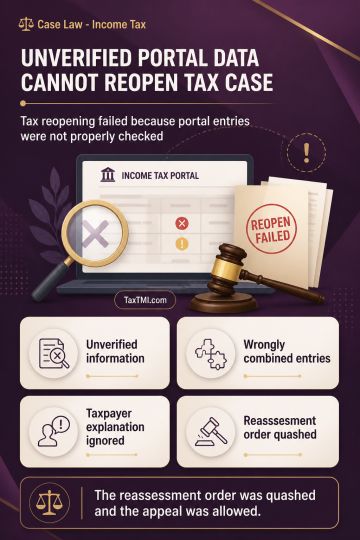
Reassessment jurisdiction fails where unverified portal information is aggregated without examining the taxpayer's explanation or relevance of entries...
Statutory sanction for delayed reassessment requires approval from the prescribed authority; approval by an inferior authority invalidates jurisdictio...
Transfer pricing margin adjustments require matching treatment of non-operating income and related costs, with comparability issues reconsidered on ev...
Preliminary-expense amortisation and MAT exempt-income adjustments prevailed, while trademark costs and managerial remuneration require fresh verifica...
Export valuation requires contemporaneous evidence; unrelated invoices cannot prove overvaluation, and dual penalties on firm and partner are impermis...
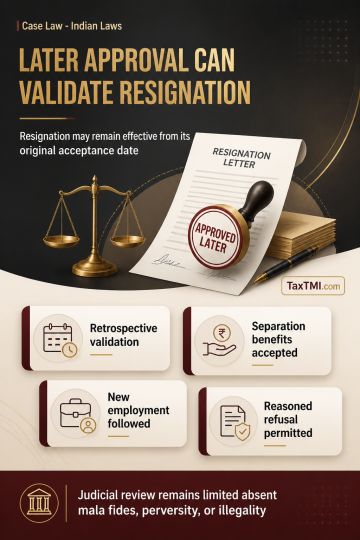
Ratification of resignation acceptance validates separation retrospectively, while withdrawal may be refused through reasoned administrative discretio...
Nature-dependent electricity contracts receive new Ind AS accounting, hedge designation, transition and financial-statement disclosure requirements fr...
Page of 4817
Press 'Enter' after typing page number.
481 to 500 of 96332 Results
❮
❯
❯❯
0 / 200
Expand Note
Add to Folder
No Folders have been created
+
Are you sure you want to delete "My most important" ?
The Tribunal held that the assessee's objects fell within protection of environment under section 2(15), not the residuary head of advancement of any other object of general public utility. Accordingly, the proviso to section 2(15) and the 20% commercial-receipt threshold were inapplicable, making denial of registration on that basis legally unsustainable. It further held that deduction of tax at source on receipts did not, by itself, defeat the exemption claim, that filing return in ITR-6 was explainable because the assessee was not registered at that time, and that filing under a wrong limb was only a bona fide technical error requiring verification. Registration under section 12A was accepted subject to verification of the technical objection.
The Tribunal held that the assessee's objects fell within protection of environment under section 2(15), not the residuary head of advancement of any other object of general public utility. Accordingly, the proviso to section 2(15) and the 20% commercial-receipt threshold were inapplicable, making denial of registration on that basis legally unsustainable. It further held that deduction of tax at source on receipts did not, by itself, defeat the exemption claim, that filing return in ITR-6 was explainable because the assessee was not registered at that time, and that filing under a wrong limb was only a bona fide technical error requiring verification. Registration under section 12A was accepted subject to verification of the technical objection.
Note: It is a system-generated summary and is for quick reference only.
 TaxTMI
  TaxTMI
 of 4817
















 Join Channel